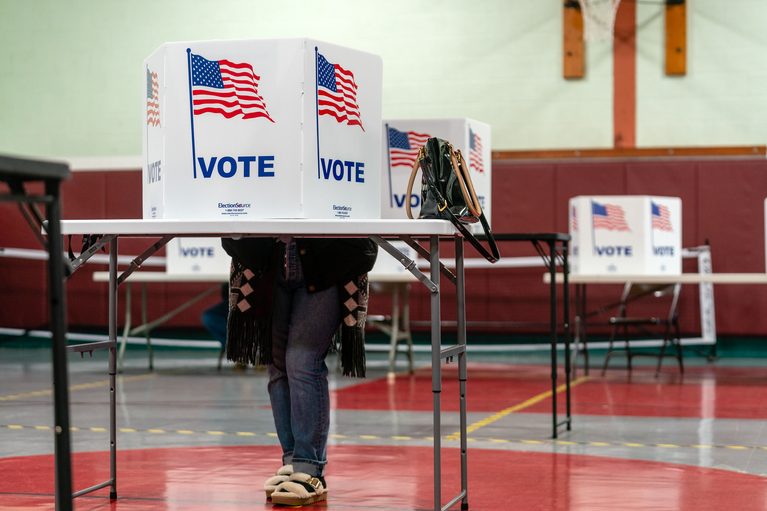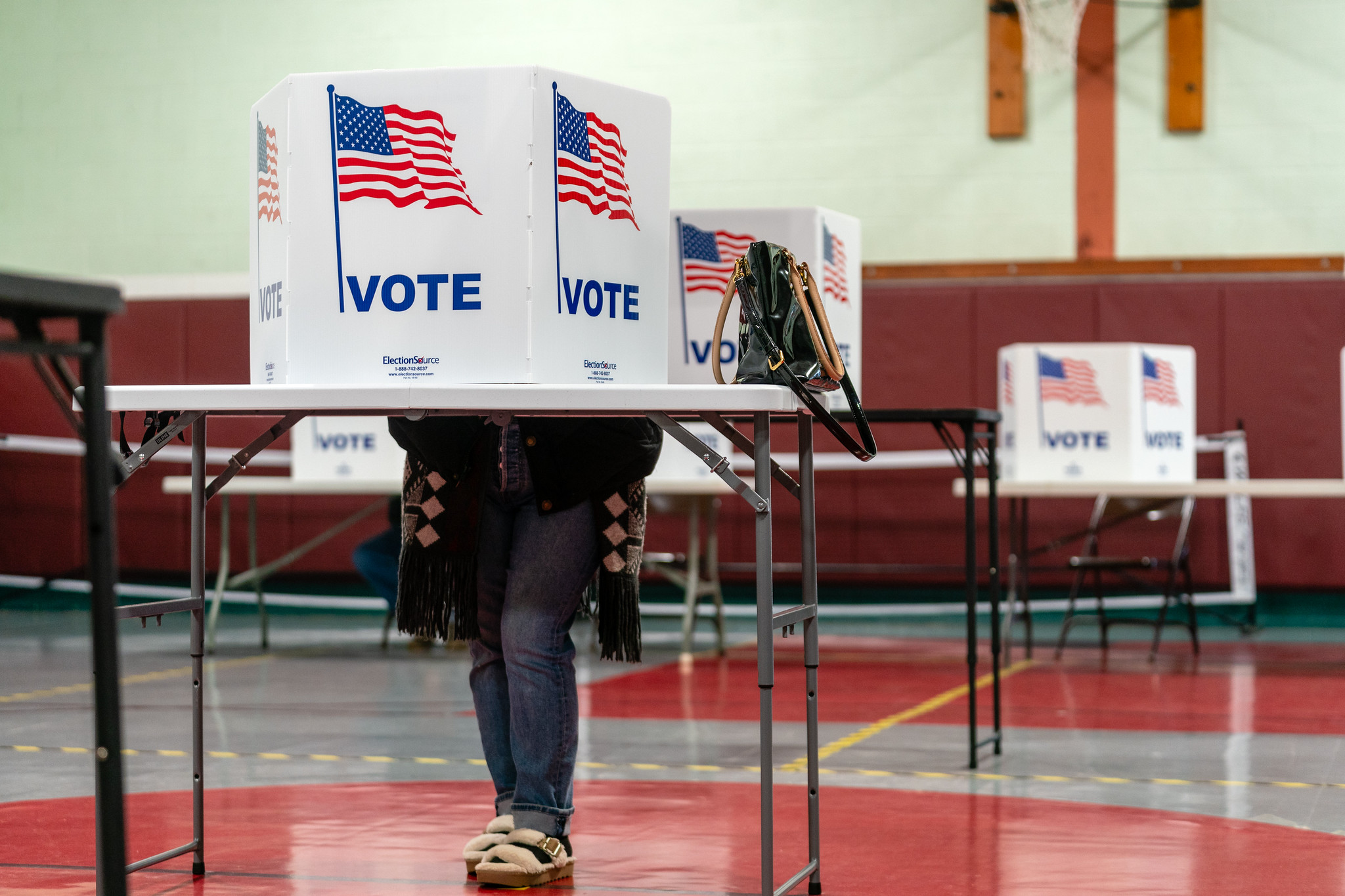
Students in the Malden Public Schools district will enjoy a day off on Tuesday, November 3rd, as schools will be closed to serve as polling locations for the midterm elections. While students are thrilled to have a shorter school week, it is important to understand the significance of the upcoming election and its impact at the federal and local levels.
“Voting is such an important right because it gives us a say in the kind of people that represent our needs and wants, and that ensures the laws being passed and enforced in our country are as much as within our best interests as they can be,” emphasized junior Lyra Heining.
What are the Midterm Elections?
Divided into three parts, the United States government consists of the executive branch, which enforces laws; the legislative branch, which creates laws; and the judicial branch, which determines the constitutionality of laws. Constituents regularly vote to select members of the executive and legislative branches.
The executive branch involves the President and his cabinet members, while the legislative branch consists of Congress at Capitol Hill. Congress is further divided into two parts: The Senate and the House of Representatives. The Senate includes 100 members—two senators per state—and the House of Representatives includes 435 members—the number of representatives is based on state population.
The presidential elections occur every four years, while midterm elections occur every two years, during the middle of a presidency, to decide the members of Congress. During this, all House of Representatives seats are up for grabs because representatives have two-year terms. However, senators have six-year terms; therefore, only ⅓ of Senate seats are up for election at a time. The staggered system—officials are elected to seats at different times—was created to prevent senators from the same state from appearing on the ballot.
“Congress is responsible for making laws, so in many ways these elections are just as important, if not more important, than the presidential election,” stated Speech and Debate and AP US History teacher Kurtis Scheer.
Many states will have more than just Senate and House races on the ballot, also including gubernatorial and legislative elections, as well as ballot questions.
The Massachusetts Ballot
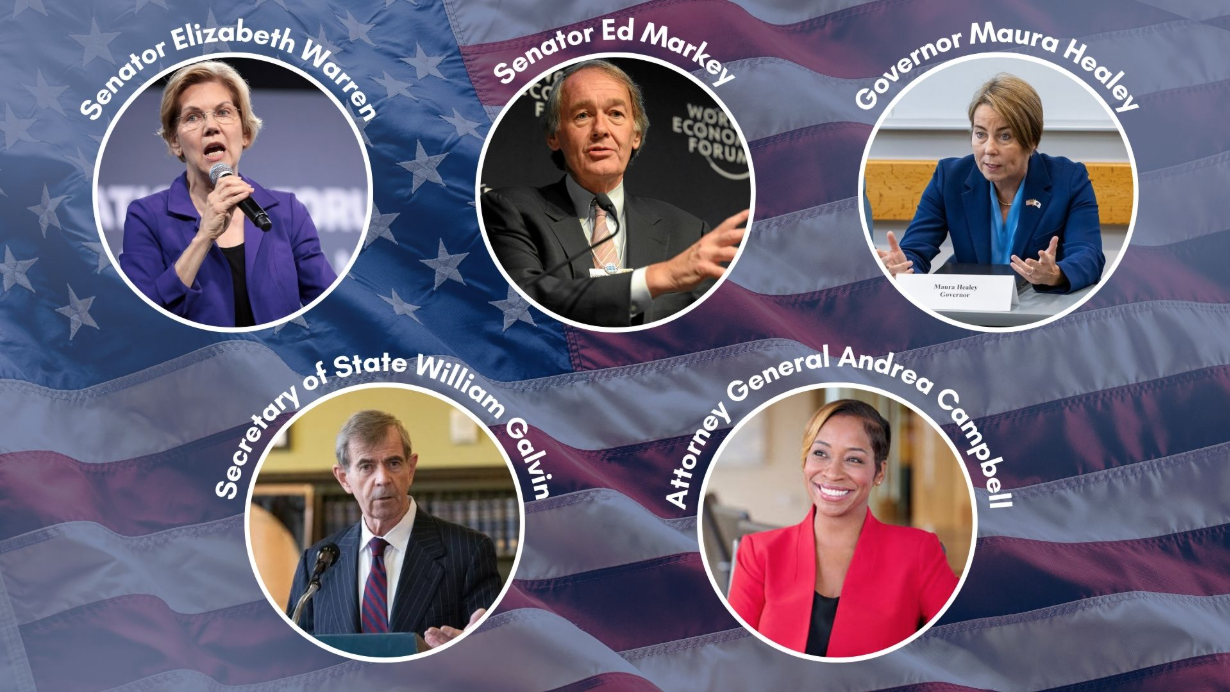
Massachusetts is an overwhelmingly blue state, meaning most of its voters are affiliated with the Democratic Party. As a result, all current elected officials in office are Democrats (D). Except for Elizabeth Warren, whose current term ends in 2031, the listed members are campaigning for re-election.
Based on the state’s size, Massachusetts will elect nine House of Representatives members tomorrow. To learn more about the representatives, visit: Massachusetts House Primary Election 2026 Live Results
Since America’s independence, a two-party system has dominated the country. Today, the country is divided into the left-wing Democratic Party and the right-wing Republican Party. Despite ideological polarization straining American democracy, Congress represents both ends of the spectrum, highlighting the importance of voting.
“All politics is local. The representatives closest to you are often the ones whose decisions affect your daily life the most,” Scheer noted.
What are referendums?
Massachusetts citizens can also vote directly on legislation through ballot questions or referendums. A referendum asks voters to approve or reject a law already passed by a legislature, or to decide on a specific policy proposal referred to the public. On the ballot, it appears as a separate question with its own titles, summaries, and Yes/No options. In fact, referendums are why the Massachusetts Comprehensive Assessment System (MCAS) is no longer a graduation requirement.
Mock Trial and AP Government teacher Richard Tivnan explained how ballot questions are “one of the few direct links” between the people and government, “allowing voters to make decisions on specific policies.”
To get a ballot question before voters, supporters must collect signatures, submit the proposal to the legislature, and then gather another round of signatures if lawmakers reject it or take no action.
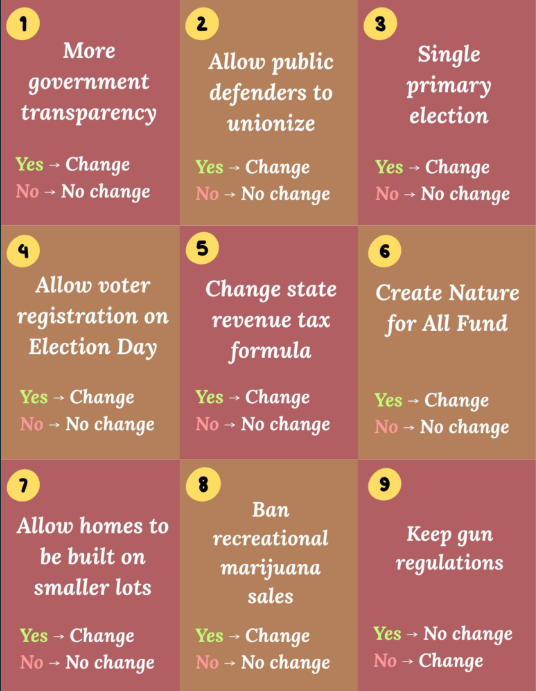
This year, Massachusetts has nine referendums on its ballot, each distinct, requiring voters to be informed about the topics. However, political campaigning does not heavily focus on the ballot questions; instead, it discusses national partisan issues. As a result, most questions are not “on the radar for a lot of people this year,” expressed Tivnan.
There is a blatant lack of voter knowledge where citizens do not know “who is on the ballot, what the questions mean, or that ballot questions exist in the first place,” elaborated YWCA TASK Advisor Chris Murphy.
Junior Minerva Davenport underlined the importance of raising awareness, as many “assume” ballot questions do not “directly affect them.” She urged that “people need to understand that their rights” either come from a clause, the Constitution, a Supreme Court ruling, or a law, “but can be undone.”
Besides awareness, the language used in the questions can be complex and confusing, creating barriers for the common voter. For instance, “yes-or-no wording on ballot questions can be confusing because sometimes a ‘yes’ vote changes something, and other times a ‘yes’ vote keeps things the same,” added Tivnan.
Scheer included that even “well-educated voters” can be puzzled and may need a “cheat sheet to remember whether a yes vote means what you think it means.”
Low Voter Turnout
One of the biggest challenges facing the midterm elections is low voter turnout. While presidential elections often draw widespread attention, many voters do not show up for elections held between presidential cycles. “Many casual voters do not feel the same urgency to participate,” Scheer explained.
Several people might also feel as if their individual vote will not make a difference or that election outcomes are already decided. Murphy argued that this mindset “keeps many people away from the polls” despite having multiple methods to vote.
Young voters face additional barriers. Many 18-year-olds are balancing schoolwork, college applications, or other responsibilities, making politics seem less important in comparison. Scheer mentioned that any barrier hinders voting: “Whether it’s work, family responsibilities, or scheduling conflicts, it will reduce voter participation.” Moreover, Election Day not being a federal holiday might also contribute to a low voter turnout.
One way to boost voter participation is through voter education. Schools and social media platforms can provide clear information about elections, candidates, and voting procedures. When people understand how elections affect their lives and know how to vote, they are more likely to feel motivated to participate in the democratic process.
AP World History and AP Economics teacher James Hill encouraged young voters to actively seek information rather than relying solely on social media algorithms. “Seek out news more than let news seek out you,” he explained, noting that consuming “news from a variety of sources” can help voters become better informed and make more thoughtful decisions at the polls.
Beyond education, accessibility remains a challenge, particularly for “non-native English speakers,” remarked Heining. While election materials may be available in multiple languages, registration requirements, ballot information, and election resources can still be difficult to navigate. Expanding multilingual resources, early-voting periods, and offering more polling locations will promote higher participation.
At the end of the day, voting gives people a voice in how their government is run and helps shape decisions that affect their daily lives, so make sure to fill out a ballot tomorrow.
About the Author