The start of the 2025-2026 school year has welcomed many policy changes; one of them being the removal of directed studies from the curriculum. Debates have sparked among administrators, educators, and students about the program that has been a part of Malden High School for nearly two decades.
Directed studies referred to a period built into student schedules, either upon request or due to a requested class—typically an elective—being full, sending students to a designated room supervised by a teacher. Its purpose was to give students guided academic time to complete assignments and homework. However, as the years progressed and the program grew, fewer and fewer students were focused on studies, turning the academic time into a social hour, or worse, a period to be skipped.
Spanish teacher Elana Mayer, who proctored a study last year, highlighted how she was “ecstatic” when she heard about the program’s removal, recognizing them to be a “waste of time for teachers and students included.” She continued, “It just ends up being a lot of students who are not doing anything or are on their phones or sleeping.”
In theory, the study was supposed to give students with busy schedules or responsibilities after school more opportunities to be on task with their schoolwork, get extra help, and utilize 80-90 minutes of academic time to the best of their abilities, and, if present in a student’s schedule, were supposed to only occur for one period or one semester.
Sophomore Aya Bihi described them as “really helpful,” giving her “time to finish” her work and “a sense of relaxation throughout the school day,” knowing she had productive time to look forward to.
While the practice sounds efficient in concept, it soon derailed due to a few significant factors: understaffing, students not meeting the required academic time dictated by the state, and the misuse of the period.
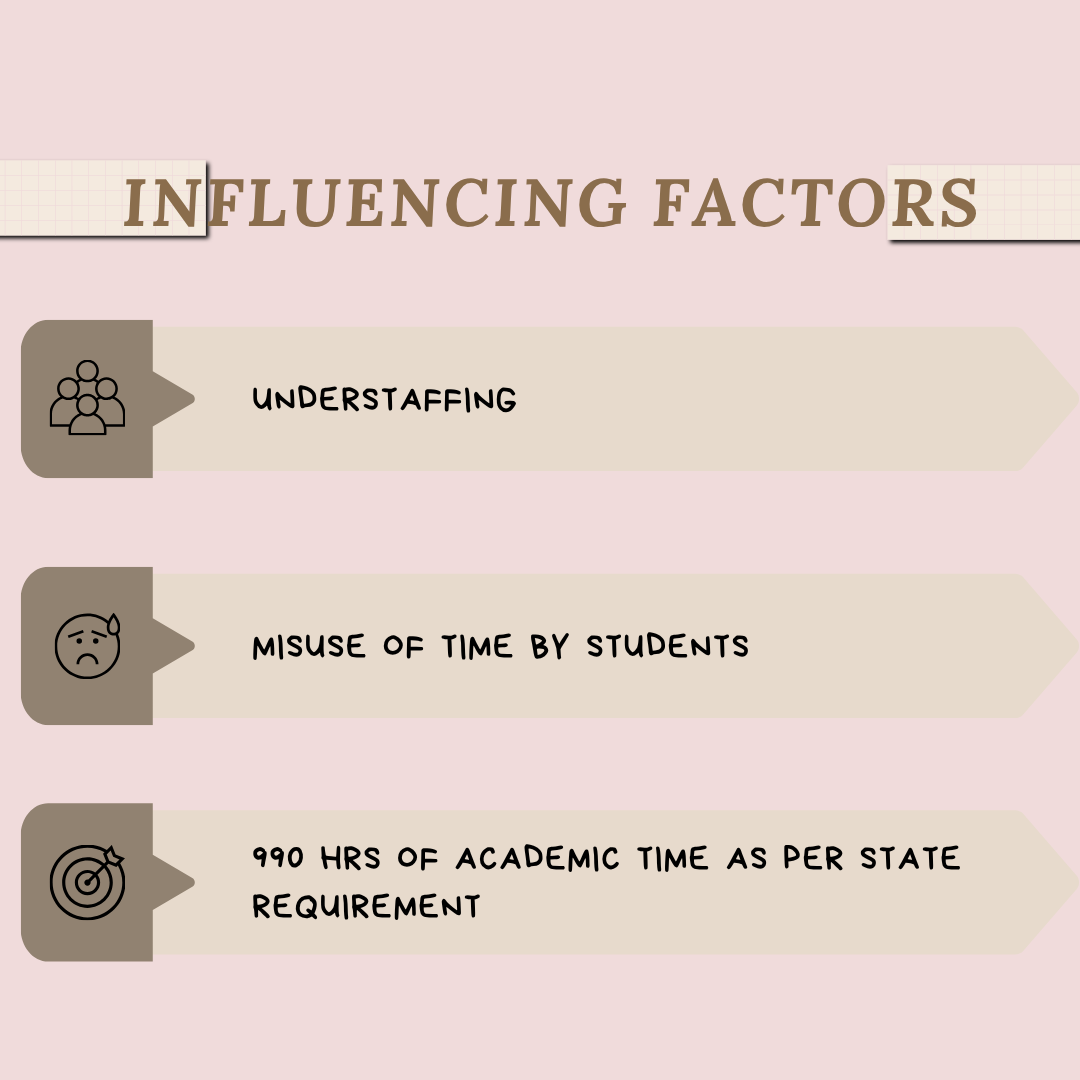
Superintendent Dr. Timothy Sippel expressed his worries about students “not receiving the education they deserved,” observing that some had two or three directed studies built into their schedule. That was essentially a loss of approximately 160-240 minutes of class time between a single two-day rotation. While one study is understandable, two or three take away from its value, reducing it to a free period, which is exactly what happened.
At the beginning of a semester, students would be inclined to attend their designated location and use the time effectively; however, as days passed, the novelty of the situation died, and precious academic time was wasted. Students did not deem the study as important as actual classes, giving them incentives to mindlessly scroll on their phones, chat with friends, or quite simply skip by feigning an excuse to go to the bathroom or nurse.
Sophomore Ruby Neicth Forbes remarked that “many times directed studies were fillers in students’ schedules who didn’t need them.”
Student attitudes toward the system further showed how directed studies had begun to harm more than benefit, pushing the need for a schoolwide change to prevent falling down a rabbit hole from which recovery would be strenuous.
Additionally, the teacher assigned to the study was there to proctor, not provide academic support, as a mix of students were dumped into one location, each with different needs. Those who decided to utilize the time could not ask for help unless the teacher taught the subject, further disadvantaging and frustrating students.
Sippel continued that one of the factors influencing the prevalence of directed studies at Malden High was the “lack of teachers in the Art and World Language departments,” causing many students who were “deeply interested in taking a class to be redirected.” Instead of having the exciting opportunity to learn a new skill, it was replaced with a directed study, stagnating student growth in areas of their chosen interest.
“When I first heard about the removal, I wondered how it would work with the amount of staffing we had,” noted Chemistry teacher Martin Berryman.
Sippel highlighted that this problem was his and the school committee’s “driving motivator” to ensure that students were able to enroll in the curricula they were ambitious about, without anything holding them back. This was supported by recruiting for new teachers “earlier in the spring” rather than the summer—which had been done for the previous years—allowing the applicant pool to be far larger than before. The change proved successful with the hiring of 16 new teachers, including four art teachers and four language teachers.
“I am all for not having directed studies for the reason being that students who want to excel in a class, but cannot due to its unavailability; however, for the ones who used the time valuably and need it, it’s unfortunate to no longer have them,” noted junior Reva Upadhayay.
Principal Chris Mastrangelo explained that the thoughts that went into this decision and the process behind it were a “long-term series of meetings, discussions, and analyses” before the administration could settle upon a tangible solution. Believe it or not, the planning for the next school year begins after winter break, and for the past few years, directed studies have been a glaring component of the annual agenda.
“Our hope when we went into this was to be able to make a dent. We had around 50 directed studies last year, and planned to get it to ten for the 2025-2026 school year; instead, we got it down to zero. We outshot our goal,” Mastrangelo shared.
The process consisted of school administrators conducting 60-65 meetings and working well over 100 hours combined, even in the summer, to see the different possibilities available to students at Malden High. They reached out to two outside agencies to run simulations and get predicted outcomes of what would occur from certain changes and inputs. This in itself took multiple cycles, especially while trying to maintain school and state standards. Despite all the challenges, the “hard work paid off with all the kids in classes,” believes Mastrangelo.
Moreover, a concern shared by both the superintendent and principal was the Massachusetts Department of Elementary and Secondary Education requirement stating that each student must receive 990 hours of structured learning. Due to the increased presence of directed studies and enrichment not counting as academic time—which is why it had switched to extension—the high school was just shy of meeting the mandatory hours.
Suddenly, removing studies became a part of a larger issue regarding our educational legislature. With the implementation of the new policies, MHS no longer falls under the requirement; in fact, it surpasses the 990 hours with approximately “1010-1020 hours,” concluded Mastrangelo.
Although directed studies have been removed, there are some alternatives for students who do not have a full set of classes or have chosen a separate course of action, such as “School-to-Career, Early College or Dual Enrollment with Bunker Hill Community College, work experience outside of school, and AP studies,” elaborated Sippel.
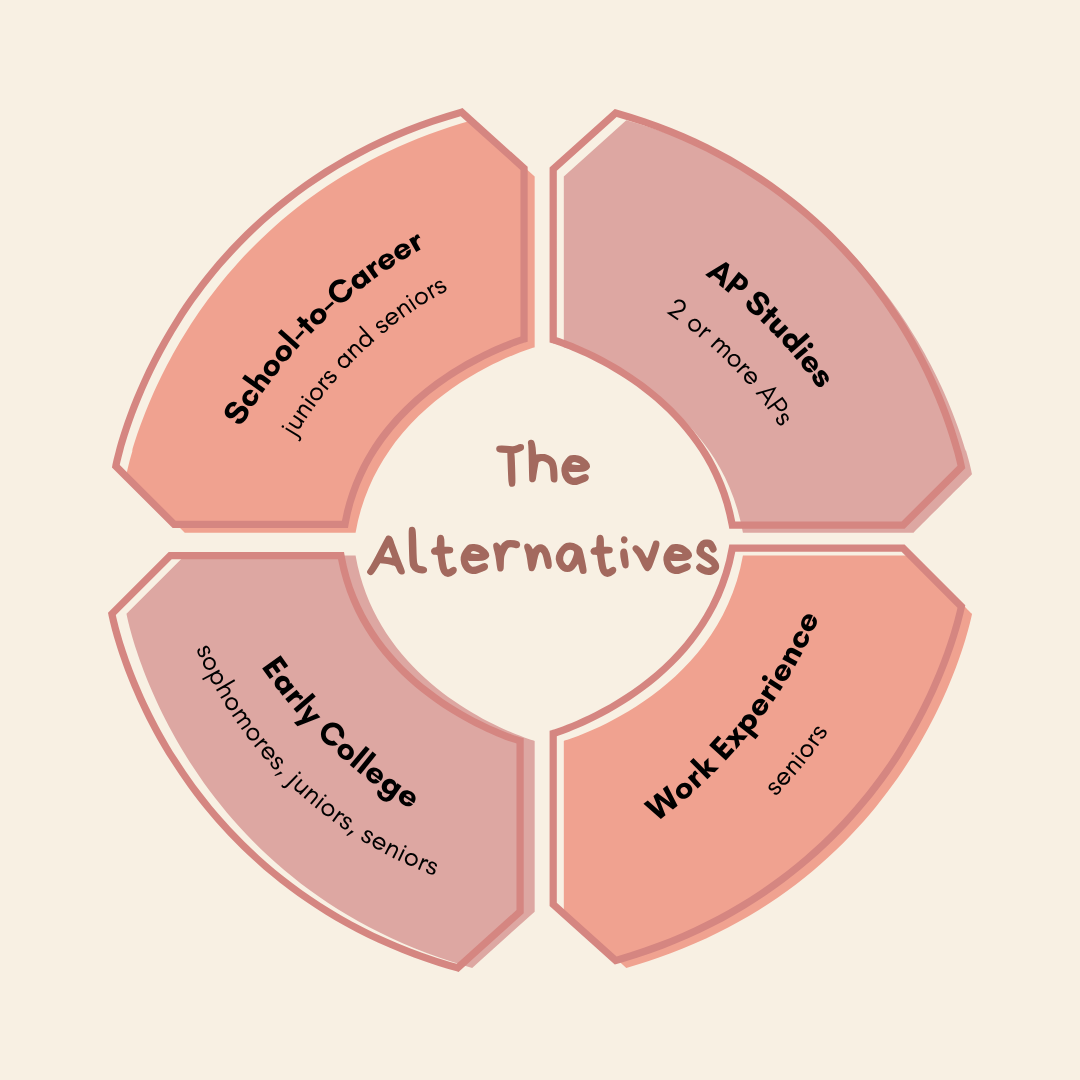
School-to-Career is scheduled as an elective on a student’s transcript, whereas Early College or Dual Enrollment takes the place of one of Malden High’s periods, allowing students to have one less class period due to enrollment in a college class after school or during the school day.
For work experience outside of school, students would have to show proof of an occupation and justify leaving early to work a shift in place of fourth or seventh period. The last choice available is only to those taking two or more APs. Students can sign up for an AP study, a time dedicated to completing assignments, and have that as one of their scheduled periods.
Senior Jessica Chen shared that as someone “taking 6 AP courses,” she “couldn’t be happier about the existence of AP studies,” allowing students like her to “push themselves academically without worrying about not having enough time to finish their work.” This differs vastly from the previous system, as exclusive students have access to it; therefore, only a handful of such classes are present.
Here is where a difference of opinion arises. Most teachers agree that the number of students in directed studies last year was overwhelming and should not have been that way; however, some argue whether its complete removal from the curriculum is effective, particularly in terms of independent work time, counseling, and addressing inequalities.
Freshman and junior counselor for Boyle House students, Taryn Gabbay, expressed how, in her role, she finds it “more challenging to pull students and respect class time” when students do not have free periods within their schedules. There are a lot of “demands for counselors to meet with certain students.”
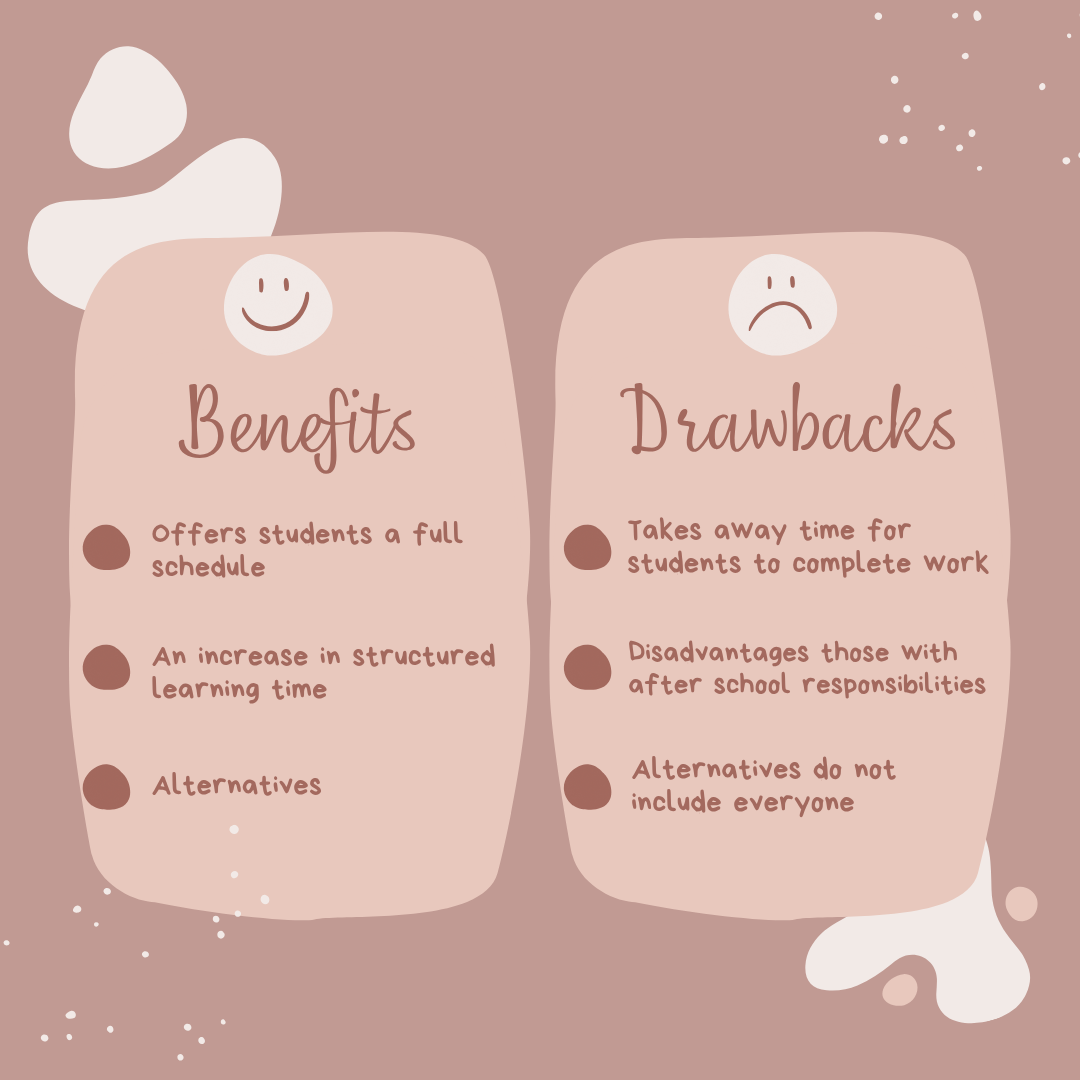
Directed studies used to be a time when students were able to get things done that they could not in a normal class, like meeting with their counselor or scheduling extra help sessions with a teacher. Now, that has become harder, specifically for those with after-school activities or responsibilities.
Gabbay mentioned that the types of students who benefited the most from the program were those who “participated in sports, had to look after their siblings, or had a job” because then they had built in time into their schedule at school to get assignments done, compared to doing it at 11 or 12 at night.
“When I had a study, I found it very helpful and found school to be less stressful. For me, it was because I had so many other things to do outside of school, and having a period of class to finish all the missing assignments helped me a lot, and I’m sure it helped many other students,” voiced sophomore Meybelin Guadron Nieto. She continued, “If I had a question or needed help, I was allowed to go ask my teachers, and I felt less drained and more motivated to stay on task.”
Some students genuinely do not have the time outside of school; therefore, having a period during school allows them a chance to be productive. “I felt so much more sane knowing that throughout the day I had a chance to sit down and get things done,” added Upadhayay.
Furthermore, some argue that only providing students enrolled in AP classes an opportunity for study undermines the workload of those in honors or college prep. Challenging course loads look different for each student, and designating an advantage to only a certain population of students is unfair to the rest. For example, one individual could be in all honors classes, but also be playing field hockey and have a job, compared to a student taking just two AP courses. In this situation, the all-honors student would have fewer opportunities to get work done outside of class, initially benefiting from a study too.
New Spanish hire, Allyson “Ally” Patrie, also happens to be a monitor for an AP study, and claimed that she “understands if kids that are not in AP are frustrated” for having been denied a study due to their course load not being “deemed rigorous enough.” She added that a CP or Honors “student’s course can be just as hard” for them as an “AP course is for an AP student.”
One of Gabbay’s concerns was that the other alternatives were only applicable to certain student populations. Only juniors and seniors can apply to School-to-Career and Early College—sophomores can apply to EC, but it’s rare—while work experience outside of school is exclusively available to seniors.
To counter this issue, Berryman proposes to have a “breadth of options for students” to participate in and to promote equal representation. This could be seen in the future as having more “language offerings” or “science academies dedicated to one-on-one tutoring and making up labs or tests,” he offered.
The removal of directed studies at Malden High marked a significant shift in how academic time is structured and valued. While the decision was driven by legitimate concerns—state requirements, staffing shortages, and misuse of the time—it sparked a broader conversation about equity, support, and flexibility in student schedules. The introduction of targeted alternatives reflects a commitment to rigor and opportunity, yet also highlights gaps for students outside those programs.
As the school moves forward, balancing structures with compassion will be the key—ensuring that every student, regardless of their academic track or personal responsibilities, has the time and resources they need to thrive.
About the Author