Vanessa Nguyen also contributed to this article.
It’s finally that time of year: spring, a season characterized by blooming flowers and the vernal equinox. It’s a time we all look forward to as it starts the countdown to summer break—but there’s just one catch.
As the second semester reaches its midpoint, exam season is approaching. Over the next two months, students across all levels, ranging from college prep (CP) to Advanced Placement (AP), will be taking exams. For freshmen and sophomores, MCAS testing will take place from March through June.
The Massachusetts Comprehensive Assessment System (MCAS) is a set of statewide standardized tests for students in grades 3 to 10. It is designed to evaluate student, school, and district performance compared to state learning standards. MCAS covers two main topics: English Language Arts (ELA) and Mathematics, with additional tests in science for grades 9 and 10, along with Civics for eighth grade.
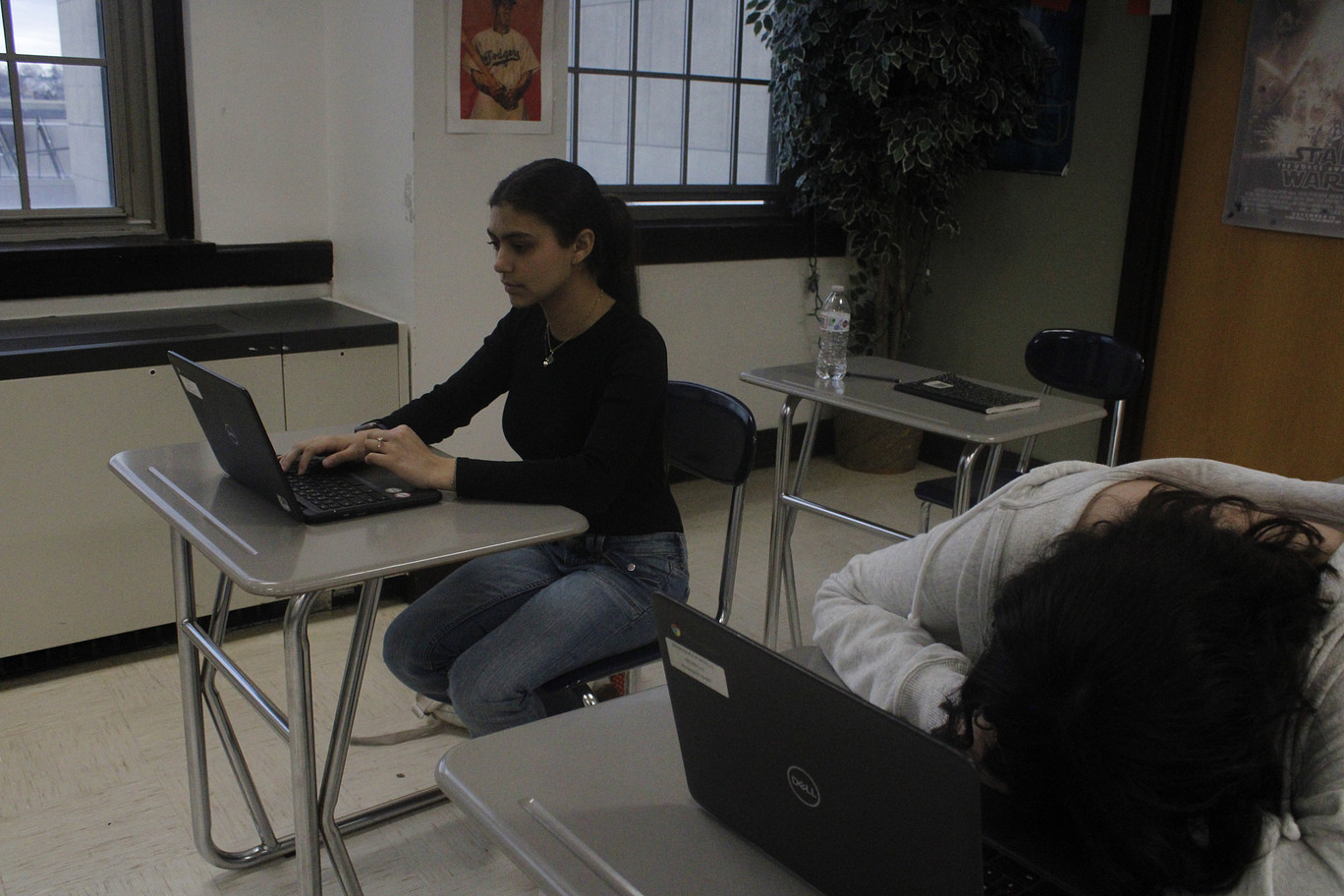
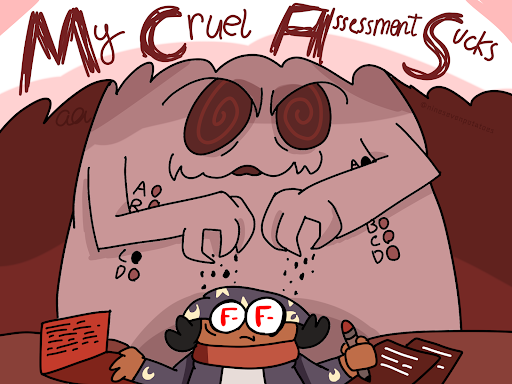
Standardized tests, such as the MCAS, are defined as “any test that’s administered, scored, or interpreted in a standard, predetermined manner.” These tests usually include multiple-choice and open-ended questions, either graded by automated scoring machines or by individuals. As standardized testing carries high-stake achievements, the importance of these assessments have provoked controversy.
“I don’t like [standardized testing],” voiced English teacher Anne Mooney. “But I also know that they are a reality,” she added.
Sophomore Lyra Heining believes that for many students, standardized testing “isn’t the best way to measure” their knowledge. “I think it causes a lot of unnecessary stress, ”Heining added.
Exam season in general has had a significant impact on students across the state, with many feeling overwhelmed by the pressure and expectations surrounding upcoming exams.
“When exam season comes around, I want to do the best I can. I really push myself and that causes me to overthink,” explained sophomore Taylor Alexander from Somerville High School.
Maintaining balance has also been a challenge for students. “It’s so difficult to balance social life and academic life while also preparing for these tests,” explained sophomore Sabrima Bhattari, noting that regular classwork continues alongside the MCAS, which contributes to the stress.

Until 2024, Massachusetts students were required to pass the MCAS in order to receive a high school diploma. However, with the approval of MA Question 2, this requirement was repealed. Students are now expected to complete coursework certified by their local school districts and achieve state academic standards for these tests.
As the MCAS is no longer a graduation requirement, it has sparked debate over whether it is still necessary for students to take.
Malden High School has a mix of opinions: some believe that the test remains important, emphasizing that it measures students’ progress and abilities, while others argue that it has become unnecessary and outdated.
“I think removing this requirement demotivates a lot of students from even trying because it’s not tied to their ability to graduate,” explained Bhattari. “]
Sophomore Gesselle Rodriguez Portillo believes that the MCAS is still necessary as students are “able to show” what they’ve “learned throughout the year” and the data can help to t“reflect on the school itself.”
“It is still necessary to emphasize trying your best on it for students,” expressed Mooney. “It impacts how the state views our school,”added Mooney.
According to Massachusetts Department of Elementary and Secondary Education (DESE), statewide testing helps the state identify whether students are meeting basic learning standards and where to focus their efforts. It remains an important way to measure where students, schools, and districts stand across Massachusetts.
“I would encourage staff not to just totally dismiss the [MCAS] because it’s problematic, because that in and of itself is also problematic and could hurt students,” concluded Mooney.
About the Author