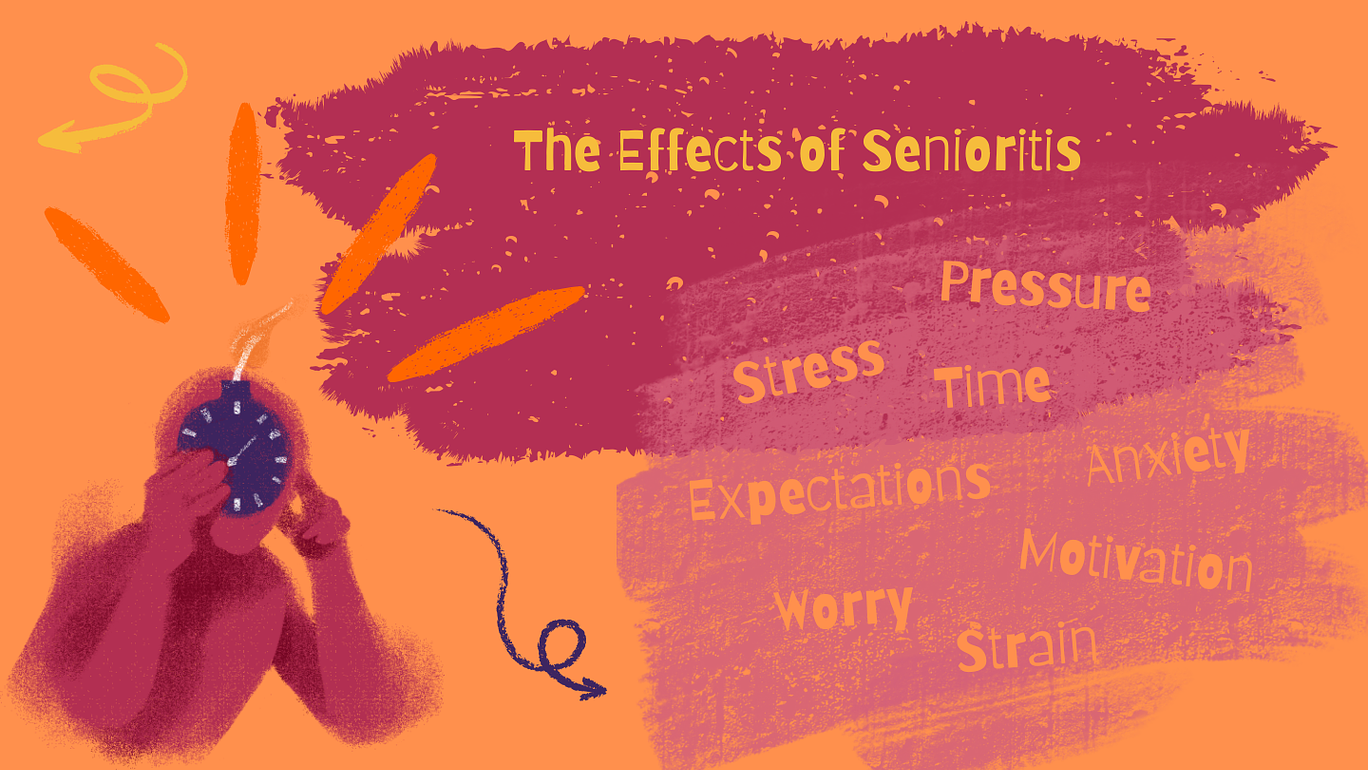
It’s the middle of your senior year, and you just got accepted into college. What now? You still have a semester left of homework, quizzes, tests, and classwork to complete, but what’s the point? You wonder to yourself, “Should I just stop trying?”
“Senioritis is exactly what it sounds like. When you catch a case of the cold, you feel groggy, tired, and unmotivated. Basically, the same thing as becoming a senior. You know that high school is almost over, so many people find it hard to be motivated to keep trying,” explained senior president Linh Do.
Meriam-Webster defines senioritis as “an ebbing (decrease) of motivation and effort by school seniors as evidenced by tardiness, absences, and lower grades.” According to the Oxford English Dictionary, the earliest known use of the term “senioritis” came from 1907 in the Chicago Alumni Magazine, where “senior” was combined with “-itis,” (a suffix meaning inflammation), to describe this drop in motivation as a disease.
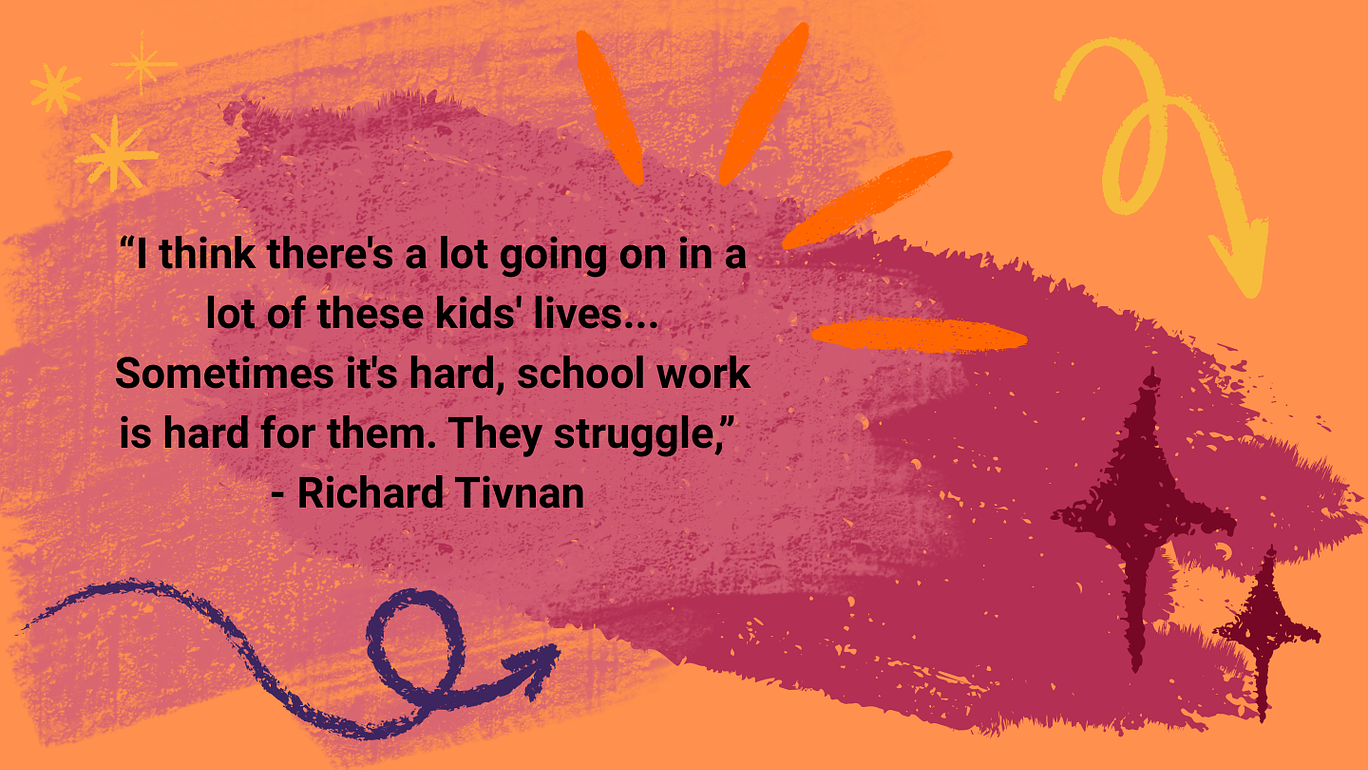
Although it might seem humorous or trivial, senioritis can come from many different unseen causes. “I think there’s a lot going on in a lot of these kids’ lives,” shared social studies teacher Richard Tivnan. “Sometimes it’s hard; school work is hard for them. They struggle,” he continued.
“I can remember, as a senior in high school myself, my physics teacher talking to all of us and saying senioritis is not an excuse. You know, ‘senioritis is not real. It’s just another word for lazy,’” commented science teacher Julie Grillon.
The term itself faces criticism as people misrepresent its intended meaning, or use it as an excuse to not get work done, when senioritis is more about how difficult it can be to uphold your motivation throughout all four years of high school. It is true you should never stop trying, but not enough people talk about how draining that can truly be.
Unfortunately, the effects of senioritis aren’t exclusive to seniors; underclassmen are also affected. “I’ve seen variations of ‘senioritis’ in underclassmen with losing momentum to do work, too,” said senior Sorin Mamouzette. “I think it’s a domino effect in a way; if you see multiple of your friends slowly stop doing their work, you’ll most likely fall into that slump without realizing it.”
Take your senior year as a time to reflect on your past performance; although it might be stressful, it’s imperative that you keep going. You’ve made it this far, and there are people counting on you to finish your education. Whenever you’re feeling down, unmotivated, or stressed, remind yourself that in a couple of months it will be you who’s walking down that graduation stage.
“It may not seem important, but it is important. The more you learn and the more you get used to having work and budgeting your time and learning,” Tivnan explained. “In the long run, it’s going to help you. The college is going to look at your transcripts at the end, you want to finish strong, the best you can,” he concluded.
About the Author