Photo by Ted Eytan. ShareAlike 4.0 International License http://creativecommons.org/licenses/by-sa/4.0/.
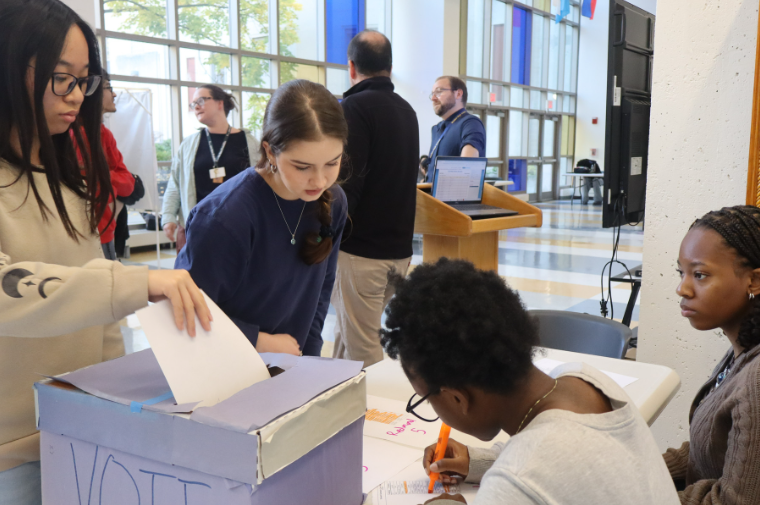
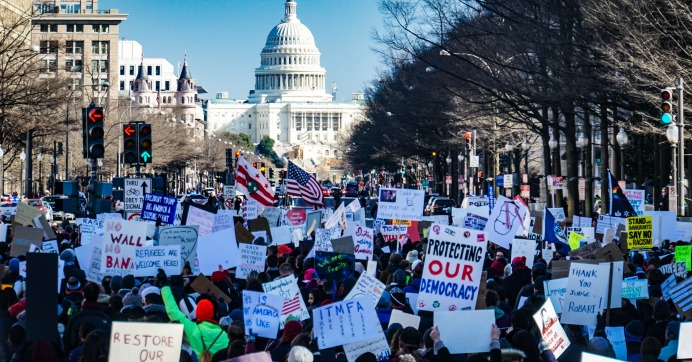
The November 3rd midterm elections marked a significant shift in American politics, as Democrats secured a historically significant majority in Congress. Election day served as a historic victory for the Democratic Party.
What began as a series of congressional races developed into a broader shift in political representation, with traditionally Republican and conservative states experiencing some of the election’s most notable results.
Democrats gained over 40 seats in the House of Representatives, bringing their estimated total to 259 seats, while Republicans are estimated to have 176. There are still races that haven’t been officially called yet. This will give Democrats their largest House majority since the early 1990s. In the Senate, as of November 10th, Democrats have won 55 seats, and the Republicans have won 44. Alaska has yet to be called, with the Mississippi Senate race being called in favor of Scott Colom on November 10th.
However, the election’s impact extended well beyond Washington. Democrats gained approximately 259 seats in state legislatures nationwide, flipping 12 legislative chambers from Republican to Democratic control.
Notable changes appeared in Arizona, Texas, Michigan, Pennsylvania, and Wisconsin, where Democrats gained control of legislative chambers previously held by the Republican Party. In Arizona, Democrats flipped both the state House and Senate, marking the first time in approximately 60 years that the Democratic Party secured full control of the state’s government. Wisconsin also experienced a major political shift, as Democrats gained control of both legislative chambers for the first time since 2010.
Another notable shift occurred in Georgia, where Democrats flipped the state’s House of Representatives for the first time since before 2004, and in Texas, where Democrats gained control of the state’s House for the first time since before 2002. In Pennsylvania, Democrats gained control of the state Senate for the first time since before 1994. North Carolina and New Hampshire’s legislative chambers also changed party control.
Democrats flipped Republican governorships in Georgia, Iowa, Nevada, Ohio and Texas. The Texas race was particularly notable, as Democrat Gina Hinojosa defeated Republican Greg Abbott, becoming the state’s first Latina governor and ending more than three decades of Republican control of the Texas governor’s office.
These victories brought the number of Democratic governors to 22 of the 36 gubernatorial races with Republicans having 12, with two races still awaiting final results.
The combination of legislative and gubernatorial victories also gave Democrats six new state government trifectas, meaning the Democratic party controlled the governorship and both chambers of the state legislature. Arizona, Michigan, Minnesota, Nevada, Pennsylvania, and Wisconsin all reached these trifectas following the election.
While the results represent a substantial change in party control, the long-term effects remain to be seen. Control of state governments influences decisions involving healthcare, voting, education, laws, and other policies that directly affect residents. The shift could also possibly affect future congressional district boundaries and election administration.
Beyond the changes in party control, the 2026 midterm elections also marked a significant moment for representation in American politics. Voters elected candidates who broke longstanding barriers in Congress and State leadership, producing eight historic firsts across the country.
In Georgia, Democrat Keisha Lance Bottoms became the first Black woman elected governor in U.S. history, alongside Texas electing Democrat Hinojosa as its first Latina governor. New Mexico also made history with the election of Deb Haaland, who became the first Native American woman elected governor of a U.S. state. These victories all represent major milestones in U.S. politics, bringing new backgrounds into the country.
Congress experienced historic changes as well; Michigan Democrat Abdul El-Sayed became the first Muslim, Minnesota’s Peggy Flanagan became the first Native American woman, and New Hampshire’s Chriss Pappas became the first openly gay man elected to the U.S. Senate, while Mississippi’s Scott Colom became the state’s first Black senator in 152 years.
These historic victories were not limited to Democrats, as Florida Republican Byron Donalds became the state’s first Black governor.
Together, these victories show that the 2026 midterms were about more than shifts in congressional majorities and state legislative control. They also marked changes in who holds positions of political leadership, with communities reaching representation in offices they had never previously occupied.
About the Author