Dylan Chen also contributed to this article
Ding Ding! By 7:45 A.M., the Malden High School hallways are wide awake; backpacks swooshing, friends chit-chatting, and the smell of freshly-made Dunkin’ fills the halls as students rush to first period. Some students appear ready to learn, while others seem like they’ve hit the snooze button quite a few times, already dreading the long day ahead.
For many students, the early start time is not only an inconvenience but also a key factor that sets the tone for the rest of the day. Some students feel that their mornings are rushed and that the things they can accomplish before school begins are limited.
“I can’t do a lot of things in the morning because there just isn’t enough time,” said senior Avani Chhetiri. “Sometimes I wish I could review for a test or quiz before school, but the bus schedule doesn’t allow it,” she continued.
Sophomore Lillyanna Keogh expressed her concern with arriving at school in an orderly fashion, having to “get used” to leaving her house earlier. “I don’t live very close to school, so oftentimes if I leave the house just a few minutes late, I end up tardy,” Keogh explained.
Beyond rushed mornings, exhaustion also follows students into classrooms and after-school activities. “Feeling exhausted makes it harder to keep up with homework and other responsibilities,” sophomore Harly Cadeau voiced.
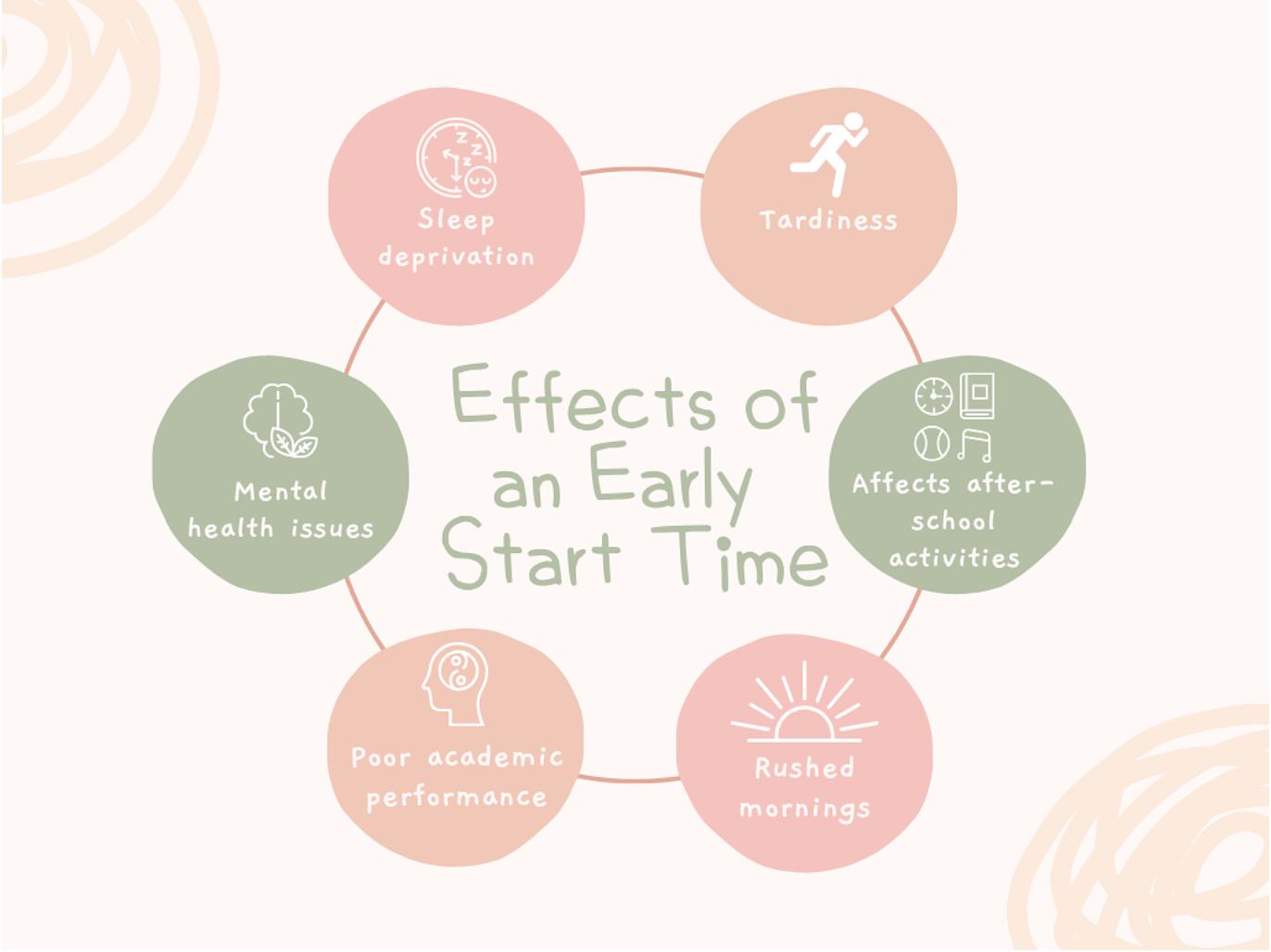
In senior Ethan Chen’s eyes, the early start time is another “reason why students may fall behind on assignments.” Chen points out that with some of his AP classes, he often stays up late completing assignments, “limiting” the sleep he gets.
“I believe that certain poor-scoring assessments and easily avoidable mistakes I have made resulted from such a lack of adequate sleep,” Chen expressed.
In recent years, the debate over school start times has received significant national attention. According to the Centers for Disease Control and Prevention (CDC), chronic sleep deprivation harms students, especially high schoolers, and can increase the risk of academic struggle and mental health issues, such as depression.
Research also shows that earlier start times don’t sync with the changing circadian rhythms that students experience. The circadian rhythm is the natural cycle of physical, mental, and behavioral changes that the body goes through in a 24-hour cycle. It influences important functions in the body, most notably: our sleep patterns. During puberty, teenagers begin to experience a natural shift in circadian rhythms, making it difficult for them to fall asleep before 11 P.M. As a result, an increase in homework and hormonal changes, sleep deprivation becomes common.
“Teenagers naturally don’t get tired until later in the evening,” stated English teacher Anne Mooney. “The data says high schools should start later and K-8 schools should start earlier, but personally, I kind of like an earlier start time,” Mooney added.
Additionally, chemistry teacher John Frigo believes that the current start time here at Malden High benefits students. “I think it should be even earlier,” Frigo declared, advocating for the removal of homeroom and that classes should start at exactly 7:45 A.M.
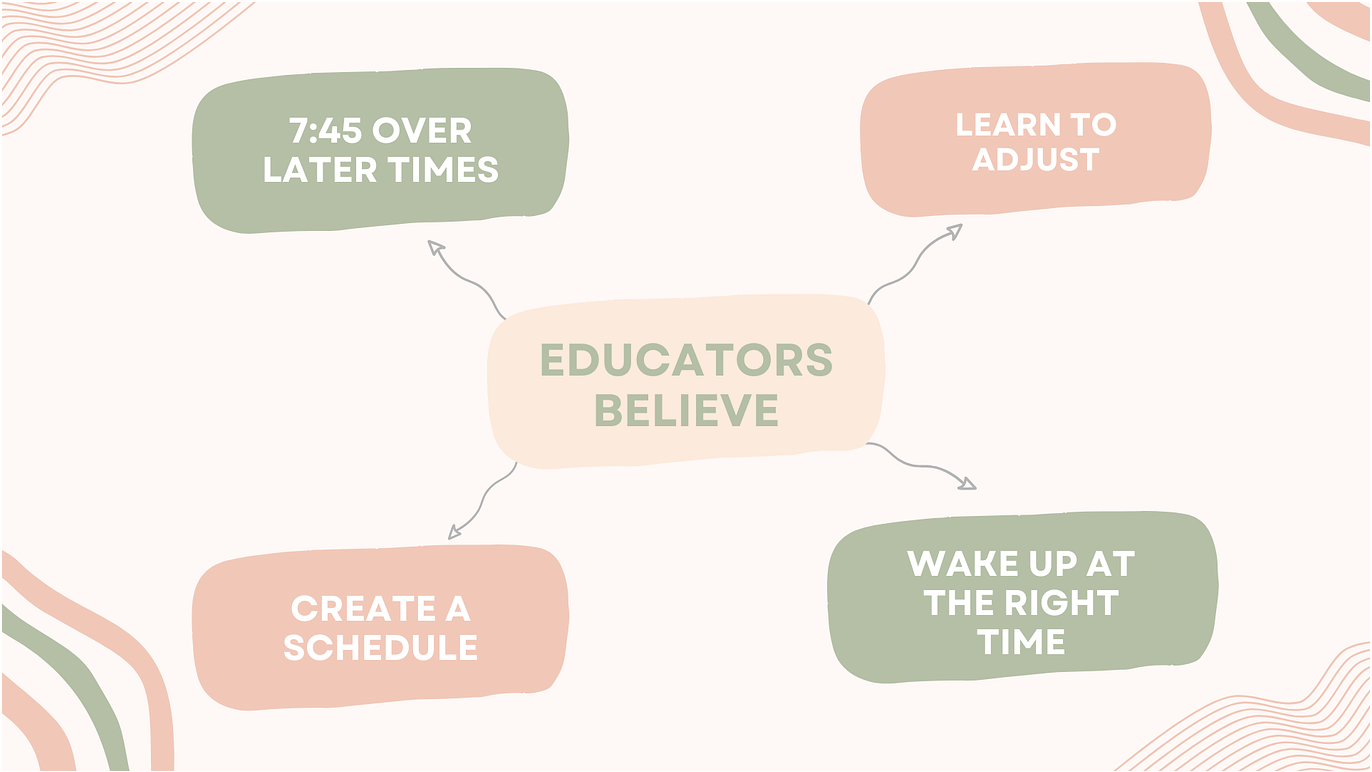
On the other hand, U.S. History teacher Courtney Braz empathizes with students’ opinions but also acknowledges the importance of balance. “I do think it’s a little bit too early to start at 7:45, but I definitely would not sacrifice coming in later to leave much later.”
Some might argue that students’ habits play a role in waking up late. Brunelli House Principal Jean Ewald Charles suggested that it’s not a matter of time, but rather “learning to adjust, knowing how to wake up at the right time, and creating a schedule,” which is recommended for students.
Clearly, the time school begins at Malden High has sparked a variety of perspectives, with students arguing over its negative effects and educators emphasizing its positives.
“I can see how it prepares students with time management and instructs them to follow a routine,” shared Keogh, adding on how “it gets pretty draining after a while.”
“If we wanted to get a [start] time based on students’ needs, there would have to be a lot that would change,” concluded Charles.
About the Author