History is a core class taken throughout schools worldwide, yet what many of us fail to realize is that we are witnessing history live every day as fires and protests are speeding their way across the globe. In a time of heightened political stress worldwide, many events seem to be brushed under the rug to prioritize political events relating to the United States. One of these major political world events is the corrupt government in Nepal.
As explained by Social Science teacher Richard Tivnan, “when governments are found to be corrupt by the people,” it is not uncommon that “action has often been taken.”
Although many of the protests taking place in Nepal have made their way to various social media platforms, such as TikTok, the misinformation being spread is adamant. According to the BBC, Nepal became a republic in 2008, after a decade-long civil war that resulted in 17,000 deaths; since then, “Nepal has had 14 governments, and no leader has completed a full five-year term.”
As showcased in various news outlets, many believe that the protests arose from a simple social media ban, yet this is far from the truth. Junior Reva Upadhayay, who has family residing where the protests are taking place, expressed her anger towards these outlets for promoting false information without true compassion for Nepal: “The protests were never about a social media ban; it was about the corruption happening in Nepal and the silencing of voices that led to a ban on social media.”
Social Science teacher James Hill described how difficult it is for various countries to get true coverage, especially in American news outlets. “Something that happens in Nepal is always going to be a struggle for attention, for American eyeballs. So, I think a country like Nepal is not a country that Americans are keyed into, and certainly Nepali politics is not something that anyone knows about.”
The root of corruption within the government includes politicians stealing hard-earned tax money from citizens and using it for themselves. Senior Sandesh Ghimire, a Nepal resident until 2015, dived deeper into the main root of the problem by explaining how “the politicians and leaders are not just accused of misusing money, but there is much evidence, and many ways they have been proven to have been misusing money.”
Many Nepalis have left the country due to the neglectful government, which “are and were never focused on solving people’s real problems like poverty all over the country, unemployment, or even education,” Ghimire continued.
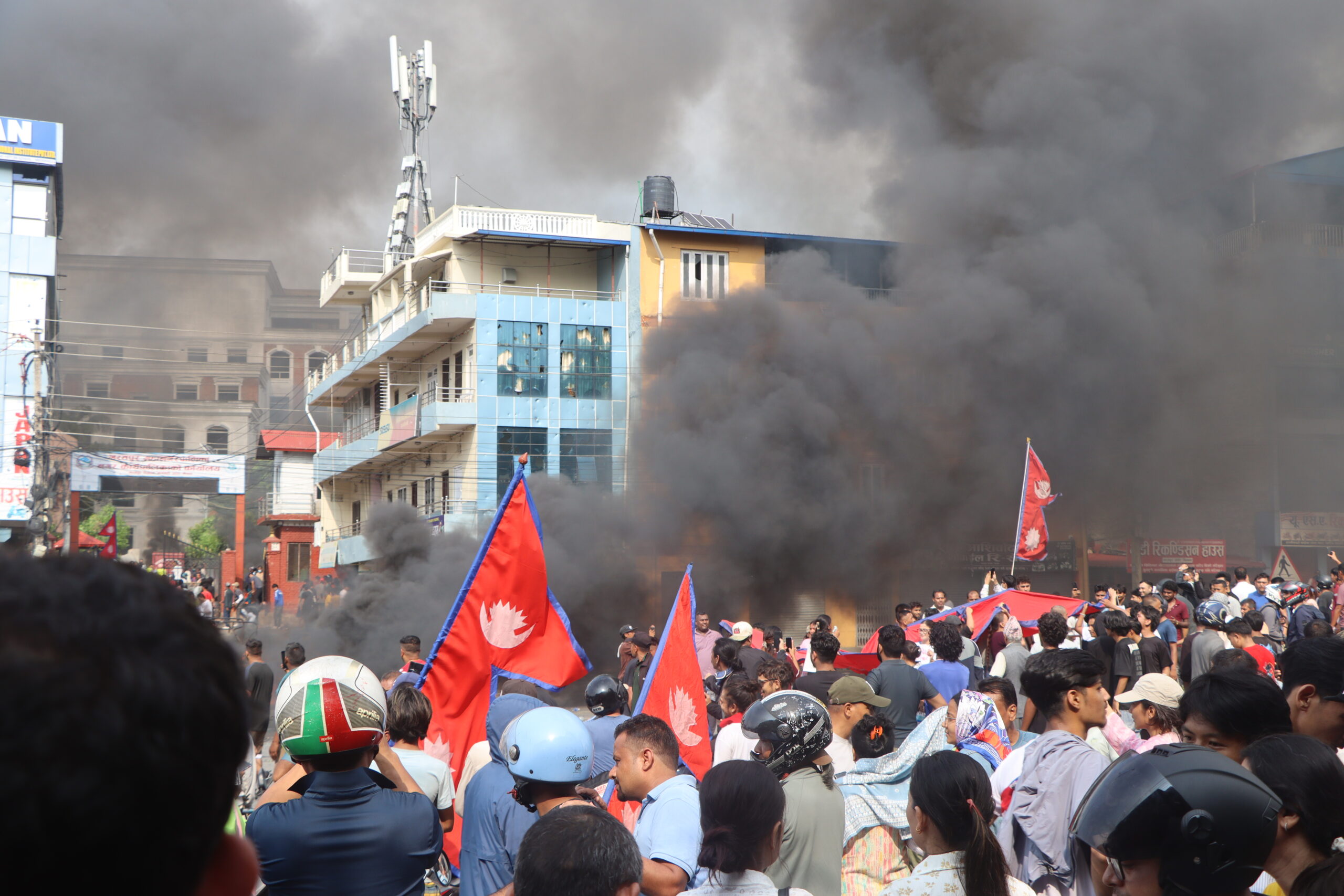
Additionally, many civilian voices have showcased just how drained Nepali citizens are of their government, as these protests involved the destruction and burning of many significant buildings, which has resulted in many politicians fleeing.
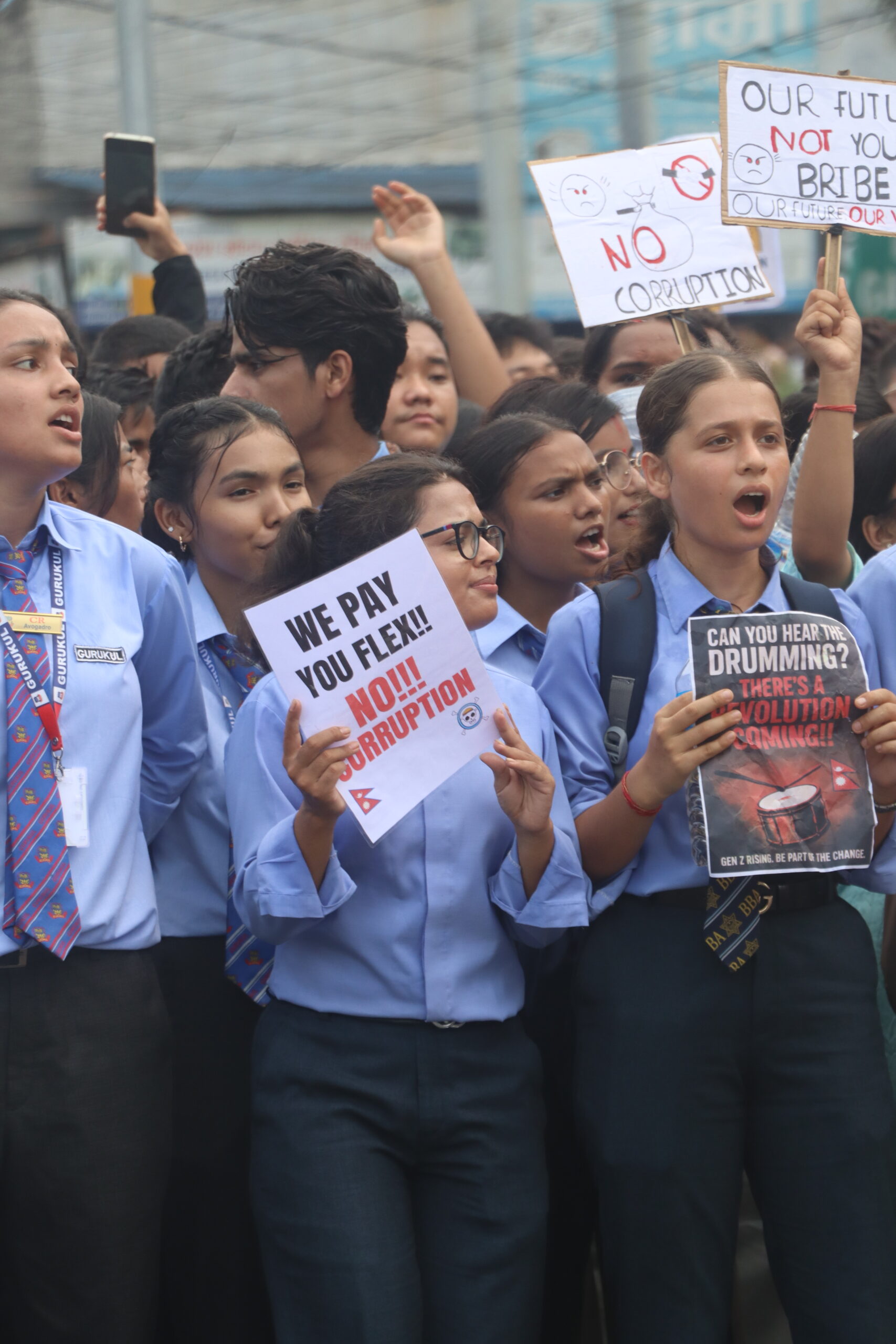
With Malden High School being the most diverse high school in Massachusetts, according to Niche.com, these worldwide events are affecting many students, such as the Nepali student population.
“In terms of the protests, I’ve heard about the situation since I was younger. It is a shame how it has gone on,” mentioned Upadhayay.
Ghimire emphasized that the corrupt government was the reason his family decided to move. “My father once came to America with the dream of giving his kids a better opportunity. Because his country and government failed him.”
As a result of the protests, former Supreme Court Chief Justice Sushila Karki was appointed as prime minister, the first female prime minister Nepal has had. The social media ban was also lifted on September 8, 2025.
This successful overthrow of the government demonstrates how vital citizens’ voices are to the government. “I am hopeful to see progress in Nepal,” concluded Upadhayay. This is just the start of the journey Nepal has to rebuild its beautiful country.
About the Author