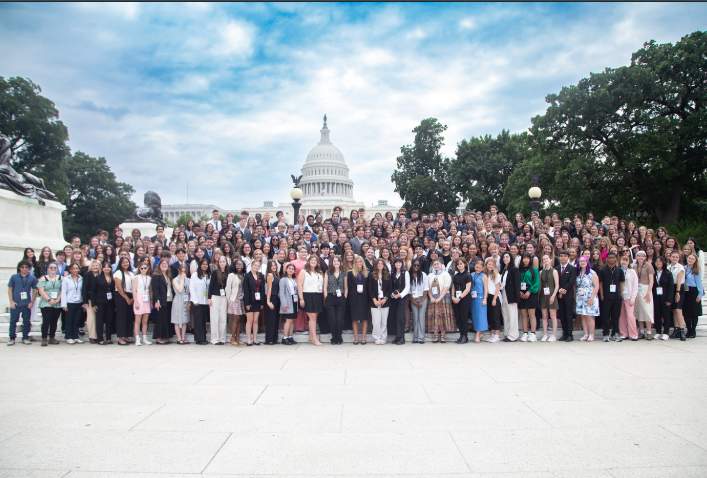
Can you imagine a world without factual news reporting? This hypothetical question illuminates a striking issue that many countries grapple with. As media outlets and news sources begin to lose funding, it is crucial to remember the purpose of reporting. Nonetheless, it is essential to bring up a generation that is willing to prioritize factual reporting. The Washington Journalism and Media Conference (WJMC) aimed to do just that.
Over this summer, George Mason University (GMU), located in Fairfax, Virginia, hosted its 15th annual WJMC. The conference admits a multitude of high-achieving rising juniors and seniors with an interest in journalism and media to become National Youth Correspondents.
There are two sessions of the conference that take place in July; each session is a week long and admits a different group of students. Correspondents commute from two dorm buildings, located on the GMU campus. These correspondents are put into small, rainbow-colored groups, led by faculty advisors who are high school yearbook and journalism teachers. Throughout the conference, correspondents have exclusive access to various field visits and sessions with journalists.
I had the opportunity to be a part of this experience during the second session, which took place from July 14th to July 19th. The first day acted as an introduction to the program for the correspondents. For the majority of the day, advisors were available to provide tours and aid correspondents in finding their dorm rooms. To end the day, color groups met together to play introductory games before heading to the George Mason conference room to hear Savannah Behman, a Senate Correspondent for National Journal, speak about her journalism experience while eating dinner.
Day 2: Journalism in Action
The next day, the schedule began to be set in stone. Each day began at 7:30 a.m. with a hearty breakfast and ended at 10:30 p.m. with participants being expected to be in their dorms before room checks. After breakfast, each color group separated to head to their assigned rooms within GMU. Color groups worked on the First Amendment Simulation, which included correspondents playing different roles such as a Journalism teacher, student sources, parents, and more. Acting in these roles, correspondents had to determine whether an article published was protected by the First Amendment, and what would happen if it was censored.
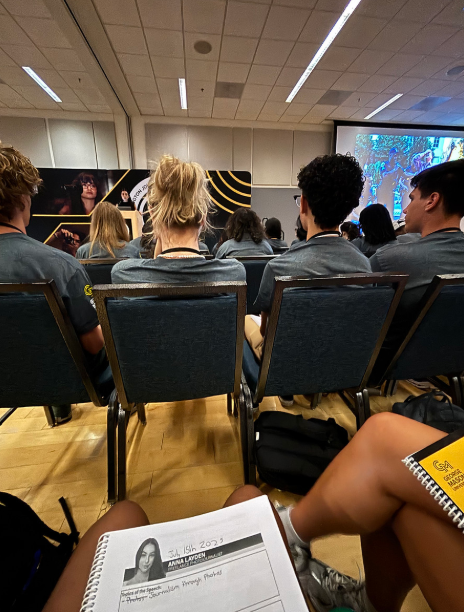
After the simulation, correspondents headed to listen to Tom Jackman, a reporter for The Washington Post, followed by Anna Layden, a Freelance Photojournalist who worked in the Biden administration and is now working in the Trump administration. First, Jackman showcased some of the stories he had published and shared his methods for producing successful stories. He then went around interviewing various participants about a hypothetical situation to demonstrate active reporting skills before he wrote an article including the interviews within ten minutes. To conclude his speech, he read his article out loud for correspondents to hear.
After a fifteen-minute break for correspondents to refresh their minds, Layden was introduced on stage. Layden began her speech by describing how her love of photography started, and having to deal with doubts as a journalist. She went on to show correspondents a multitude of her pictures before she opened up the floor for correspondents to ask her questions.
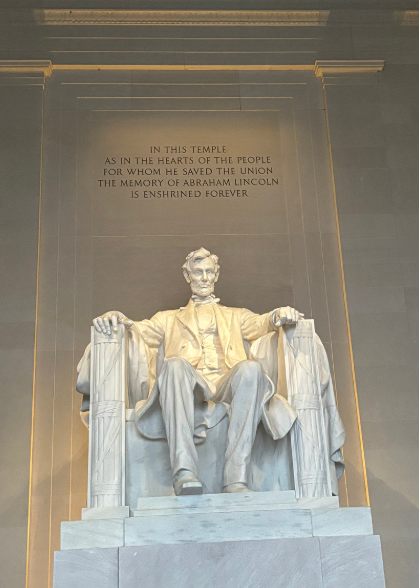
Once the guest speakers concluded their speeches, correspondents made their way to dinner before heading to the Washington Memorials. Advisors allowed correspondents to walk around the World War II Memorial freely before grouping up together and heading to the Abraham Lincoln Memorial Area. While there, correspondents could go see the Lincoln Memorial, the Korean War Veterans Memorial, the Vietnam Veterans Memorial, the Vietnam Women’s Memorial, and the Washington Monument.
Soon, correspondents boarded a bus to the Martin Luther King Jr. Memorial. After viewing the memorial for around 30 minutes, correspondents boarded back onto the bus and headed to their dorms.
Day 3: Journalism in the Capital
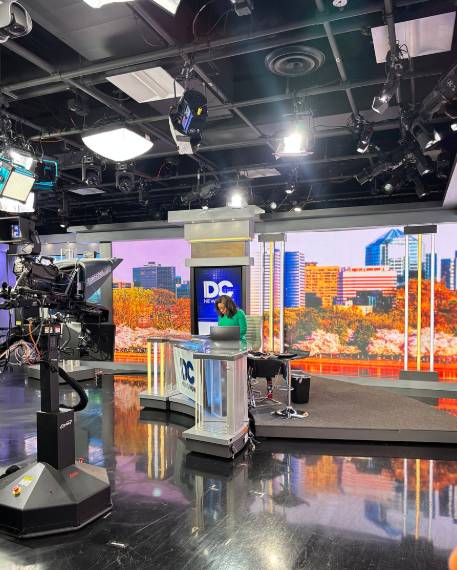
The third day, correspondents headed to their Field Assignment Visits, which they chose prior to the conference session. The field assignments included the DC United, The People’s House, DC News Now, the International Spy Museum, Monumental Sports Network, The Hill, the Pentagon, and the Library of Congress; I went to DC News Now for my field assignment. Correspondents on this field assignment had the opportunity to tour the DC News Now news station. On top of this, we were given the chance to watch how live news is made.
Once we made it back to the campus, Andrias White Murdaugh, an award-winning event producer and news anchor from This Morning on WTVR, dove into her experience as a journalist. Some key takeaways from her speech were to be confident and volunteer. She mentioned how volunteering, even for little roles, can lead to bigger opportunities.
After Murdaugh’s speech, correspondents had the chance to network with a multitude of journalists: Kayla Sharpe, the Digital Newsletter Team Leader at Bloomberg Industry Group, Nadgeena Jerome, a multimedia journalist, Rodger Smith, a radio/podcast journalist, and many more.
Day 4: Becoming a Journalist
On Day 4, correspondents took part in a Newsroom simulation. In this simulation, we were assigned a specific story and had to try to “sell” it to various hypothetical news stations. After this simulation, correspondents traveled to the National Press Club, which is the traditional meeting place in Washington for newsmakers and journalists.
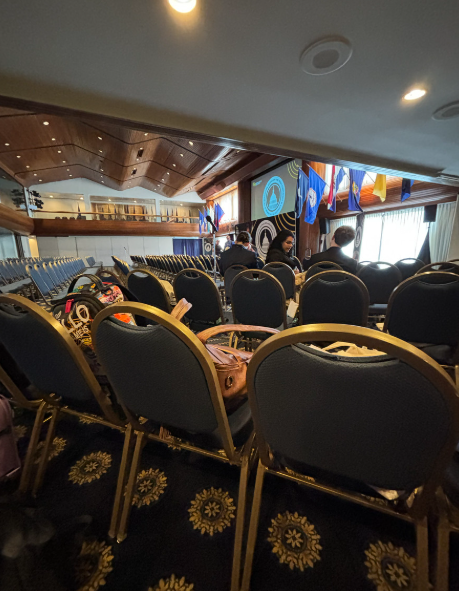
Once we made it to the National Press Club, we heard from two guest speakers: Carmella Boykin, a host and TikTok producer at The Washington Post, and Chris Cillizza, an independent news creator. Boykin highlighted the importance of enjoying what you do, while Cillizza demonstrated the need to make your own decisions.
Day 5: A Day in the Nation’s Capital
The last full day revolved around Capitol Hill. Correspondents were able to walk freely around the National Mall and visit various museums, such as the National Museum of African American History. Yet, correspondents who set up congressional meetings with their House Representative or Senator spent the majority of their time within Capitol Hill for their meeting.
To end the conference, correspondents enjoyed themselves at a gala where they ate, socialized, and danced.
Overall, the WJMC experience was amazing. Although programs such as these may not seem to be of any importance now, they play a critical role in shaping the community of the future.
About the Author