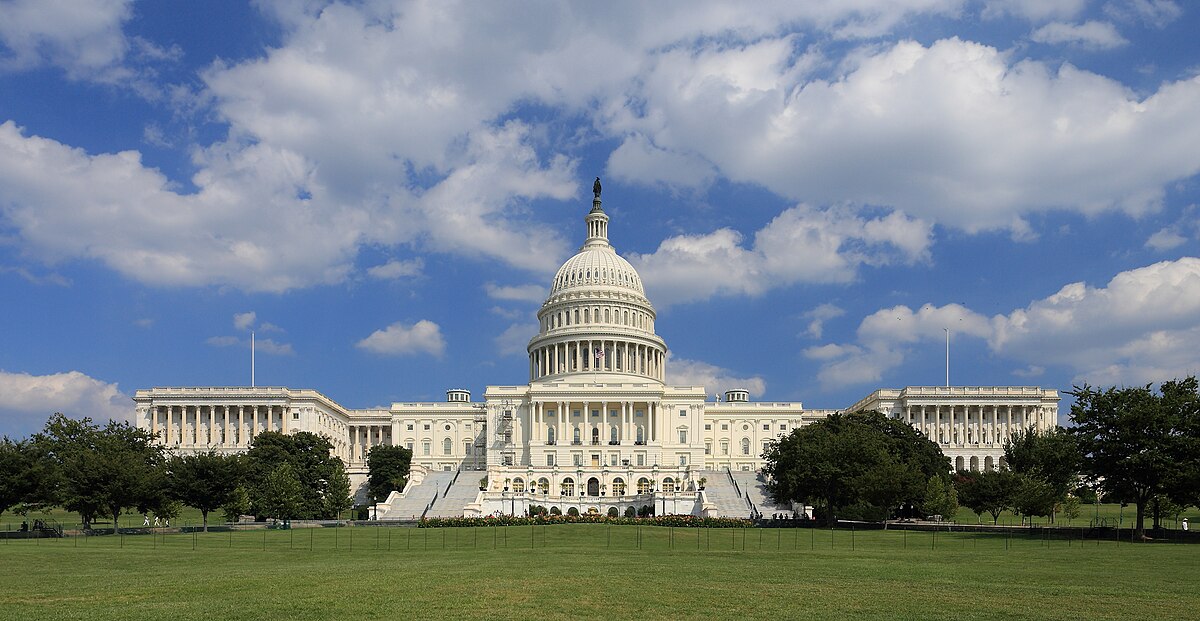
On July 4th, 1776, 13 delegates from the British North American colonies would gather and sign the Declaration of Independence that would, in the coming centuries, establish one of the world’s greatest superpowers: America. As the young country strived to anchor a foothold in a developing world and overcame several challenges, it institutionalized a unique democratic government based on a system of checks and balances.
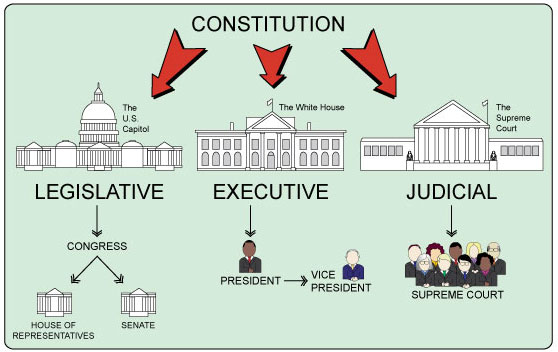
The American government is split into three branches: the executive, responsible for enforcing laws; the legislative, creating laws; and the judiciary, tasked with interpreting laws and constitutionality. The separation of powers was observed to ensure that no one branch would accumulate too much power and threaten the people’s freedom. From then until now, our country has filled the pages of history books with instances of pride and shame; loss and victory; peace and protests, but if there is one thing that has remained untouched, it is our government system.
“The system works pretty well; it has been working well for the past 250 years,” voiced Social Science teacher Richard Tivnan.
However, its stability does not equate to its perfection. Polarization¹ of the two-party system, public education’s role in democracy, and the rise of social media and the internet have seen drastic changes in how Americans view the republic in the past few decades and influence the future of our country.
Polarization of the Two-Party System
The evolution of a two-party system dates back to the 18th century, when Alexander Hamilton and Thomas Jefferson’s rivalry solidified an ideological difference between the Federalists and Democratic-Republicans. Politics in the Founding Fathers’ era would set precedents for American elections and shape the foundation for how candidates would campaign. The United States does not, in any way, restrict the formation of third parties, nor does it explicitly state how to govern elections; despite that, a third-party presidential candidate has never won.
Tivnan explained that “financial expenditures for running campaigns and popularity” play a significant role in grounding the two main parties, disabling other running candidates from winning enough votes from the electoral college². A well-funded campaign can hold rallies and conventions, familiarizing the public with their faces, whereas a third-party candidate does not have those opportunities. In the end, a majority of it comes down to psychology; the more you see a person aligned with your views on posters, news channels, social media, or television, the more likely you are to cast your vote for them.
There is absolutely no issue with our country supporting a two-party system; the problem arises when the parties no longer represent the majority and instead gravitate towards two extreme ends, polarizing politics and creating hyperpartisanship³ among its citizens. Extremism of any kind is toxic to democratic health, promoting an “us-vs-them” complex, often fueling political violence.
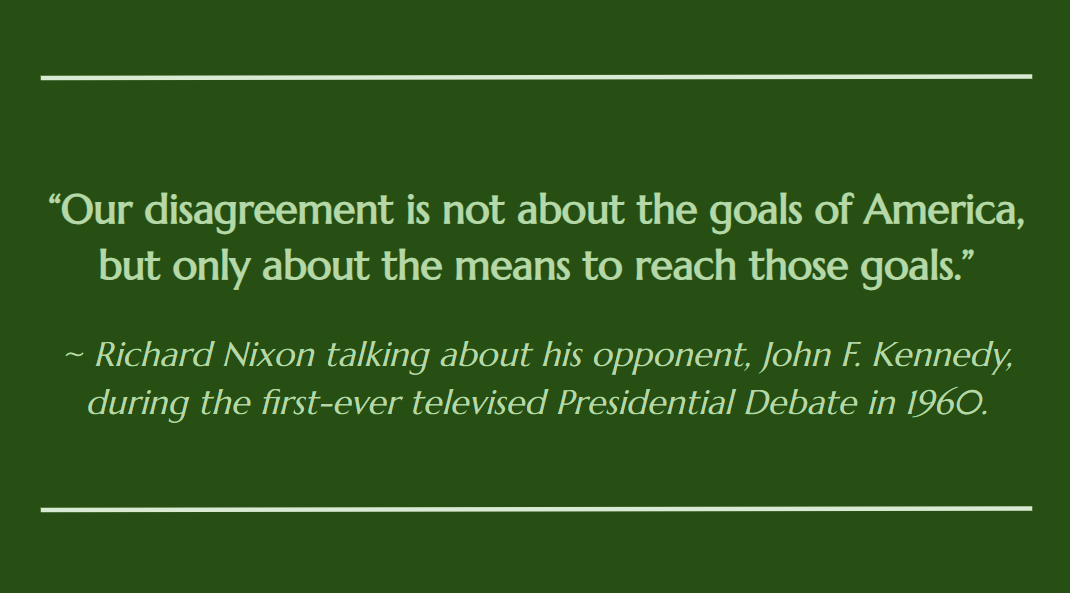
In the past few decades, presidential candidates have shifted from having the same national goal, just with a different path to reach it, to having completely separate agendas catered to the left or right wing, resulting in a centrist majority. Most of the time, people do not support two extreme ends, leading them to wander in the middle, not knowing which choice to make for the future of their country. These people are called centrists and often identify themselves as independent from the two parties.
“When politicians were not televised all the time, there was more inclination to compromise and get deals done; now, they’re less inclined to stray from their party, or stray from what their base wants to hear,” added Tivnan.
In her article, Maya Eaglin, a New York correspondent for NBC News, implies that the United States’ two-party system is flawed by interviewing several individuals of the “new generation” and presenting their arguments for identifying as “independent” and “politically homeless.” Eaglin amplifies interviewee voices, describing personal disappointment with both parties at their failure to reflect similar “values and beliefs” with the youth majority—Gen Zers and Millennials—leaving them disadvantaged.
“It feels like we only have two choices,” vocalized English teacher Anne Mooney.
Not only does polarization leave many voters unrepresented with the winner-take-all system, but it also allows politicians to blame the opposition for national problems, increasing public tensions, and perpetuating violence. Suddenly, perpetrators believe that punishing the other side is the appropriate response, when in reality, those in charge have the power to bring progressive change. We continue to point fingers and pass the blame, forgetting to address the issue at hand, and instead create rifts that undermine unity. This phenomenon is known as the “us-vs-them” complex, where psychological and sociological factors rooted in group dynamics reflect how voters naturally categorize others and themselves, often leading to favoritism toward one’s own group and suspicion or hostility toward others.
The real question is whether the two-party system in the United States is anti-democratic, when, according to a 2025 poll conducted by NBC News, 38% of constituents said, “neither political party fights for people like them.”
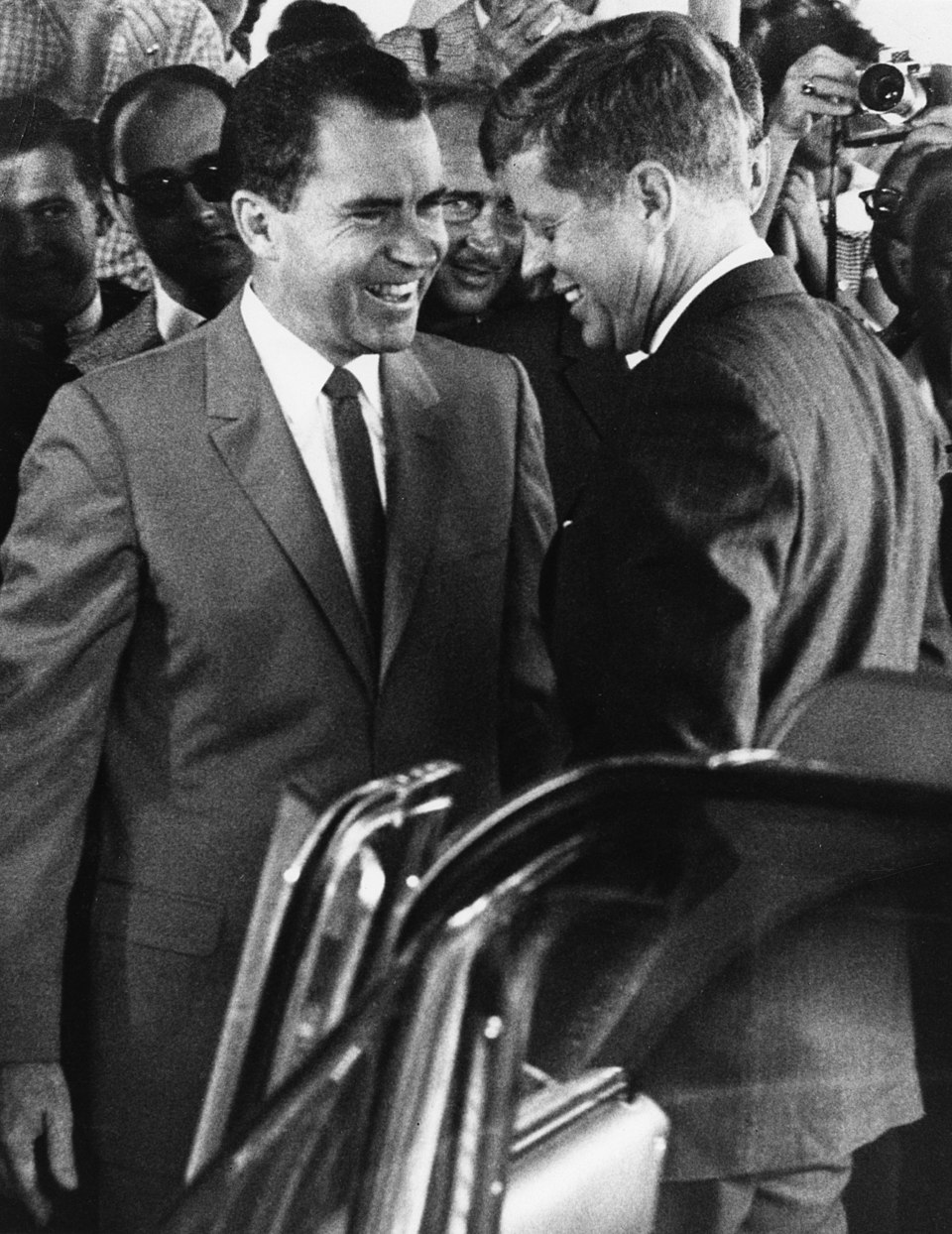
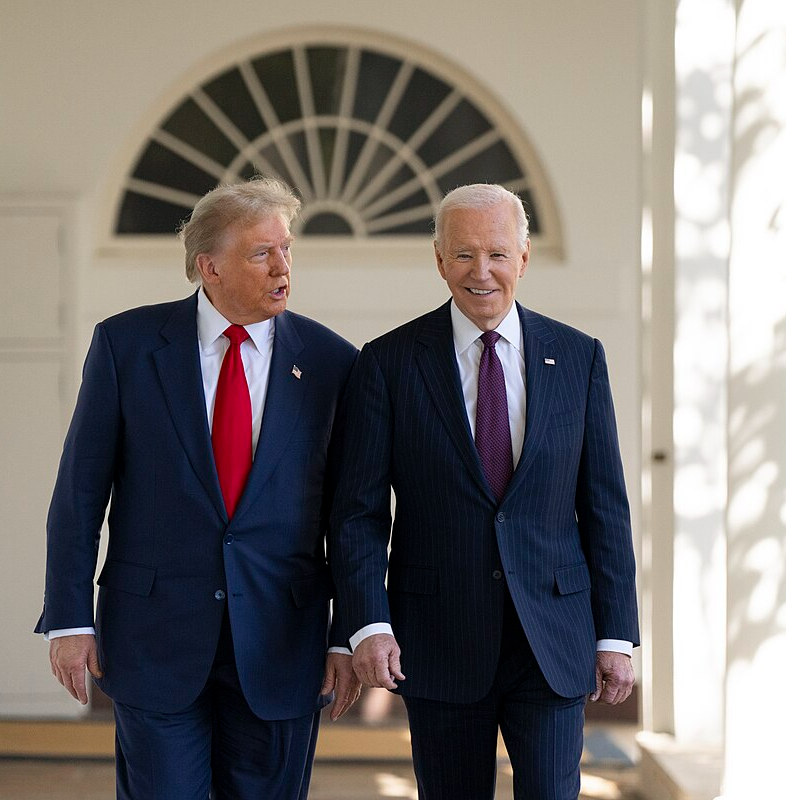
at the Key Biscayne Hotel, where the Nixon family was vacationing. They discussed the presidential election and the upcoming administration transition on November 14, 1960. Richard Nixon Presidential Library
Public Education
The modern understanding of public education can be attributed to the nation’s first Secretary of Education, Horace Mann, who “championed education” as a cornerstone of democracy in a time when only wealthy elites could bestow their children with proper knowledge. He preached that education should be available to all, advocating for diverse school environments and state-paid institutions, which would become largely accessible by the 20th century.
Building on Mann’s ideology, reformers such as John Dewey argued that education should not solely teach facts but also include critical thinking and reflection, which are crucial for democratic engagement. Milestones like Brown v Board of Education in 1954 further reinforced the notion that education is a civil right, not a privilege.
Democratic ideologies thrive under an educated populace, emphasizing the need for voters to receive a proper understanding of our country’s government system. Schooling has the opportunity to embed democratic principles and civic knowledge in future voters, preventing the cascade of America into the hands of a demagogic⁴ leader. Illiteracy gives an advantage to manipulative candidates, twisting their narrative to portray the nation’s interest at heart, while privately benefiting from naivety.
“It shouldn’t be just the history teachers who are aware; everyone should be. Basic concepts of how the government works, what the government does, and what it can or cannot do should be known by all,” observed World History and Psychology teacher Ann Pember.
Post-COVID impacts have proven to be detrimental to literacy rates, leading to increased drop rates, poor reading levels, and little to no civic knowledge in the young generation. While the global shutdown only lasted for two years, its aftershocks can still be felt by teachers and recorded in data. US History teacher Ashley Garlick noticed, “more apathy when it comes to being involved in school, whether it be grades or extracurriculars,” illuminating some of these aftershocks.
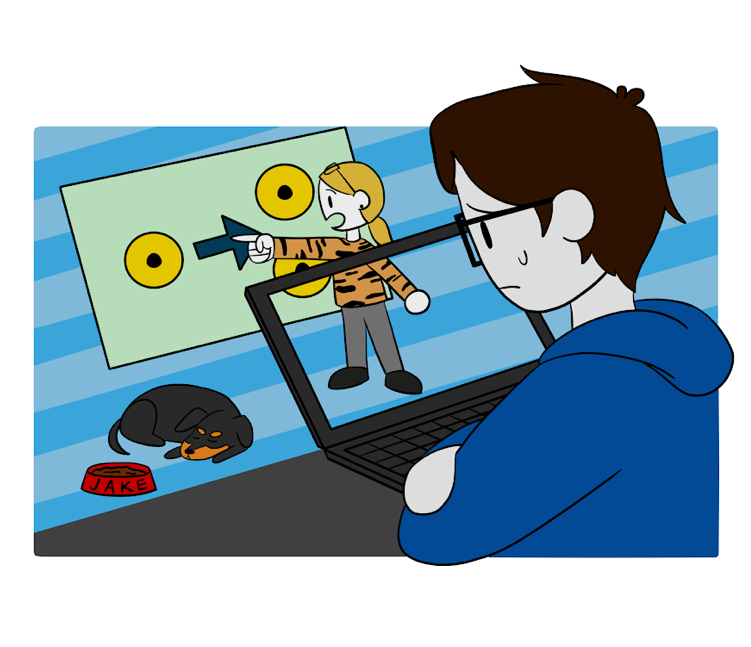
The glaring issue with our education system is that it caters to test-taking, and not real-life application or cognizance. Usually, educators worry about preparing students to take a standardized exam, not caring if we reflect or hold on to the taught materials. Not only does this demotivate pupils, but it creates a cycle where education loses its true meaning, succumbing only to its competitive aspect.
The Commonwealth Beacon reported in 2023 that only “29% of third graders” in Boston could read at grade level, while a 2024 study from the U.S. Chamber of Commerce Foundation found that more than “70% of all Americans” across all age groups fail a basic civic literacy quiz. Not only do these highlight the dire situation the republic is in, but the drastic effects these statistics could have on future elections and the state of our country.
The decimation of civic awareness is directly linked to increasing polarization, where citizens are more susceptible to participating in ideological bubbles than in sophisticated debates. Without a tangible comprehension of constitutional principles, the electorate becomes at risk of misinformation and authoritarian rhetoric.
“If we start with making children politically aware of the state of our nation, we can use that as a jumping-off point for students to have enriched politically driven conversations—if they so choose—and be able to voice their own opinions,” expressed sophomore Minerva Davenport.
Social Media
As of now, the post-COVID youth generation is dealing with record-low literacy rates, clinging to social media for information, and not knowing its credibility. The rapid spread of social media in the past decade, along with other factors, has stagnated student growth, promoting ignorance and low voter intelligence. This renders our generation susceptible to influences hoping to absolve the democratic cornerstone of our nation.
Students who were in third or fourth grade during remote learning were at an age where children develop familiarity with a school schedule and ground their foundation in that structure. However, COVID prevented that skillset from ever occurring, causing low student engagement and attention span. Instead, what the pandemic reinforced was the presence of technology in student lives, destroying the bridge for traditional education before it was even constructed.
Social media is arguably one of the most controversial aspects in modern day, especially with its ability to spread information within seconds. On one hand, ideas from one corner of the world can be shared with the click of a button to another, increasing global communication and awareness. On the other hand, whether it be a fact or fiction, a post can swarm screens just the same, creating an environment of uncertainty and misinformation.
Social media does not run “fact checks, nor does it stop the spread of false content”, leaving it up to the individual to determine whether the source is trustworthy, stated senior Leica Naceus. It is ridiculous to assume that a person will research every single post, reel, or fact, enabling the cycle to continue. This allows opportunities for supporters of the opposing parties to feed propaganda to other supporters, expanding the flow of rumors, festering polarization, and dwindling media literacy.
Mooney declared, “There needs to be consequences for inciting violence to harm other people. You’re free to say it, but you also have to understand that you now have to reap the consequences.”
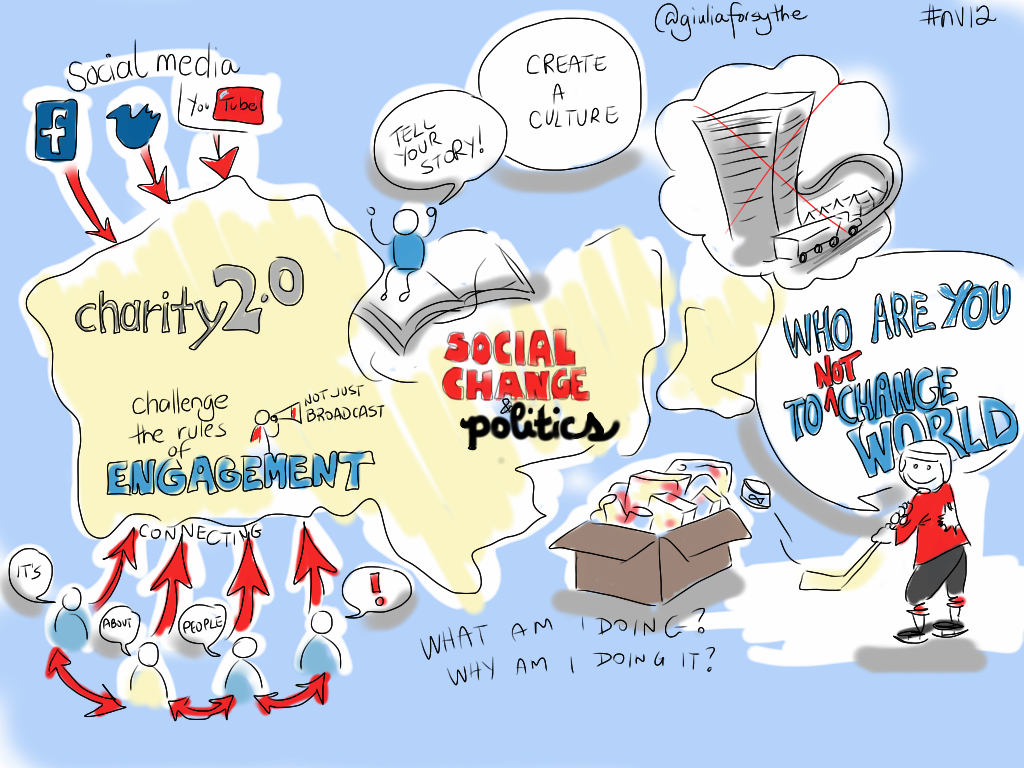
One of the major issues that accompanies social media apps is the algorithm and its process of entrapping users in ideological echo chambers⁵. You may have noticed that when you watch, like, or comment on specific content, that topic tends to repeat itself on your feed, regardless of how insignificant or implausible it is. The app observes its users’ preferences and sorts accordingly, forming unique algorithms for individuals.
“Your feed tells you what you want to hear; it purposely shows things to aggravate you, depending on your political leaning,” Tivnan elaborated.
In terms of democracy, the algorithm presents information skewed towards the user’s political party, preventing knowledge from the other side from being transmitted, or only representing extreme viewpoints. Ultimately, this results in users becoming trapped in an algorithm of their choosing, showing “only one side of the story,” voiced junior Jazlyne Ruggiero.
The Pros and Cons of Our Options
Democracy is a multifaceted, work-in-progress concept that can have various modifications with pros and cons; two of these modifiers can be: multipartyism and civics as a mandatory high school course.
Multipartyism
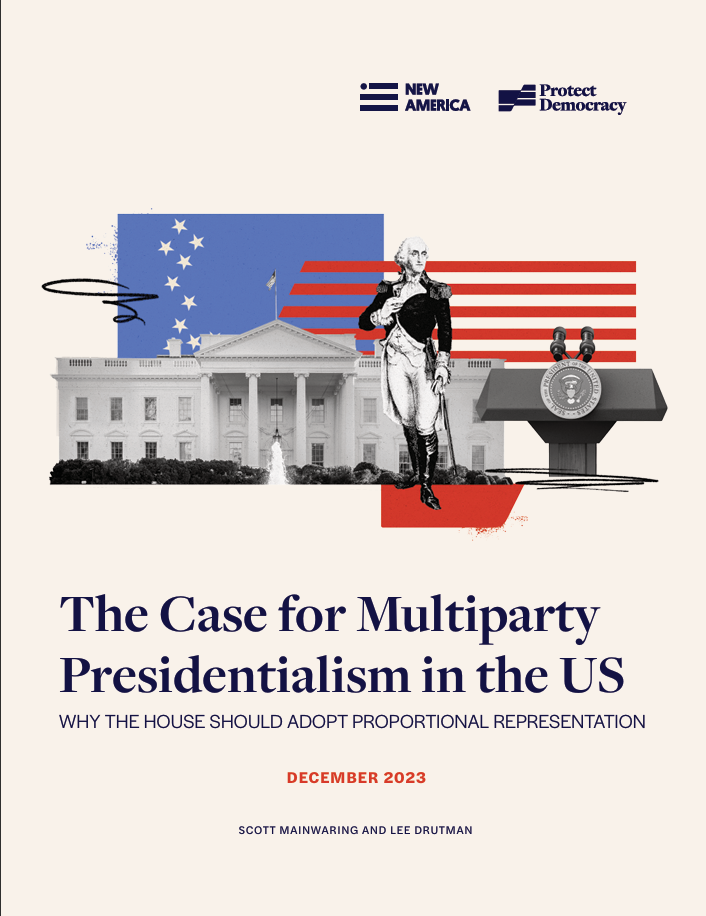
Multipartyism, just as it sounds, is a government composed of more than two parties, opening doors for the underrepresented. Scott Mainwaring, a political science professor at Notre Dame, and Lee Drutman, a Senior Fellow in the Political Reform program, argue that multipartyism and proportional representation in the United States House of Representatives and Presidency would “attenuate” current polarization, hyperpartisanship, and gerrymandering⁶ by forming a majority-driven moderate “political center” to strengthen democratic governance. Mainwaring and Drutman support their argument by comparing and contrasting the past and present U.S. party system, alongside using facts and statistics to highlight how an “overlapping” and “nonideological” two-party system provides ground for coalition; while extremist principles create division, endorsing political violence.
Sophomore Wafia Saruwar shared, “I’ve met so many people who agree with conservative views but still lean heavily to the left, some because of religious views, some because of political beliefs, and some just because of their moral compass. America is a big country, and just having two political parties with such differing policies does not and will not be able to represent this country and its people as a whole.”
In theory, the concept crystallizes itself as the best way to structure elections in a democracy; however, upon closer examination, multipartyism has its flaws. In a two-party system, if voters are disappointed with how the party in authority governs, “they can vote it out in the next election.” In contrast, proportional representation hinders voters’ rights, as even if the party loses its governing power, it can form alliances with the winning party to maintain its foothold in the government. The two-party system provides voters with a direct say in who they want in politics, while multipartyism provides a doorway to the tyranny of the minority⁷.
“A lot of Americans choose comfort over what is in our best interest, and we have to be willing to give up comfort, which is easier said than done,” concluded Mooney.
Civics as a Mandatory High School Course
In Malden’s curriculum, students are taught civics—the study of rights and duties of citizenship—for the first and last time in eighth grade. Although education leaves an impact at each grade level, most of the information taught in middle school is not retained by students’ brains. The course would be far more effective if it were retaught, in depth, during the senior year of high school, when students are either about to be or are eligible to vote. As a resident of this country, it is crucial to be aware of one’s democratic privileges to recognize injustice, make informed decisions, and exercise constitutional rights.
“Having a required civic curriculum or having more informed standards for history is only going to help students accelerate their writing, reading, and understanding of the Constitution, which elevates US citizenry,” highlighted US History teacher Patrick Finnegan.
High schools should not only mandate civics as a class, but also ensure that this class is dissected by each and every student, until they know the country’s governmental principles by heart. For efficient results and focus on real-life application, the class should not have traditional tests to assess student progress; instead, it should focus on getting students to exhibit the material they’ve learned in practical ways, such as administering the process of proposing a bill.
Sophomore Tenzin Tseten believes, “Any form of history or government course should be a graduation requirement, because it teaches students the rights and liberties they possess and how to utilize them to their full capacity. Allowing students to graduate high school without proper knowledge of their government system would harm and stunt the growth of democracy in America.”
However, “Schools Are Often Blamed for Our Foundering Democracy. It’s Not That Simple” (2024) argues that educating students on “civics” and “political systems” of the United States government is not enough to “sustain” democracy when youths feel disconnected from society. The article presents youth surveys highlighting political detachment as a result of democracy failing to address urgent issues, such as gun violence, racism, climate change, and explaining the developing “cynicism” among the age group. It pushes to advocate for a major education reform by recognizing the flaws in our current system and pushing the implementation of three urgent steps: making civic education a school-wide responsibility, shifting from debate to storytelling and collaboration, and challenging harmful policies that undermine inclusivity and mutual respect.
Teaching civics may not be a succinct answer anymore; instead, educators may need to focus on incorporating democratic awareness via all the available lenses at school. Science can explore the importance of freedom of research, while English discusses past mistakes through literature.
Junior Ninitha Balamurali proposed, “Schools may best develop a democratic environment by promoting open debates where different points of view are valued, teaching students how to listen and argue, and getting them involved in group projects where they have to make decisions together.”
“To instill democratic values, I believe schools must have programs such as mock trials, model UN, and mock elections, as they teach students how to voice their opinions and encourage individuality so that individuals can express themselves fully,” added Tseten.
When a ship is about to sink, those aboard fight tooth and nail to keep the vessel afloat until shore is spotted. Similarly, our education system must fight to keep democracy alive before the next generation succumbs to the waves, leaving us to confront the rising tide.
1. Polarization – the division of two groups into opposing extremes.
2. Electoral College – an indirect voting system of electors used to determine the president and their running mate.
3. Hyperpartisanship – an extreme form of loyalty to one political party.
4. Demagogic – an adjective used to describe a person who gains power and popularity by arousing the emotions, passions, and prejudices of the people.
5. Ideological Echo Chamber – when a person is exposed to information that solely aligns and fuels their beliefs.
6. Gerrymandering – the manipulation of voter boundaries to favor one party or class.
7. Tyranny of the Minority – a political dilemma when a small group obstructs the will of the majority to implement its own preferences.
Correction: a previous version of this article mistaking listed Wafia Saruwar as stating that many people agree with liberal views when it should have said conservative.
About the Author