Kyle Dang and Emilly Weihrauch contributed to this article.
Many high schoolers are pressured with this question regarding their future plans: “What college are you thinking of applying to?” Yet, many of these types of questions are met with uncertainty, leading to a rush of overflowing thoughts. One way to combat these thoughts and anxiety regarding these questions is by going on college tours.
Boston University held its annual Winter Open House on February 20th, giving students an opportunity to help themselves answer their college decision questions. Boston University originated in 1869 and has held a prestigious reputation since then, ranking #42 in National Universities, according to the Best Colleges U.S. News World Report.
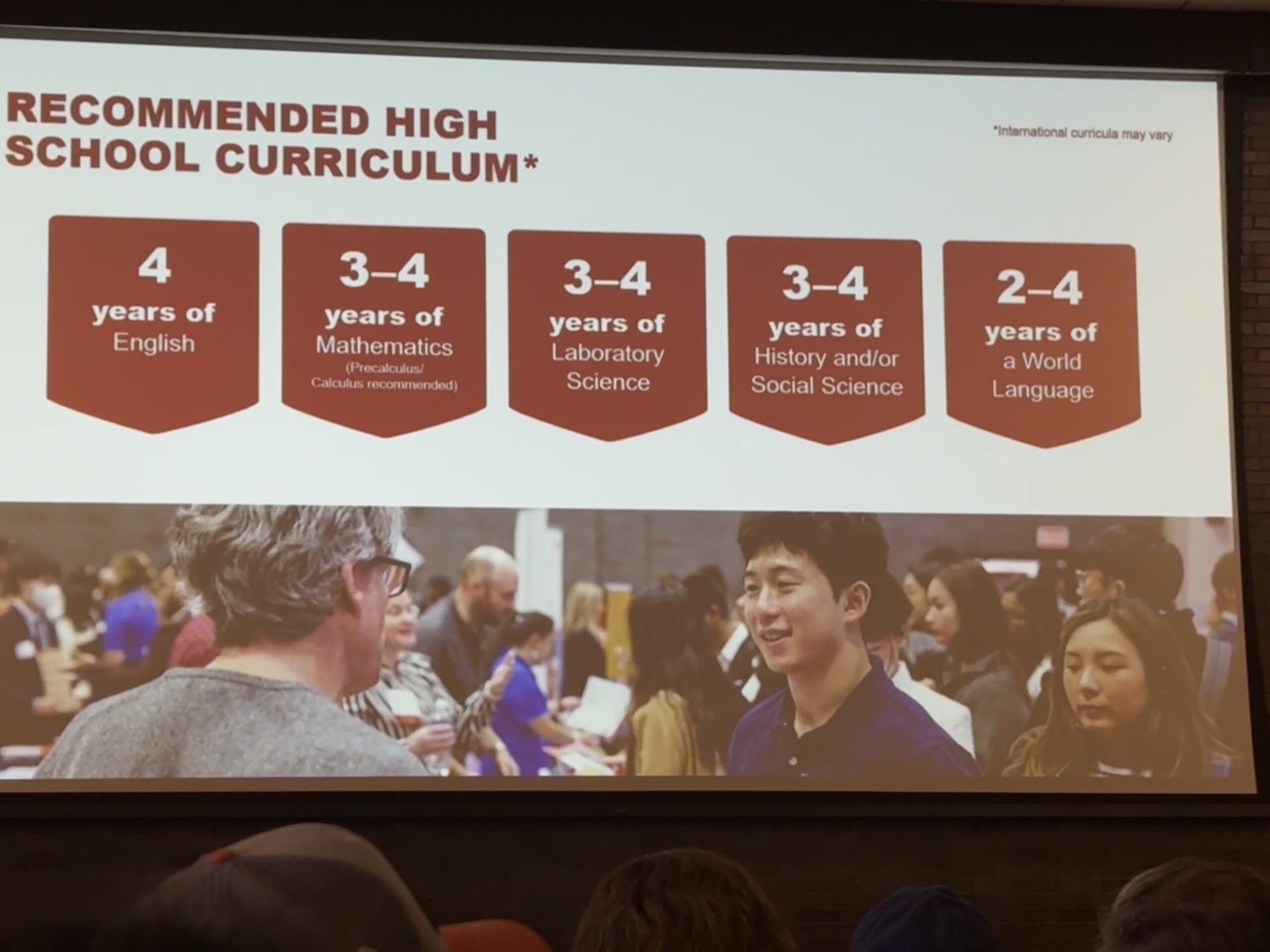
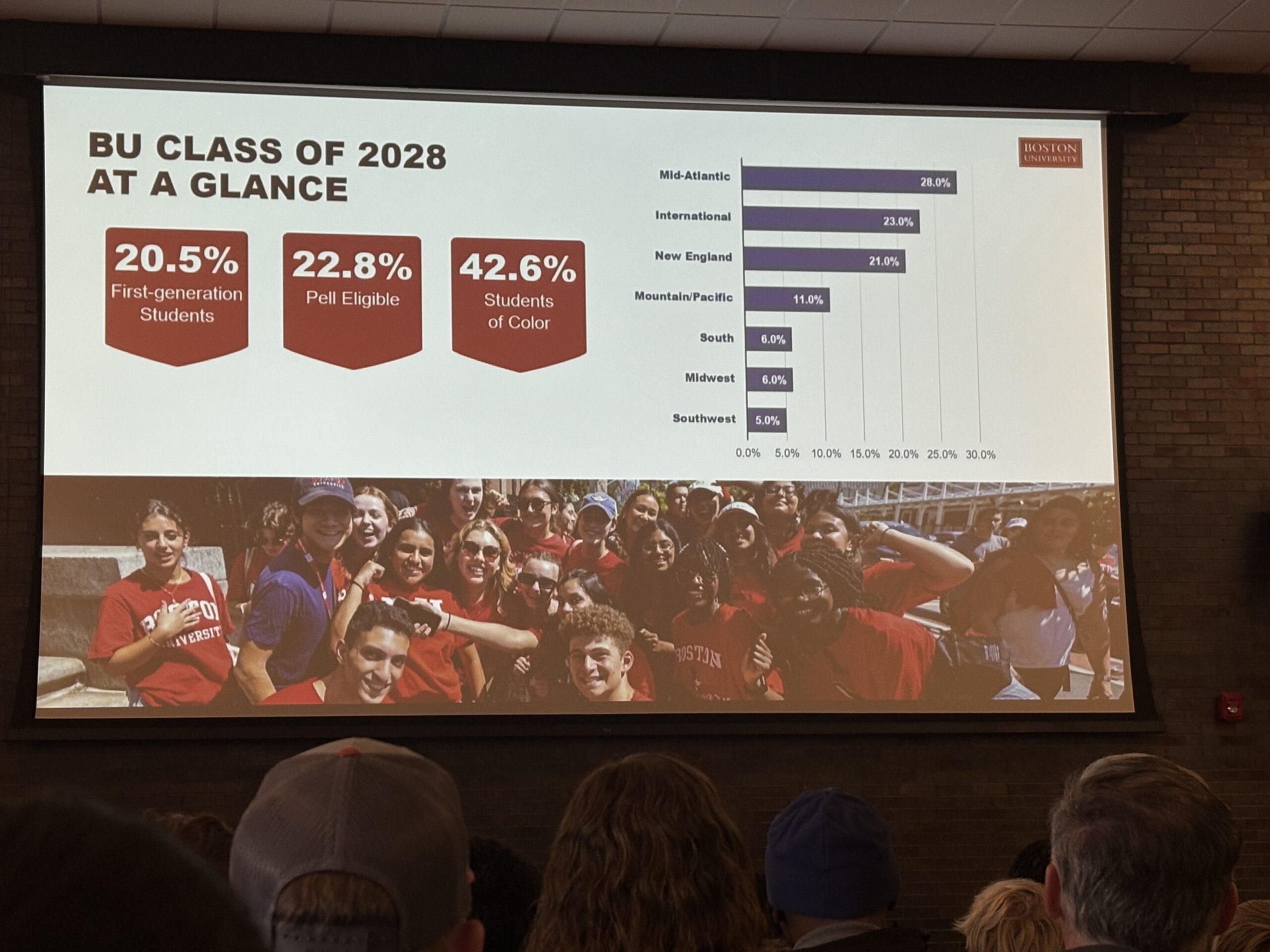
The tour consisted of a general assembly where a student panel described their experiences as a BU student, answering any questions asked by the tour participants, which was followed by an admissions case study, where a BU admissions officer detailed what stands out to them in a student applying. With an array of different international, undergraduate, graduate, doctoral, and special degree programs, BU sticks out as a top choice for many students with differing passions. So, where does journalism fit into Boston University?
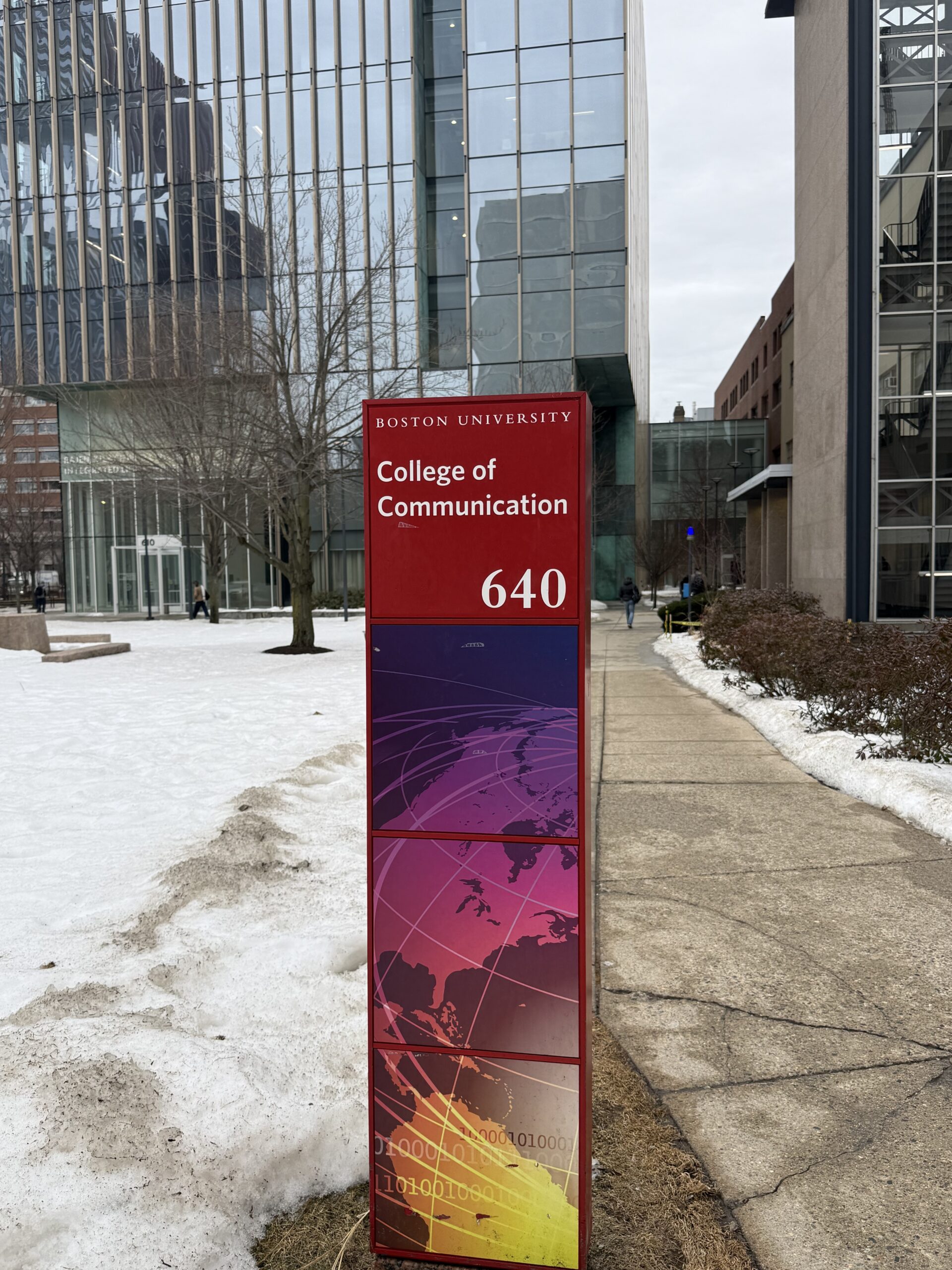
The College of Communications at BU is home to various majors focusing on public voice, such as advertising, public relations, film & television, media science, emerging media, and finally journalism. Upon entering the College of Communications, you are greeted by a large television screen showcasing various BU student broadcasting shows, along with a list of the majors it houses.
Freshman Boston University student Dabi Lee, majoring in advertising, who was involved in journalism prior to college, mentioned that the College of Communications was a key part of why she ended up picking Boston University. “I was really impressed by how developed the whole communications department was in all areas,” Lee noted.
Senior Boston University student, Ali Cook, majoring in journalism, detailed how amazing it is to be in a community with those sharing similar interests: “Everyone is very inclusive and accepting, so joining clubs has been a great way to get professional experience, meet people, and have fun.”
For many, journalism may seem like a major that doesn’t have the highest success rates when compared to highly-praised majors such as engineering or finance. But Cook detailed just how well the College of Communications is at providing professional experience: “If a student is interested in written journalism, they can publish stories for The Daily Free Press all throughout their four years here, become an editor, and even the editor-in-chief if they want to.”
“For the Daily Free Press in particular, the deadlines are much quicker, the fact-checking is more precise, and the general quality of work expected is higher, but it helps you be a lot more prepared for a career in journalism in the future,” Lee expressed.
In fact, 96% of Boston University journalism alumni are employed, continuing higher education, or partaking in other activities due to the journalistic experience provided. “For me, I can go into the workforce after graduation knowing that I have skills from experiences both at BU and outside of BU to bring to the table. Just at BU, I have radio, TV, writing, and social media journalism experience,” Cook explained.
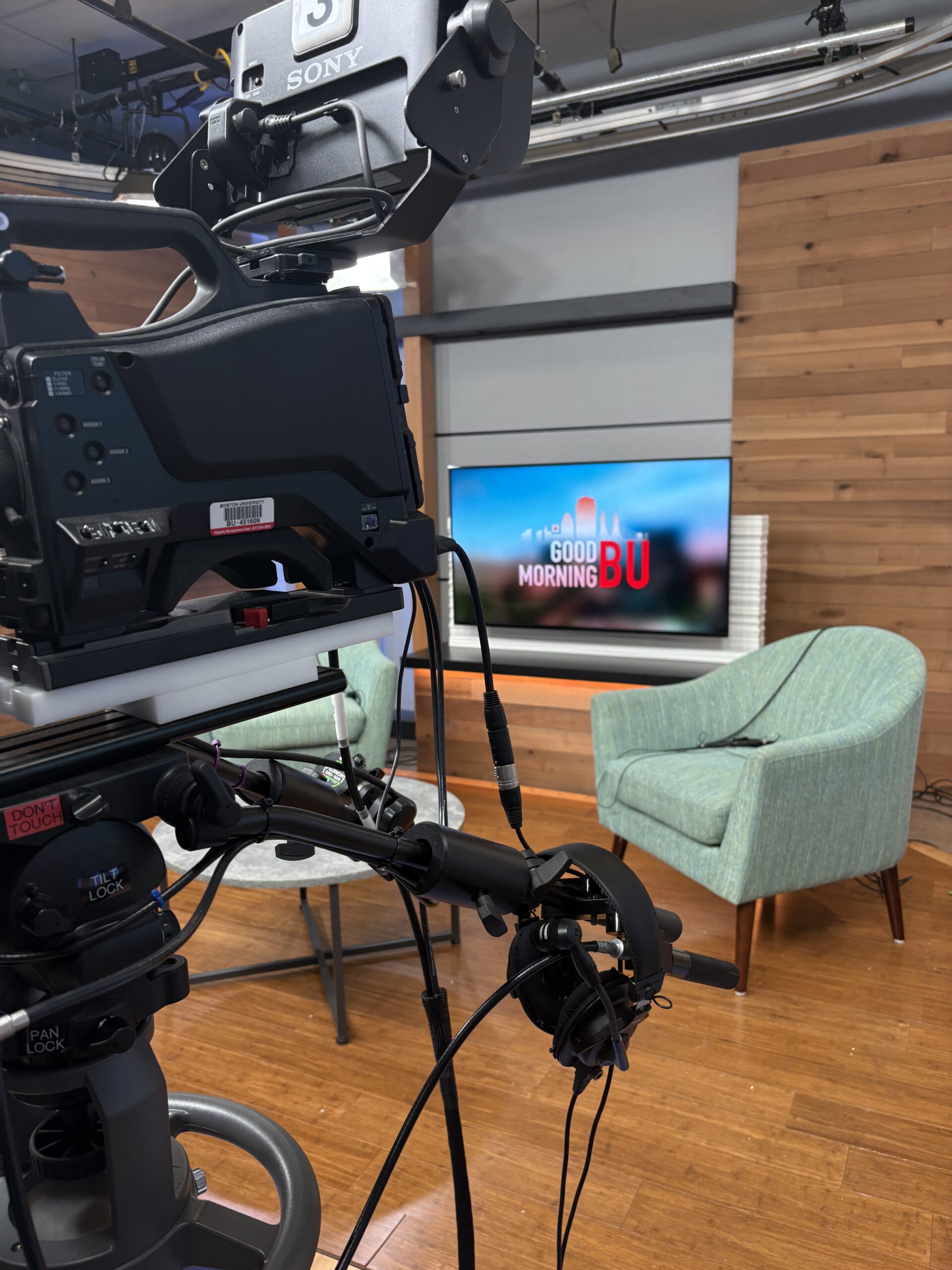
As mentioned by Cook, The Daily Free Press is Boston University’s major newspaper, but there are a variety of other lifestyle, fashion, or art magazines that students are able to take part in on campus. BUTV10, Boston University’s news program run by students, allows students to gain experience in broadcast journalism, commonly through “Good Morning BU” or a sports-journalism show, no matter the location—on the streets of Boston filming or purely in their own news studio located in the COM building.
In explaining how journalism expands beyond news reporting, it also appeals to a wide demographic of students and can simply offer a glimpse into different aspects of media.
Boston University’s radio station, WTBU, is extremely popular amongst students as it not only provides students with lively conversations about sports, music, or daily life topics, but it also dives into more serious topics such as politics. In addition to providing student interests, the station is entirely student-managed and produced!
Both Cook and Lee expressed just how amazing the communications department is due to the location of Boston University—located right in the heart of Boston, with MBTA transportation locations nearing the campus, prompting fast travel. “Being in a city also makes it so accessible, whether it’s for more stories to report on as a journalist, more companies to intern at as a PR or advertising major, or anything else,” stated Lee.
“In our introductory journalism classes, we go out into the city of Boston and interview people on the street or at events. Having the opportunity to cover important events with real people is scary, but a really important skill to learn in journalism,” Cook added.
The Experience
When we arrived at Boston University, we were led into the College of Arts and Sciences. There was no campus of any sort that served as the main building, per se. Every subject is allotted into their respective building, which contains a variety of majors dedicated to that subject. As mentioned before, we signed in and attended a general assembly, which was hosted in the building’s auditorium. We were given a seminar on campus life, and how attending the college worked before splitting into groups for each interest.
We were interested in the College of Communications, where Cook and Lee, who are both Student Ambassadors at the College of Communications, served as our tour guides, showing us the campus interior.
At an outer glance, the school may seem tiny, but don’t let its appearance deceive you! The campus is built upon four floors: the basement, leading all the way up to the third floor. Every floor provided a different feeling, such as the second floor, which mainly consisted of classrooms, or the basement, which presented itself with high-quality technology.
The hallways–although narrow–contrast with the grandeur of the rooms themselves. Some notable rooms are the two broadcasting rooms for WTBU, “the Beat of Boston University,” and BUTV10, alongside Field Production Services, which holds thousands of pieces of equipment available to students to borrow, free of charge.
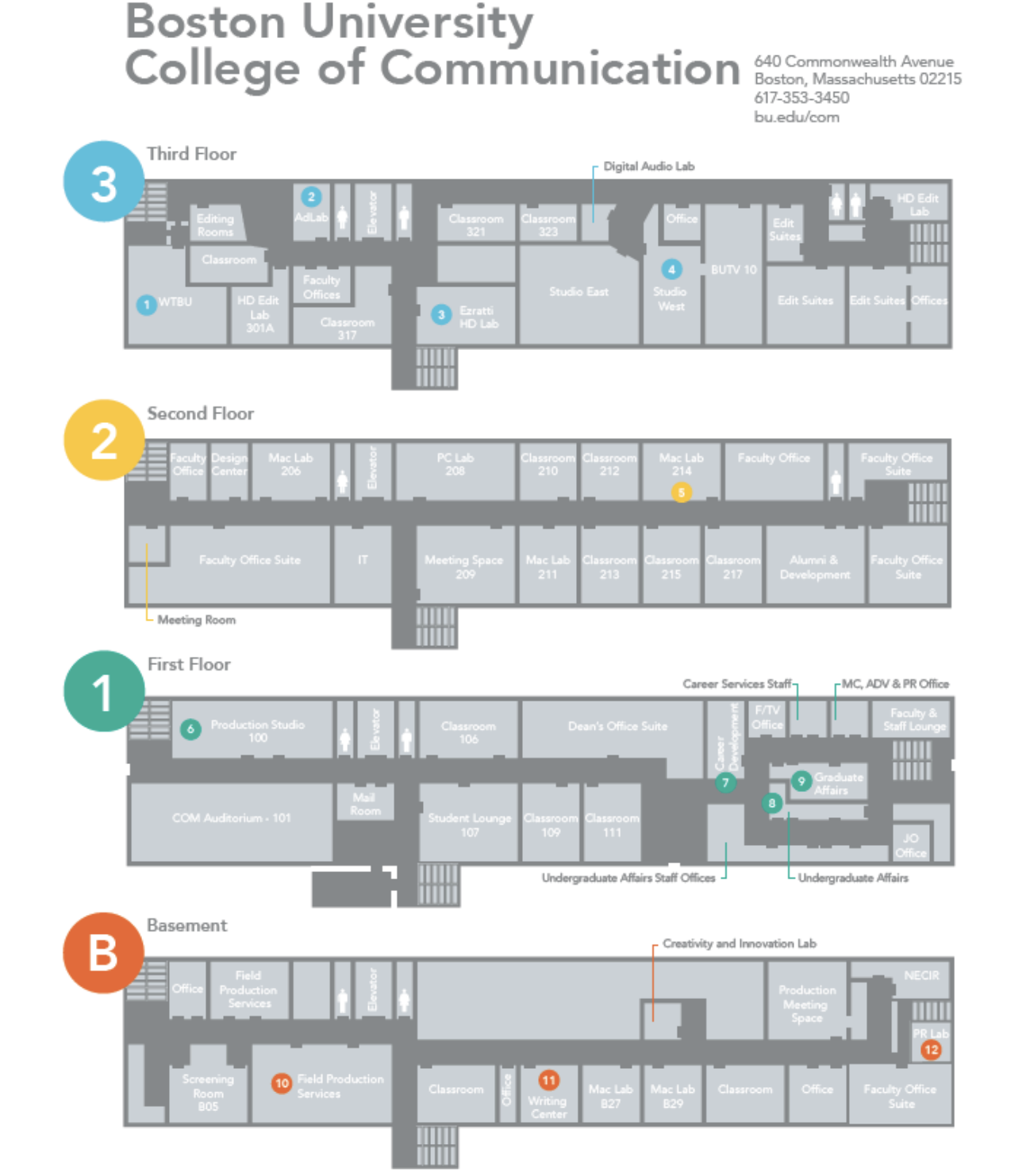
We found the equipment to be the most impressive, costing millions of dollars alone, which makes up most of the college’s funding. Every different room ranged from radio stations, recording booths, and writing centers, offering a different experience each time.
Additionally, every floor is ornamented with a variety of media, whether it be posters or photography. Boston University strives to proudly present student work, such as graphic designs from its film production classes.
Communications vary in specificity, but they all share one trait in common: making student voices and ideas take place. Boston University hosts a variety of other majors outside of journalism, such as the aforementioned film production or public relations. In short, film production focuses on the creation of short films of student ideas, while public relations focuses on a company’s voice and public image.
At the heart of communications, it goes to show that journalism can be expressed in a variety of ways, even if it isn’t explicitly writing articles.
About the Author