Education is something we often take for granted. Many of us, who spend what seems like forever sitting in class, wish to be at any place besides school. Yet, there are many worldwide who don’t have access to an education that we are fortunate enough to receive everyday.
According to a United Nations report from 2024, there are 251 million children globally who are out of school. Strikingly, Afghanistan is the only country to formally ban girls from obtaining a secondary education. Currently in Afghanistan, girls are banned from school after they reach age 12; this ban has been ongoing for 1,705 days, which is roughly 4.5 years.
From the 1960s to the 1990s, many girls in Afghanistan thrived, entering a period of educational growth. Many schools and universities, some in urban areas, admitted a large number of girls. Yet, this progress was brought to an abrupt stop when the Taliban took over in 1996-2001.
After 2001, an era of renewal seemed to begin as girls began to re-enroll in primary and secondary education. Just as girls in Afghanistan began establishing their hope, the Taliban took over Afghanistan again in August 2021. As a result, more than 2 million Afghan girls are denied an education.
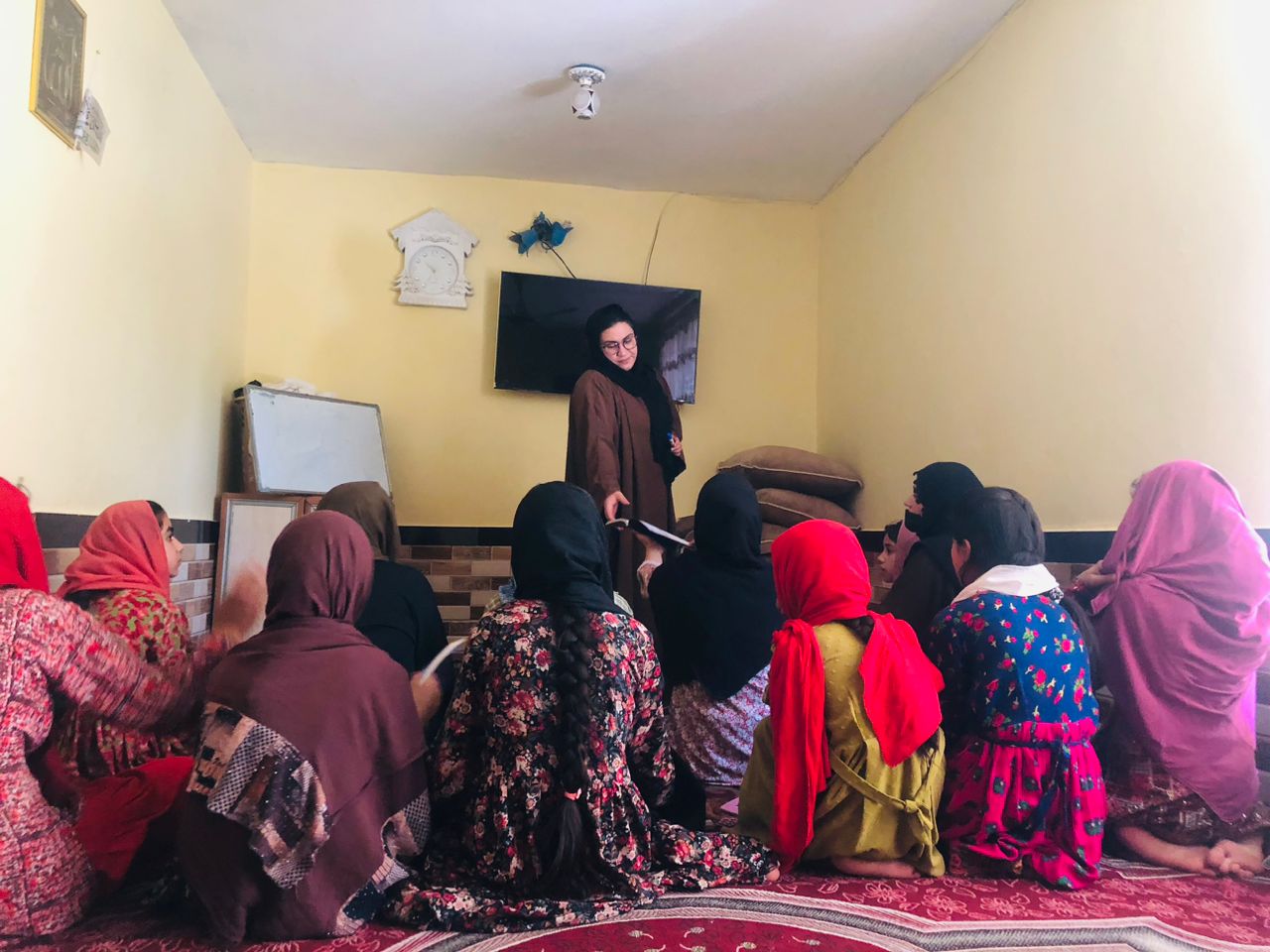
Growing up in Afghanistan, junior reporter for The Blue and Gold, Safa Niazi, witnessed girls in her community struggling with the lack of access to an education at quite a young age. “Some of my childhood friends were forced into early marriages, and others faced serious emotional and mental challenges because they were unable to continue their studies,” explained Niazi.
Once Niazi moved to the United States with her family, leaving her once familiar community behind, she realized that she had the opportunity to make a change. “That realization made me feel a responsibility to act,” said Niazi.
Thus, in 2025 Safa niazi and her sister, sophomore and Reporter for The Blue and Gold Khkola Niazi, founded ZAMIMA, a youth-led initiative dedicated to supporting Afghan girls who are denied access to an education. Niazi detailed that ZAMIMA started in a small neighorhood, “built on trust and connection” where the founders relied on those that they know personally to strive to create a safe and supportive learning environment.
Operating this educational initiative in Afghanistan comes with serious challenges. Since government restrictions continue, ZAMIMA has to navigate how it functions and its presentation warily in order to continue safely. Niazi described how connecting with the girls in Afghanistan can be difficult due to these restrictions, distance, and time differences. “Even though we are physically far away, we remain closely involved in their progress and continue to support them in every way we can,” Niazi highlighted.
Their small group of only 15 students has now grown to 45 students in just one year, who despite risks have ignited their hopes for an education.
Due to years without education, many girls have forgotten even the most basic skills. As a result, when ZAMIMA first began many girls were unable to read or write. As of now, ZAMIMA offers the following subjects: Pashto and Dari literacy, English, and painting.
Niazi hopes on expanding the curriculum “based on the students’ needs and interests” yet these possible expansions depend on the resources, safety, and “what is realistically possible under current conditions.” Some possible expansions could be more advanced English, basic science, or even life skills that could help the girls with day-to-day communication and confidence.
“The girls are improving in reading and writing, participating more in class, and expressing themselves with greater confidence. They are more engaged, more motivated, and more hopeful about their future,” Niazi emphasized.
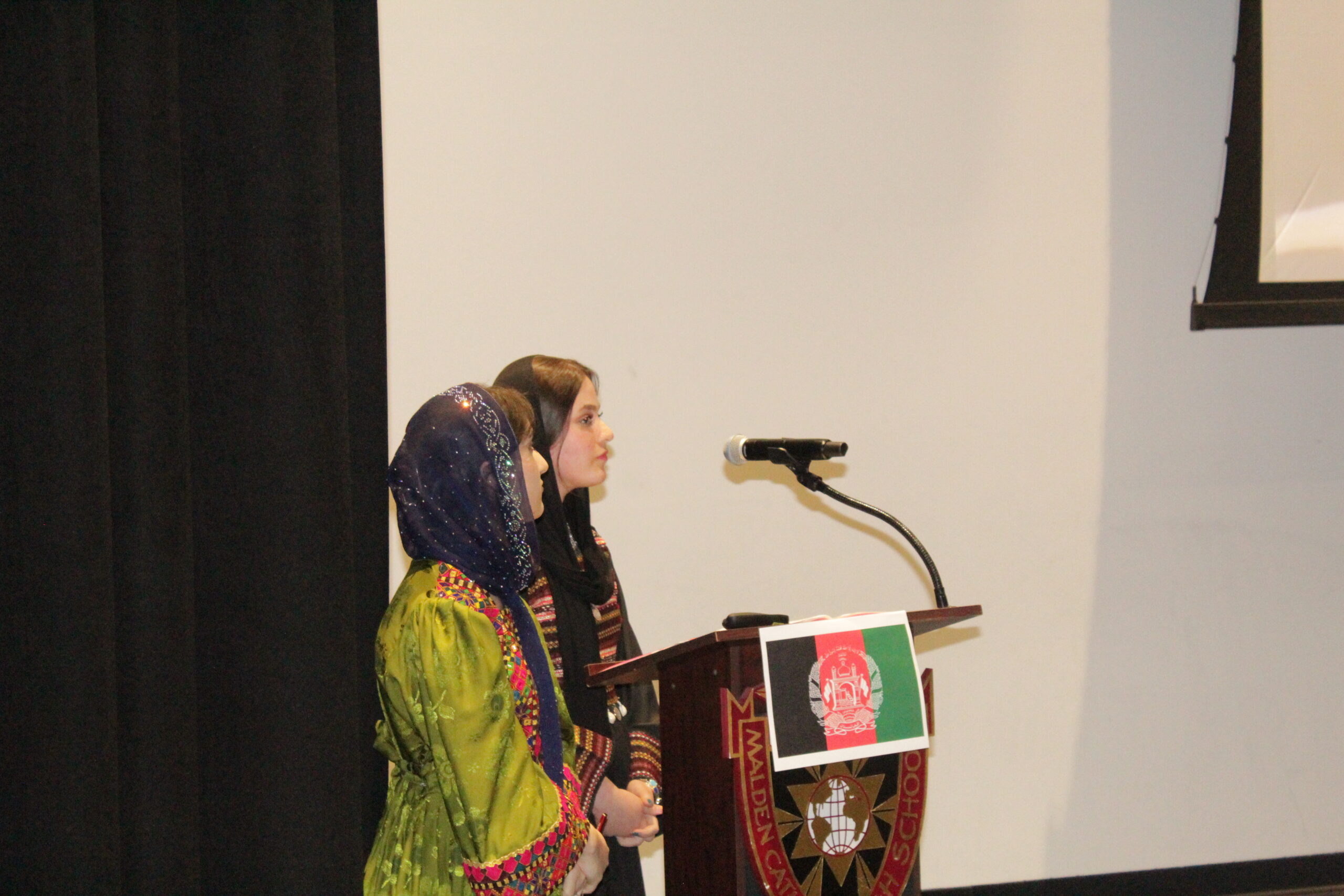
In order to spread more awareness about the reality of girls’ education in Afghanistan, both Safa and Khkola presented their work to members of the Malden community on April 17th at Malden Catholic High School. “Having events like these not only bring awareness to important topics outside of the U.S., but also show how crucial it is to help those around us,” noted Malden Catholic junior Gulianna Dormevil.
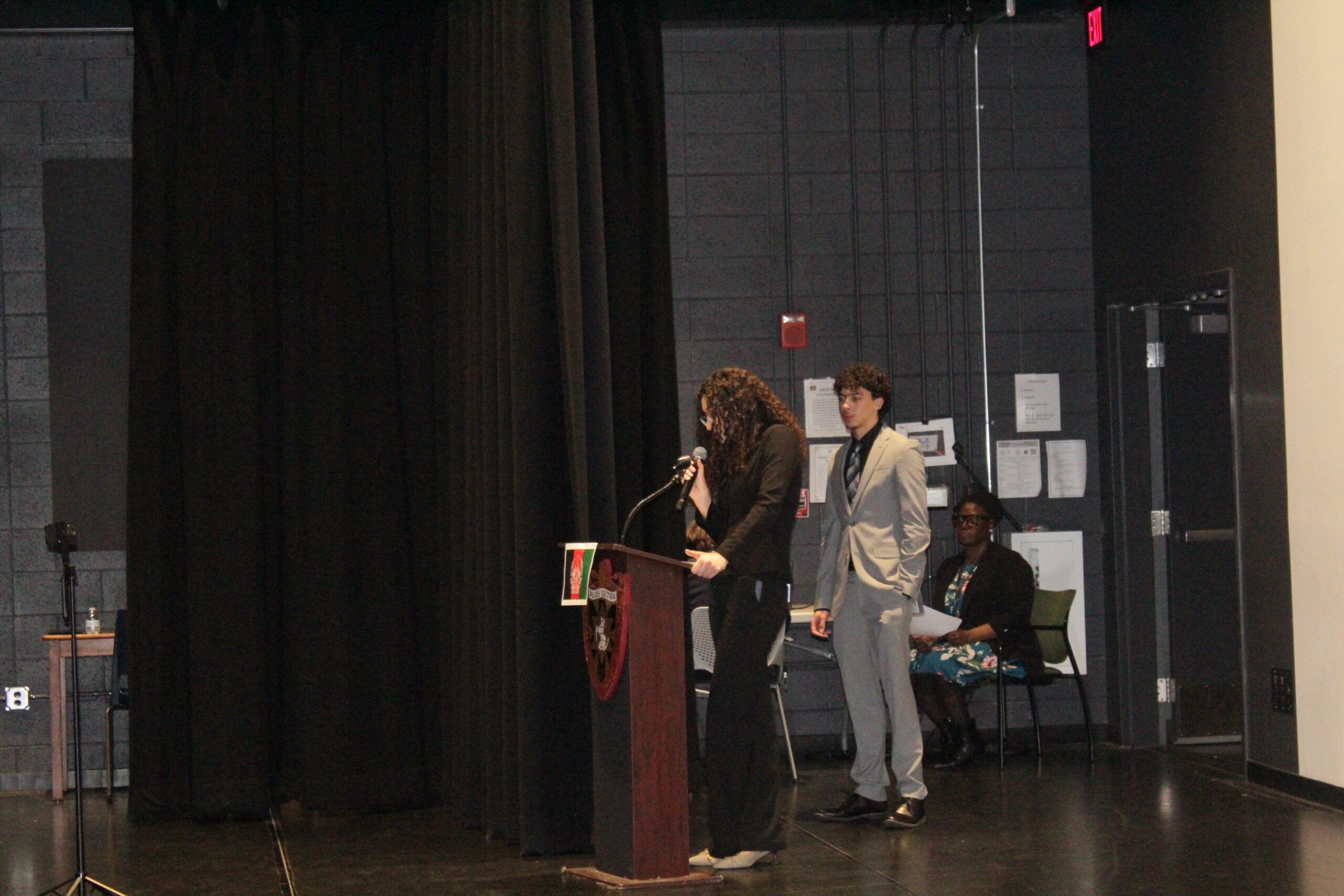
The event was sponsored by Middle Eastern North African Club (MENA) and co-sponsored by the Diversity & Inclusion Student Council, demonstrating how this issue is not just centered towards Afghanistan but is a substantial global issue that all should be paying attention to.
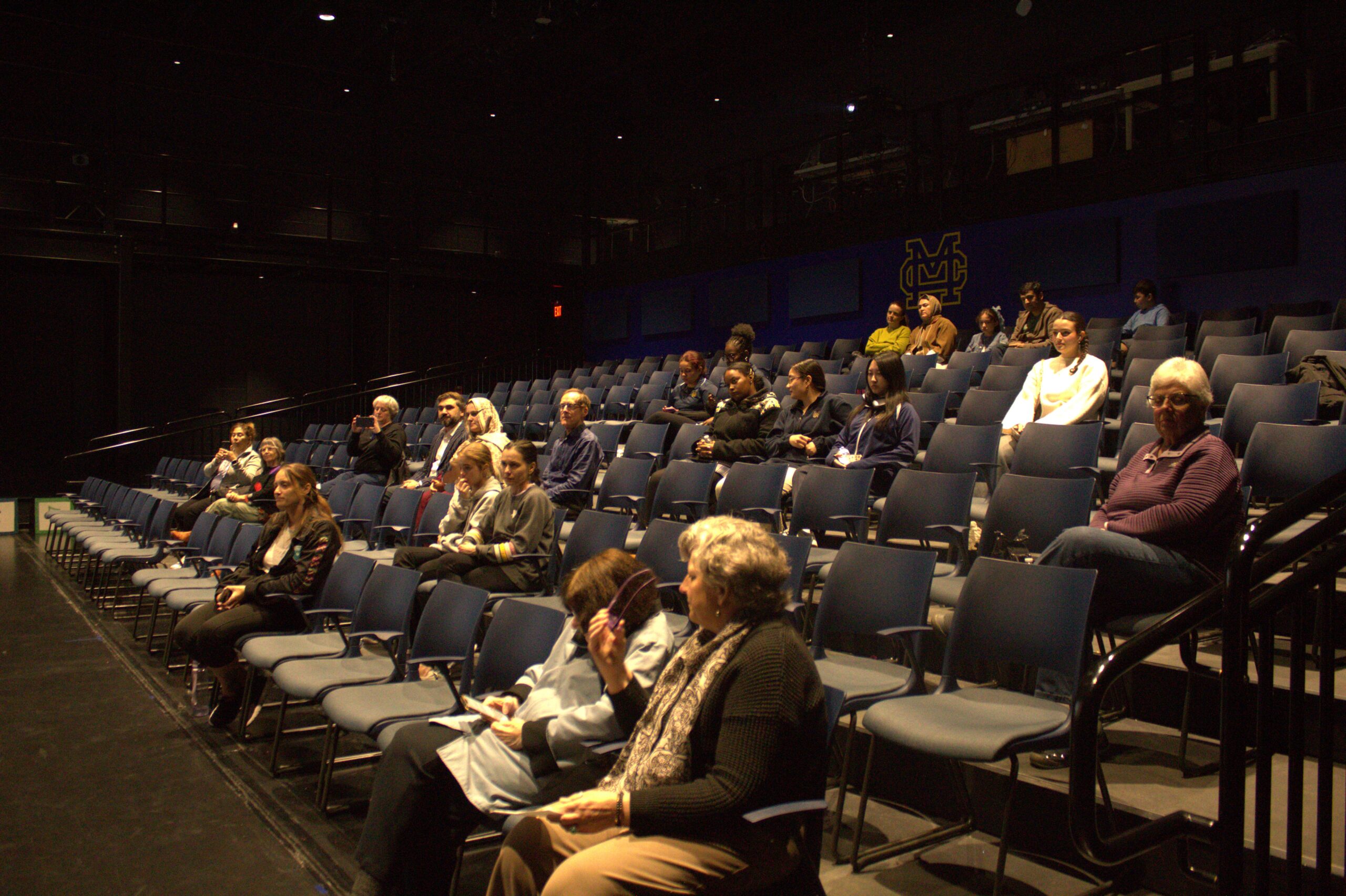
During the presentation they dived into the origin of ZAMIMA and their classroom, the challenges they face, and the progress they have seen. Their presentation illuminated how meaningful differences can begin at a local level, even when addressing larger global issues.
A video was then presented which showcased the classroom ZAMIMA provides in Afghanistan and volunteers of the initiative, along with interviews from ZAMIMA students, a teacher, and finally an Afghan boy who reflected on his privilege to an education—comparing his situation to his sisters.
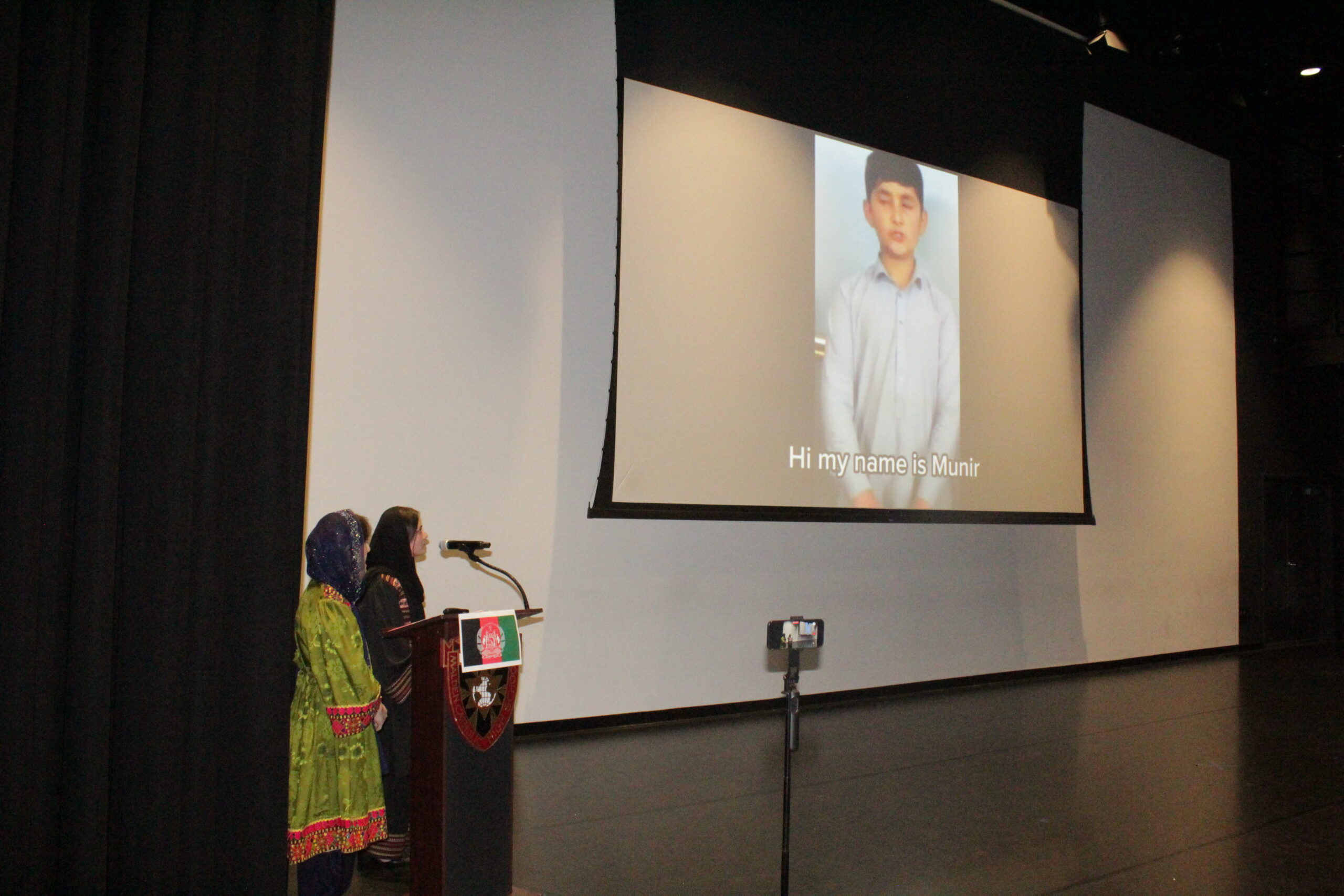
“I felt really emotional seeing all the different posters and watching the presentation because it put into perspective how I should be grateful to attend school everyday as many girls in the Middle East don’t have that option,” stated Dormevil.
With the immense amount of growth ZAMIMA has seen in just a year it is clear that their efforts are being displayed. ZAMIMA is not just a classroom but rather a response to injustice that reminds us that resilience can lead to new opportunities. “Every girl deserves a chance to keep dreaming beyond 6th grade. Zamima is our promise to stand beside them as they grow into who they’re meant to be,” Khkola Niazi concluded.
About the Author