Every spring, the city of Malden transforms into a living canvas. On April 3rd, the annual Blue and Gold Art Gallery, hosted by Malden High School at 350 Main Street, opened its doors to the public, inviting everyone to step into the world of student imagination.
The building is donated each year by a local supporter, where rows of paintings, portraits, and ceramics line its interior. Each art piece tells a story—whether it be of identity or community. Similarly, some works explore cultural heritage, while others capture everyday life through images of people, food, or animals. The diversity of art styles displayed that night mirrored the diversity of Malden itself.
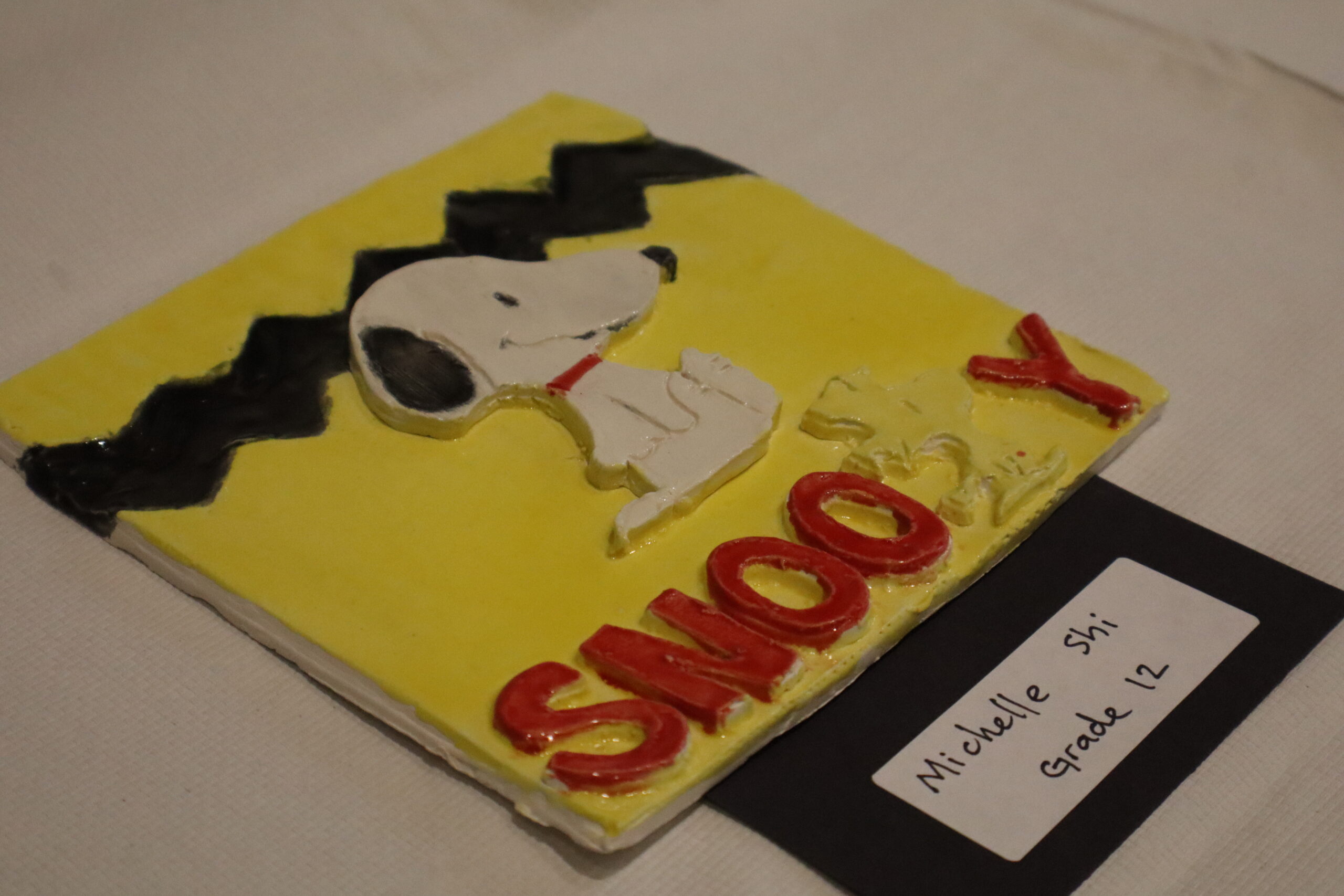
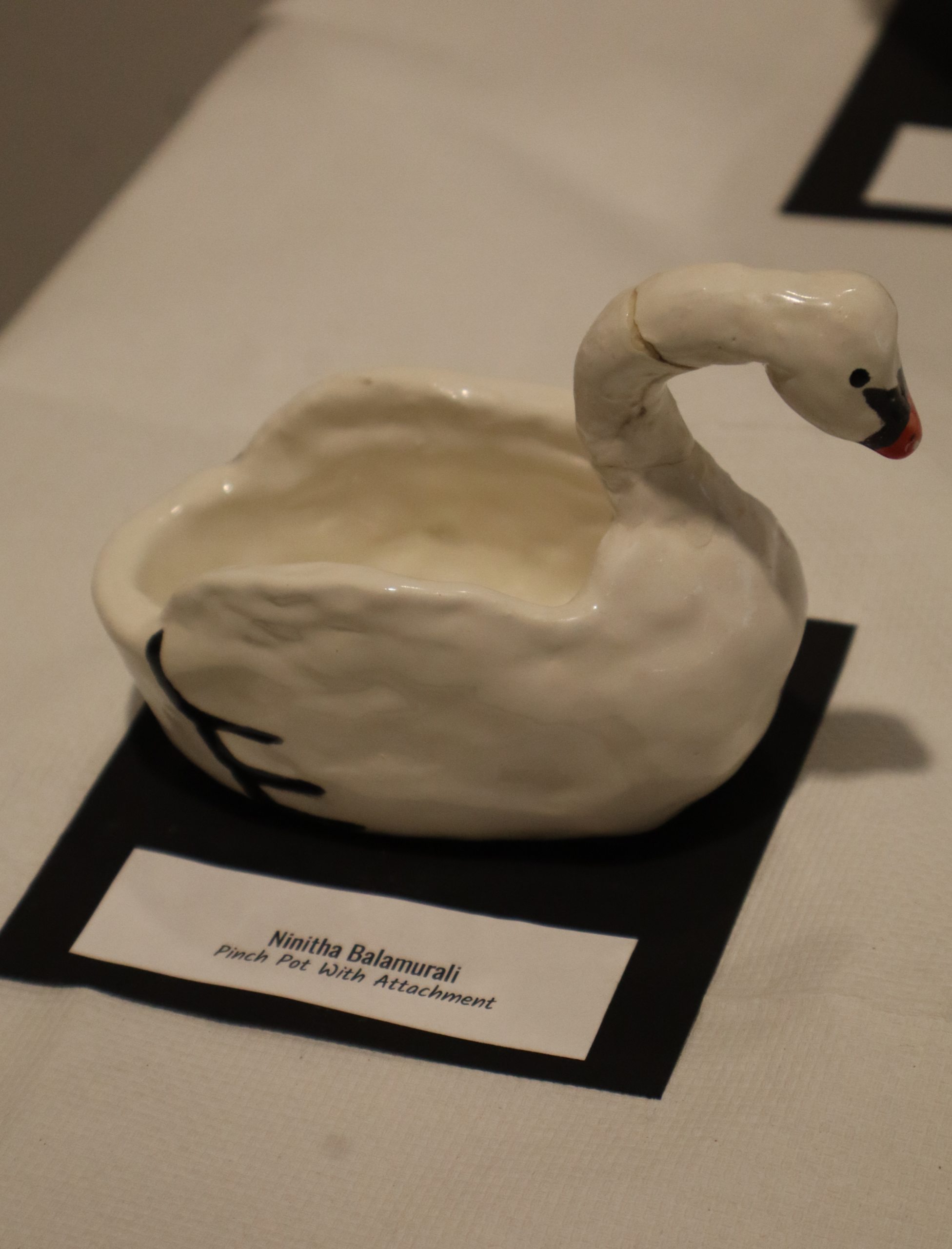
“I’ve seen other countries and other cultures in the artwork, and it’s helped me learn. That is the whole point of life, and we tend to forget that because of the fast-paced world we live in,” voiced Mayor Gary Christenson.
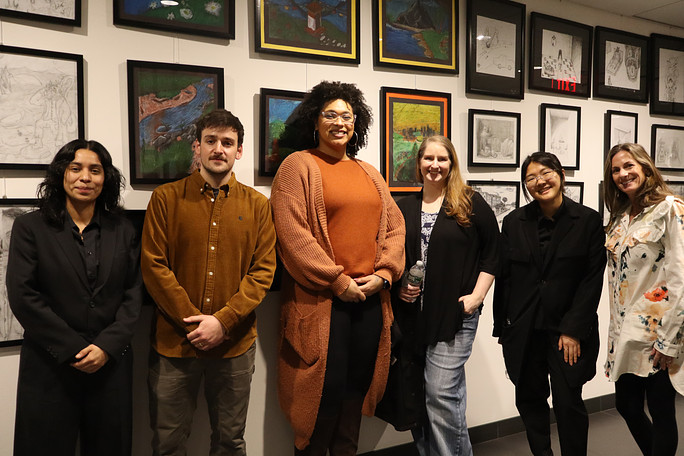
Organized by Malden High’s art department, led by teachers Eli Shalan, Kristina Gilbert, Michaela Ilebode, Breanne Mahoney, Gina Yu, and Courtney Gould, the program spends months preparing for the show. Choosing which artwork to display is no easy task, especially when wanting to represent Malden’s community as a whole in one night, and realizing that for many students, this was their first experience seeing their art displayed publicly.
“Throughout the year, we are pulling artwork that we believe deserves recognition, while also honoring student requests for the gallery. A variety is selected from across the grades, although it tends be junior and senior artwork heavy,” shared Shalan.
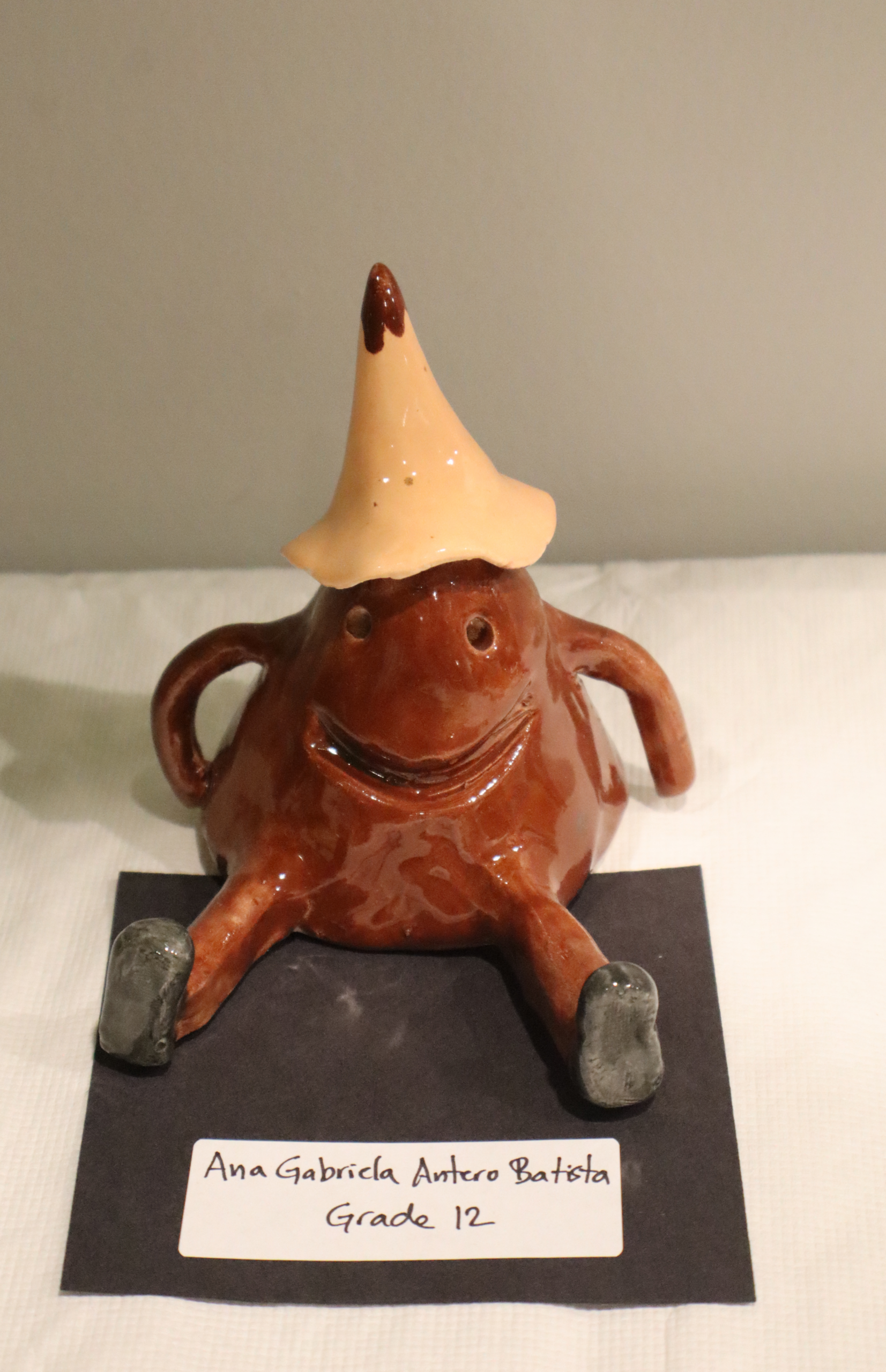
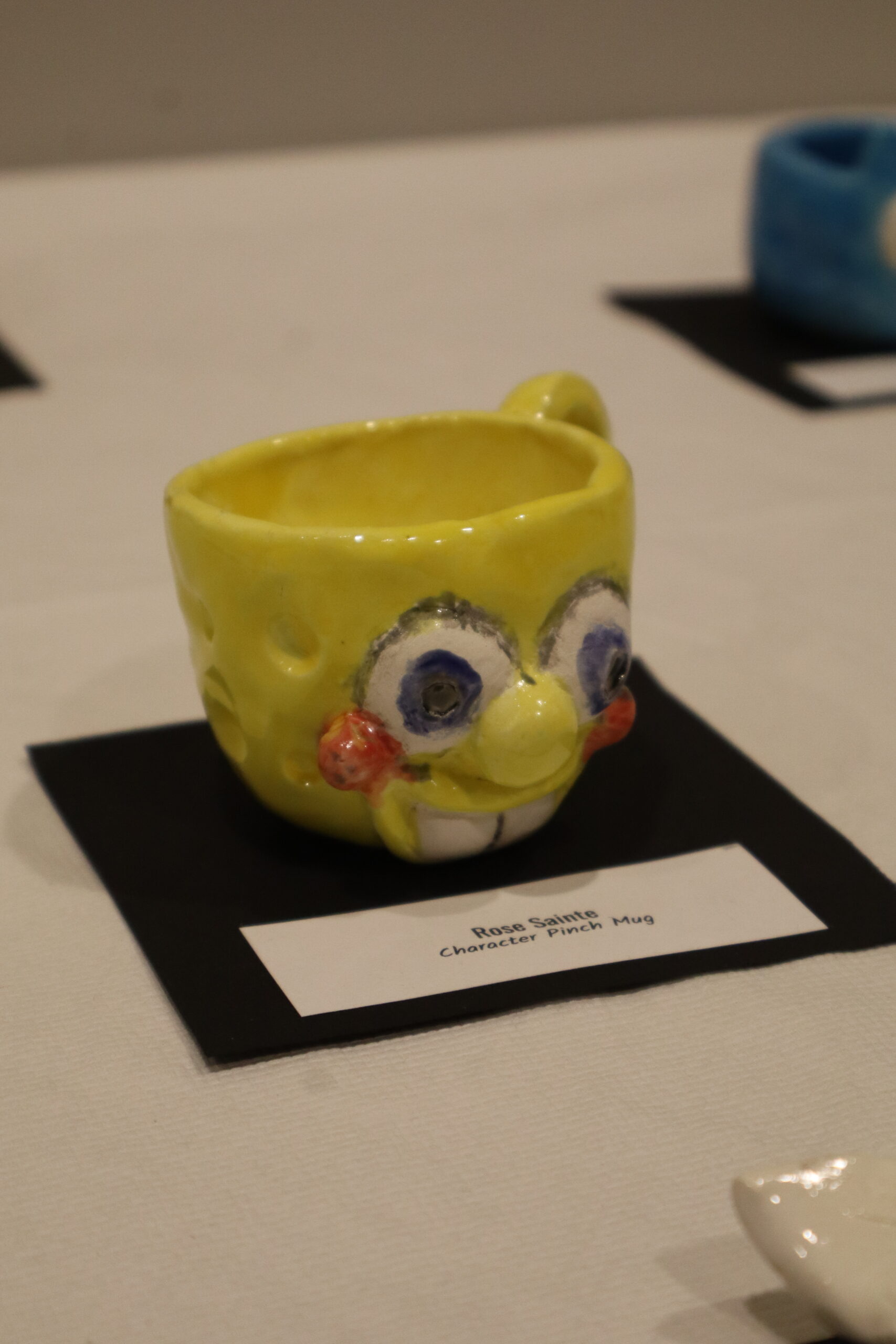
Beginning at 5:30 PM, visitors were welcome to help themselves to complimentary food and refreshments provided by Urban Grove Cafe and to tour the gallery. At the entrance, tables filled with varied ceramic works were exhibited, above which hung artwork on canvases.
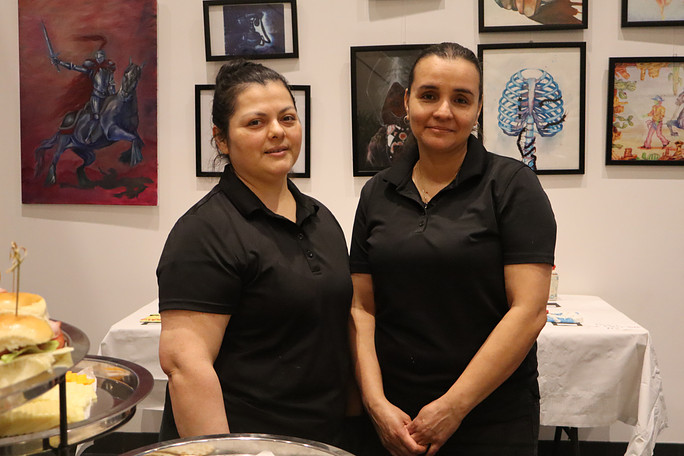
“It’s nice to have a place to see everyone’s creation being presented, skills being shared, and different art styles being appreciated,” commented junior Trini Le.
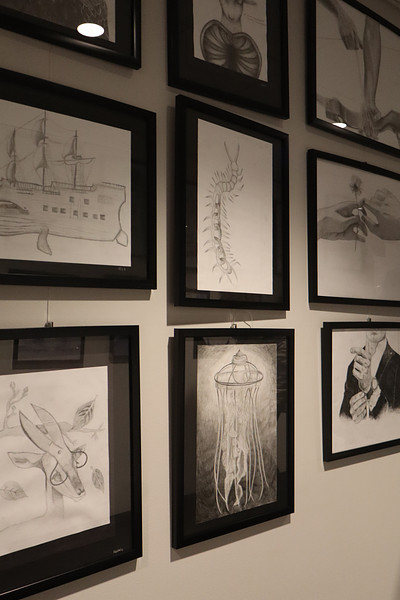
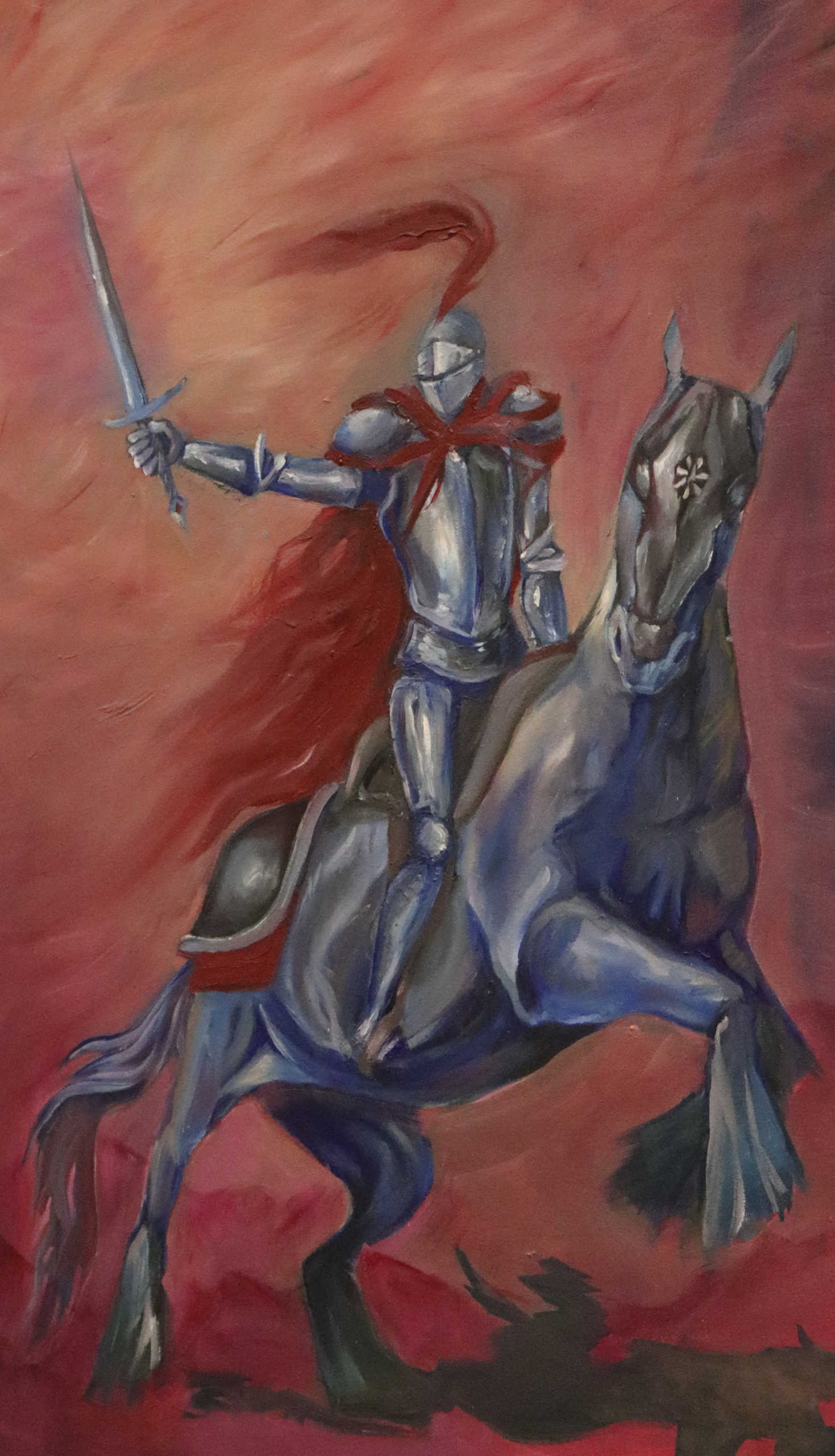
As you walked farther down the hall, the walls were decorated with self-portraits and portraits of famous celebrities. The impeccable line work, realism, and talent produced by Malden High students were evident. Continuing, artwork focused on nature, fantasy, and individualism could be observed and awed over. Finally, the gallery concluded with another ceramics exhibit at the end of the hall.
As more people had trickled in, Principal Chris Mastrangelo took the stage to appreciate the beauty of art and the hard work put in by Malden High students and teachers, calling the event “one of his highlights every year.”
Mastrangelo then handed the stage to Superintendent Dr. Timothy Sippel, who reiterated the principal’s remarks and added his admiration of the art department, shouting out the Director of History and Art, Gerard Tannetta, in the process. “I don’t even know how to describe all the media used to create such magnificent artworks. All I can say is it’s stunning, provocative, and inspiring,” expressed Sippel.
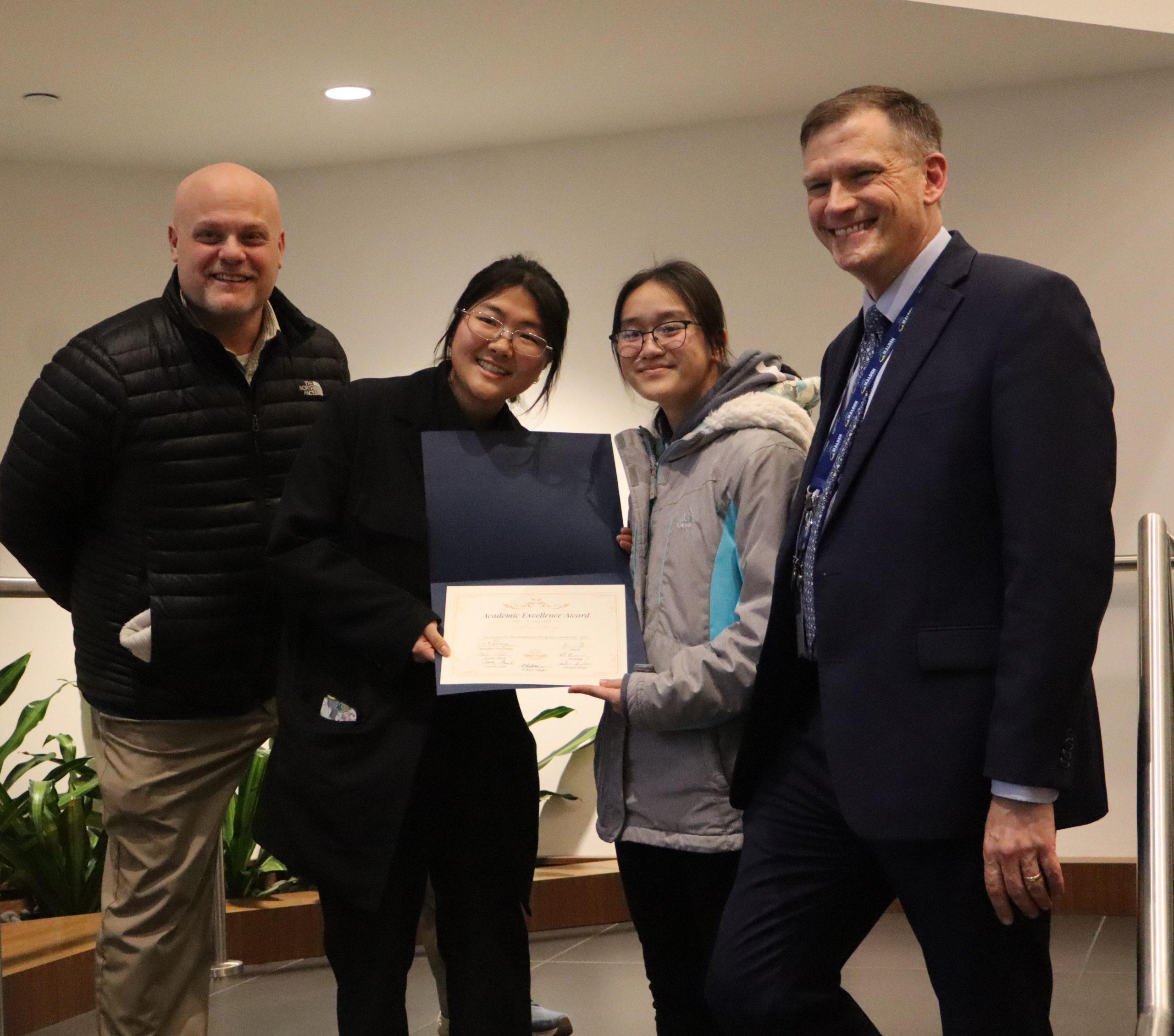
Afterwards, an award was handed out to sophomore Sophia Zhang, who won third place in the Teen Perspectives on Immigration contest held annually by the Immigrant Learning Center in Malden. The contest invites students from Malden, Everett, and Medford public high schools to submit original work on the topic “How Immigration Benefits My Community.”
Zhang’s artwork illustrated a monarch butterfly flying toward King Protea flowers, paralleling the butterfly’s migration pattern with immigration. “I’m really into simplism and choosing to depict a story through flowers holds weight in and of itself, seeing as there is a language of flowers. The King Protea flower is known for its diversity, and I intertwined Malden’s diversity by dedicating each petal to a different culture,” elaborated Zhang.
Witnessing Zhang’s accomplishment, Jessica Howard, her middle school art teacher from Beebe, shared how it is “an honor to be in her presence” and that Zhang’s “talent left her speechless.”
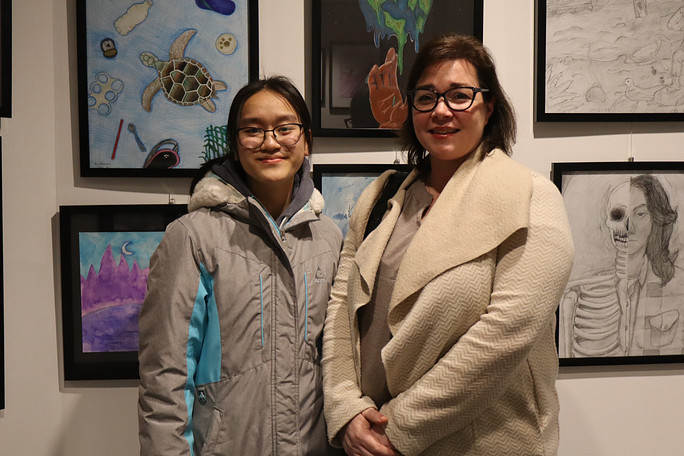
Galleries such as these emphasize art as an essential part of student life, offering them a way to express what words often cannot. Not only does it reflect emotion, identity, and creativity, but it also builds empathy by letting others see the world through someone else’s eyes. Placing them in a public setting only brings the community closer together by allowing observers to consume stories that cannot be “replicated” by anyone else, stated senior Moon To.
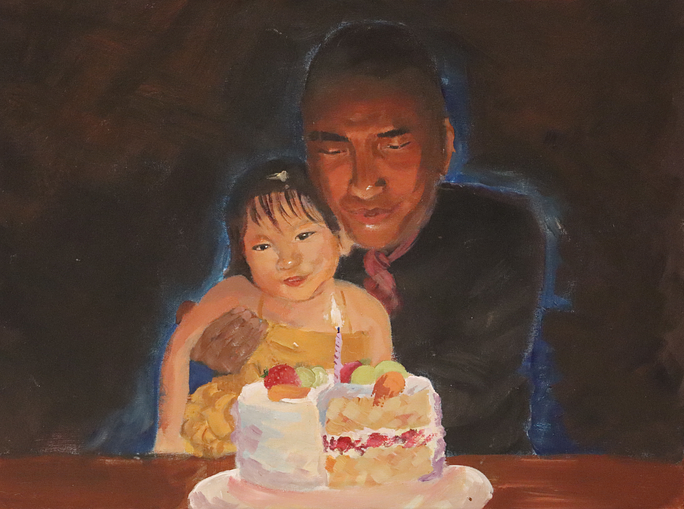
Especially with a rise in AI art, the value of student art has never been more important. Human creativity carries depth and qualities that algorithms can imitate, but never truly represent. Artificial intelligence lacks the emotional connection that art is meant to inspire and be produced with, rendering the final product meaningless. Supporting student artists means defending the authenticity of human expression behind every brushstroke.
“Art is dying as a subject and as a way of expression—we have to bring it back to life,” To stressed.
However, defining and identifying the limitations of AI art is more difficult than it seems. For instance, digital art employs the use of several generative tools and algorithms to enhance images. The technology can be used for a variety of reasons to improve an artist’s work and will remain “prevalent” in digital work, claimed Yu.
Yu believes the “language” used to describe AI art is “polarizing,” explaining how relative good can come from such programs, specifically in terms of accessibility.
“I went to an Adobe Conference in Boston last month, and I remember them heavily pushing generative AI to be integrated into digital softwares. At the time, I felt very mixed about the approach and thought ‘why do we need this?’ but then realized that some of the tools were extremely useful and fun to play around with,” added Yu.
In the end, the Blue and Gold Art Gallery stands as a reminder of what creativity can do for a community, and will continue to do if given a fighting chance.
About the Author