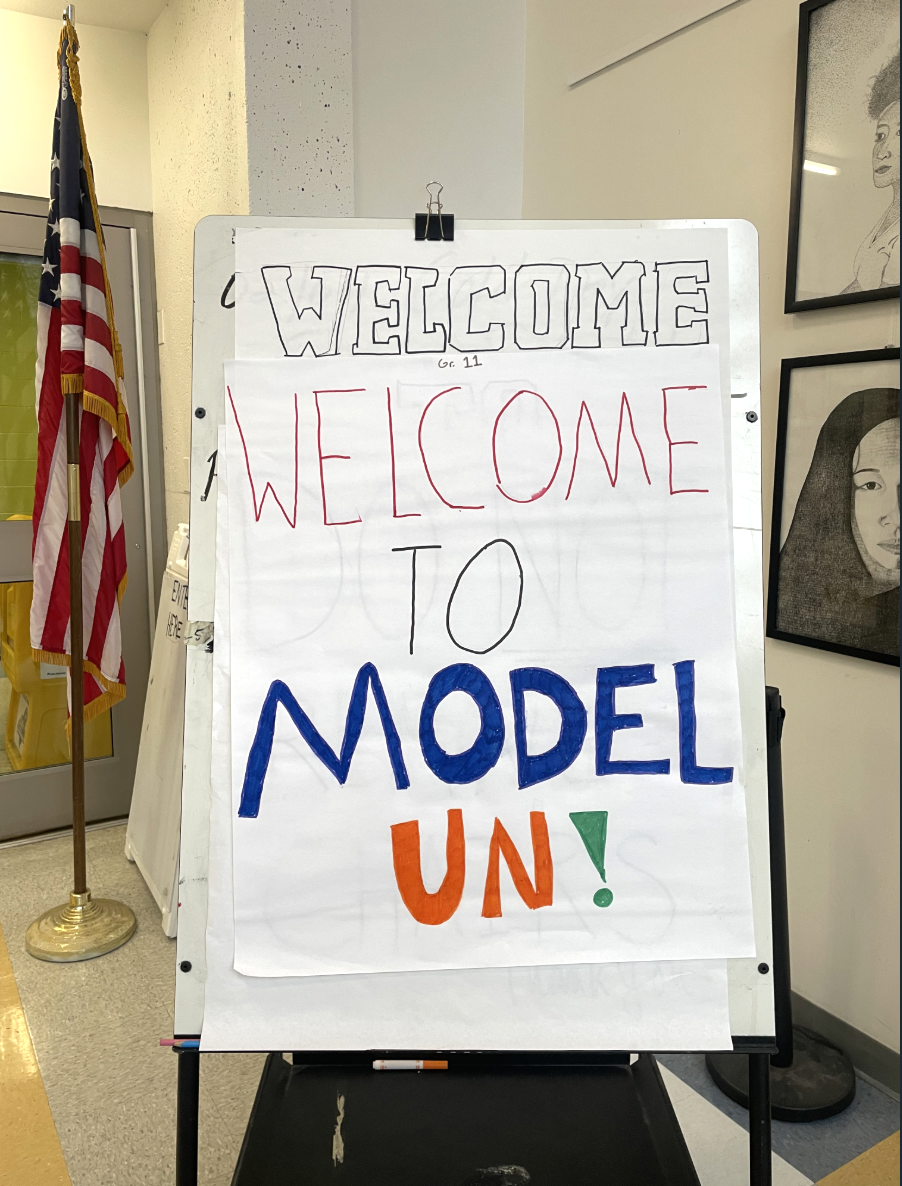
Have you ever wondered what it would be like if you and your friend were national leaders for three hours? While sophomores took the ELA MCAS, juniors taking Modern World History made their way to the gallery experiencing this mandatory event during one morning session, one afternoon session on March 24th and one morning session on March 25th.
What is Model UN?
Model UN is a simulation of the United Nations conferences where students, in groups of two or three, represent a country that they either chose or were assigned to. They act as their nation’s leaders, or in other words, become delegates of a nation’s position in a global issue to discuss with others. This year’s topic was nuclear proliferation, which is the continued spread of nuclear weapons, technology and materials, to countries or organizations that do not possess them. In this simulation, students must participate in preparing and actively speak on their country’s position as it is part of the curriculum.
Prior to the event, teachers helped students during class to research their nation’s position on the topic by having small simulations, practicing speeches, and going over vocabulary terms that would support them for the actual day of the event.
Why is it important for students to do this?
Although it helps students engage in global issues that are currently going on, it allows students to expand their knowledge in research, writing, public speaking skills, and being able to interpret alternate perspectives in a respectful manner.
First part of Event
All sessions began with students entering the gallery to sign-in for attendance and to grab their placards that had their nation’s name on it. Behind the placard also had a list of sentence starters that students had to use. As they sat down and waited, Principal Christopher Mastrangelo delivered a brief speech on how MHS is lucky to have done something unique like Model UN, further explaining how some schools don’t have this enriching opportunity.
After Mastrangelo gave his speech, United Nations Association of Greater Boston’s director of teaching and learning, Shannon Coyle, introduced herself as the Chairperson of the event. Coyle walked students through how the simulation would work and what they would be specifically doing. Next, with her gavel, she banged on the table to start a roll call on all 47 countries that were present.
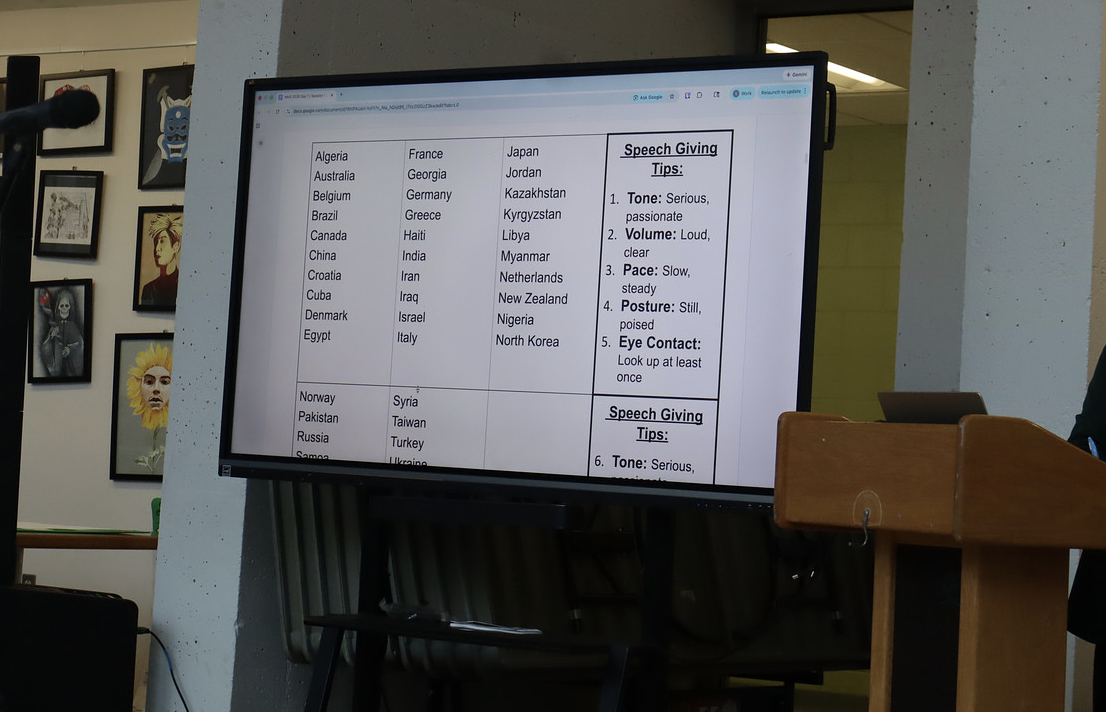
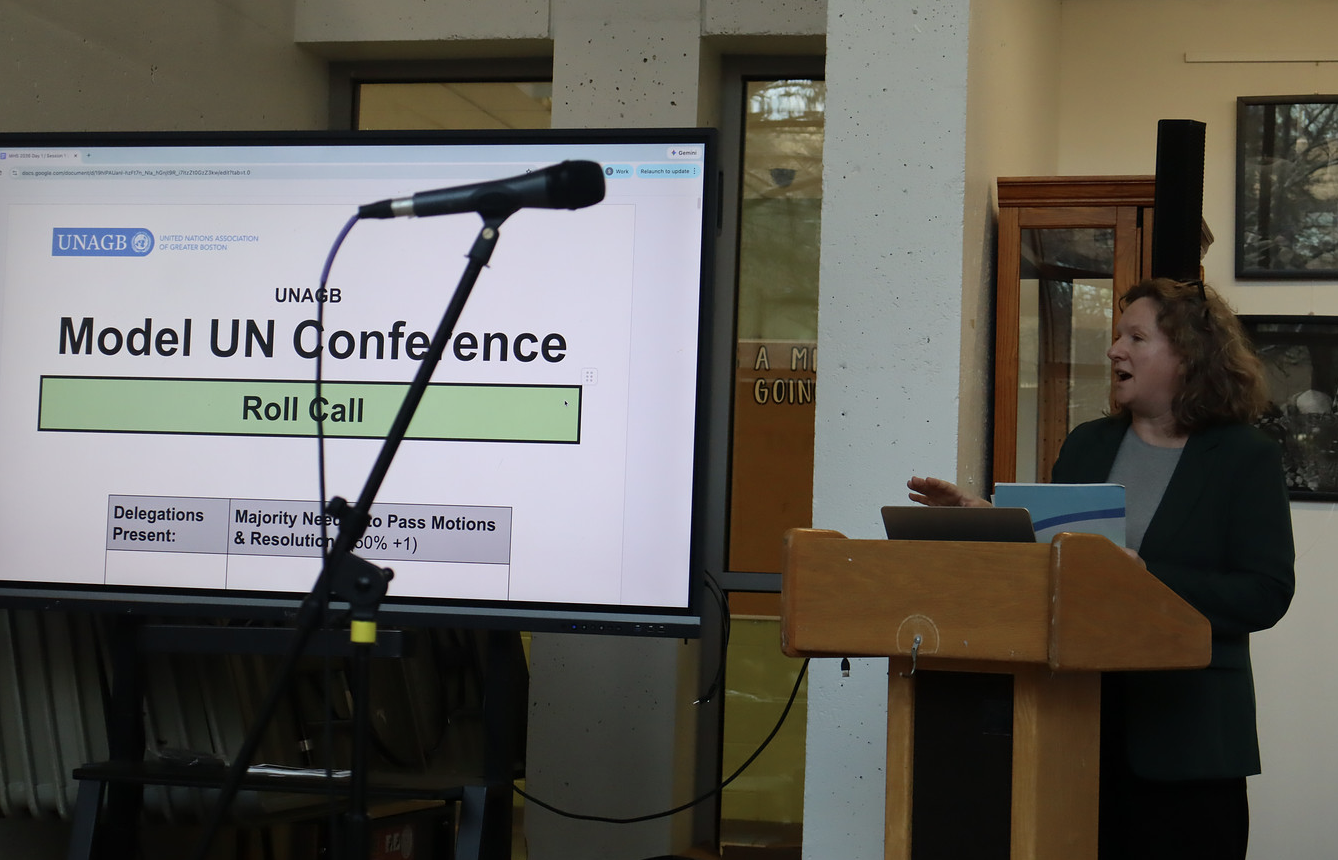
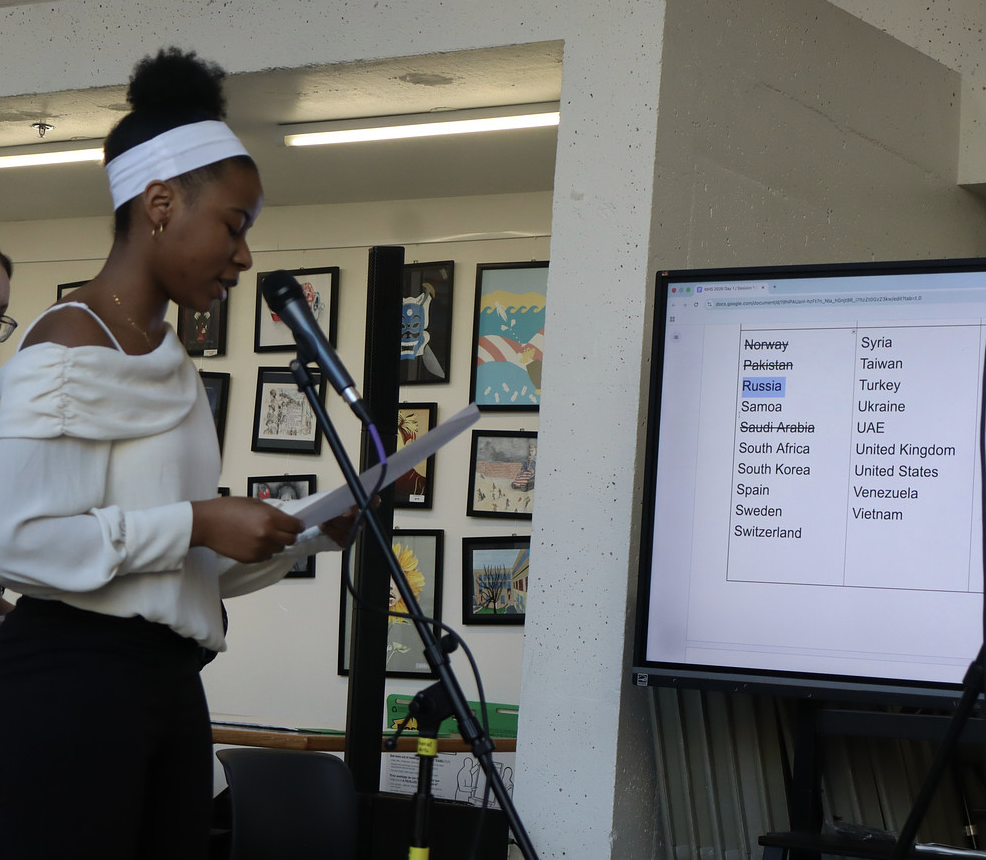
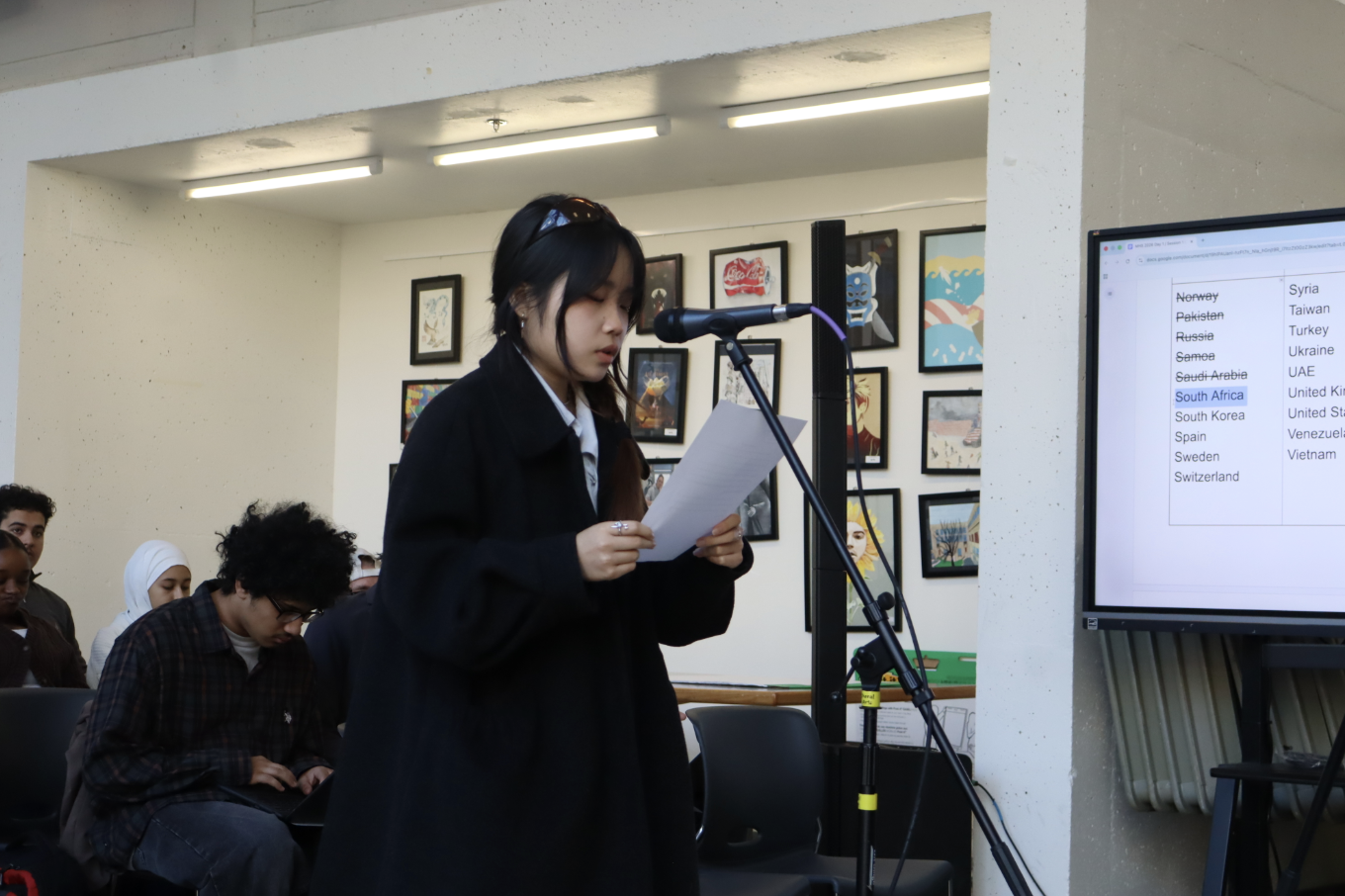
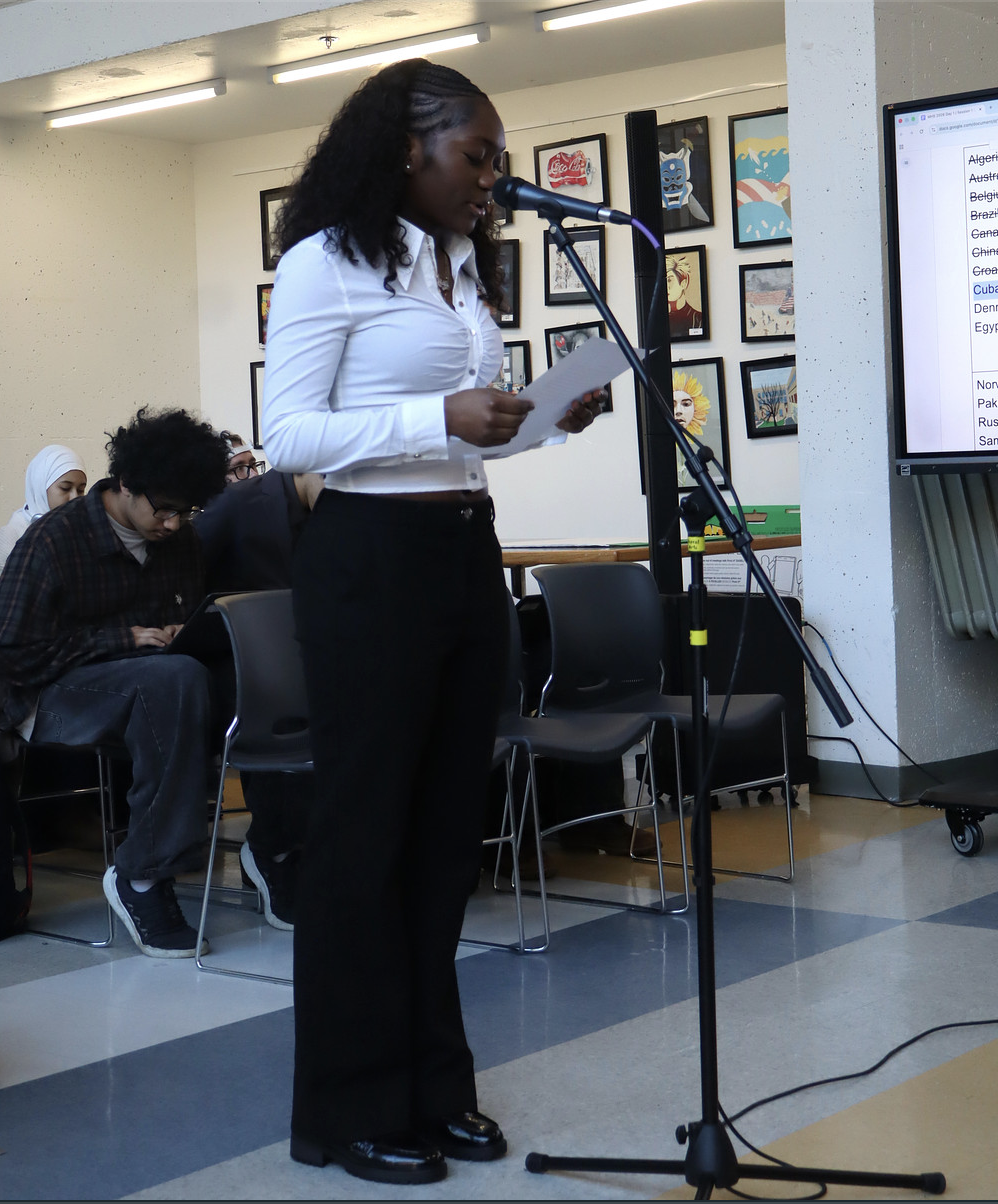
As the roll call wrapped up, Coyle asked the first group of students to do their opening speeches. In alphabetic order of countries, starting from Algeria and concluding with Vietnam, they had 1 minute to explain their country’s position on the global issue. The students’ speeches would go on for an hour and would end off with a 7-minute break before starting the next part of the simulation. During speeches, students had to take notes on each speech which would help them with creating alliances later on. Although nervous, junior Trini Le who was a representative for South Africa felt “excited” to put all the research she conducted to use.
Likewise, junior Karllens Petion who represented Venezuela thought it was interesting that the whole simulation was “interesting and felt excited.”
Junior Ella Boucher chose Russia because she felt that they were “a powerful country” and was interested in how to speak upon the topic as a representative of Russia. “I felt both excited for the fact [that] I can talk to others and see others from different classes, but nervous for our speech.”
Caucuses
Coyle then motioned for either a moderated caucus, which is a formal way for students to discuss, or an unmoderated caucus which is informal and allows for students to move freely, creating alliances or negotiations. Students with their raised placards that were called upon by the Chairperson, were able to pick an unmoderated or moderated caucus and discuss topics between nuclear waste, energy, workforce, disarmament, nuclear testing, and managing stockpiles. They were also allowed to pick the time to discuss and speak.
Students that were chosen had thirty seconds to speak if they were in favor of the topic. In order for the topic to pass, there needed to be at least 24 votes. First up was an unmoderated caucus, chosen by delegates of Israel. With 29 votes in favor, they chose to discuss the topic of nuclear disarmament. For 10 minutes, students moved around freely to create alliances.
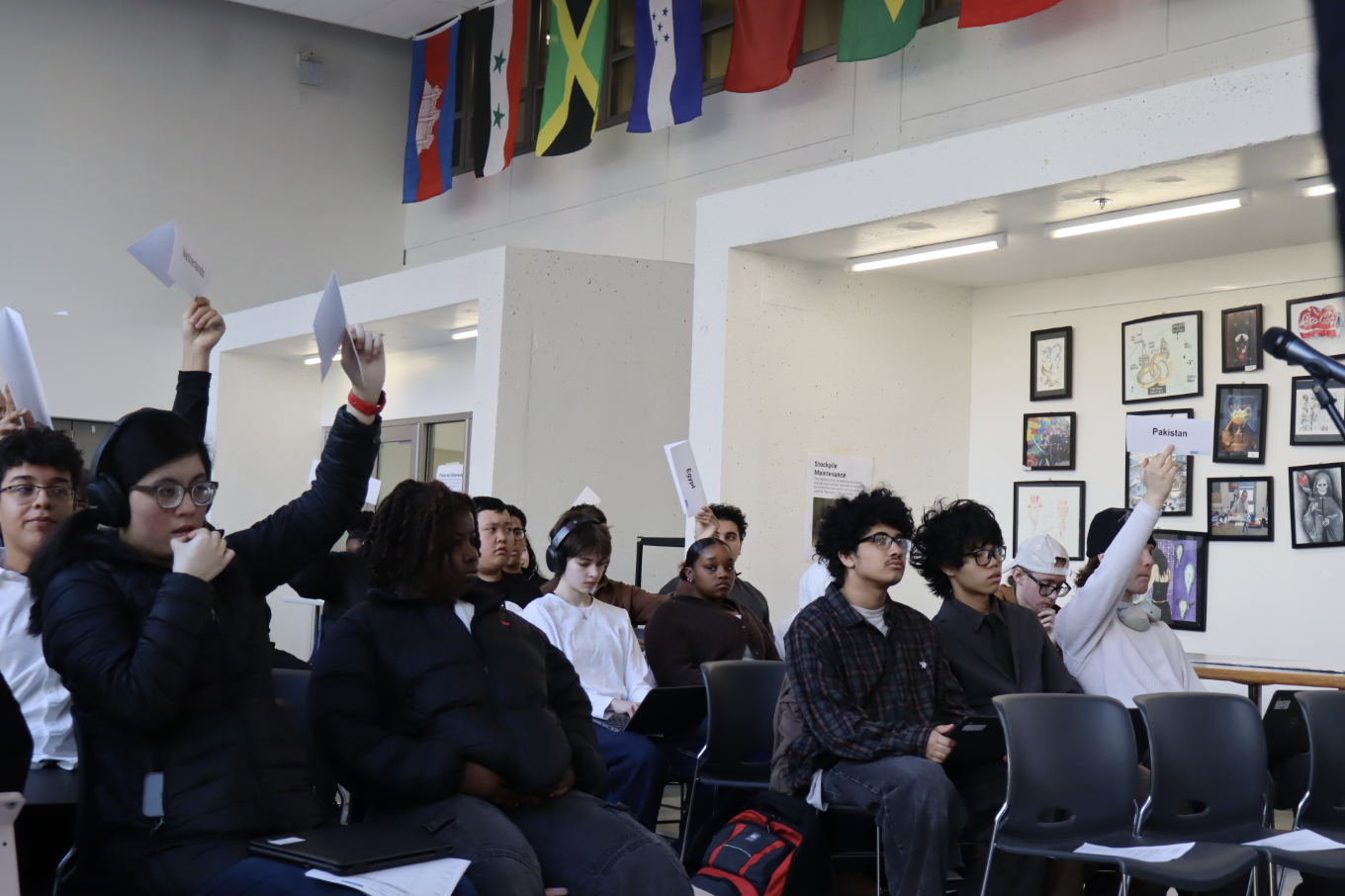
After the time was up, students could raise their placards and be chosen to debrief for 30 seconds about who they talked to in the unmoderated caucus and their perspective on the topic.
Chosen by delegates of Haiti, 26 voted in favor for another unmoderated caucus. They had 10 minutes to move and discuss the topic of nuclear energy. Again, students debriefed on the topic.
Not every caucus chosen is expected to pass. For example, delegates of the United Kingdom wanted a moderated caucus about managing nuclear stockpiles, but only 15 voted. Delegates for Haiti also did not have enough votes when chosen for a moderated caucus of nuclear testing.
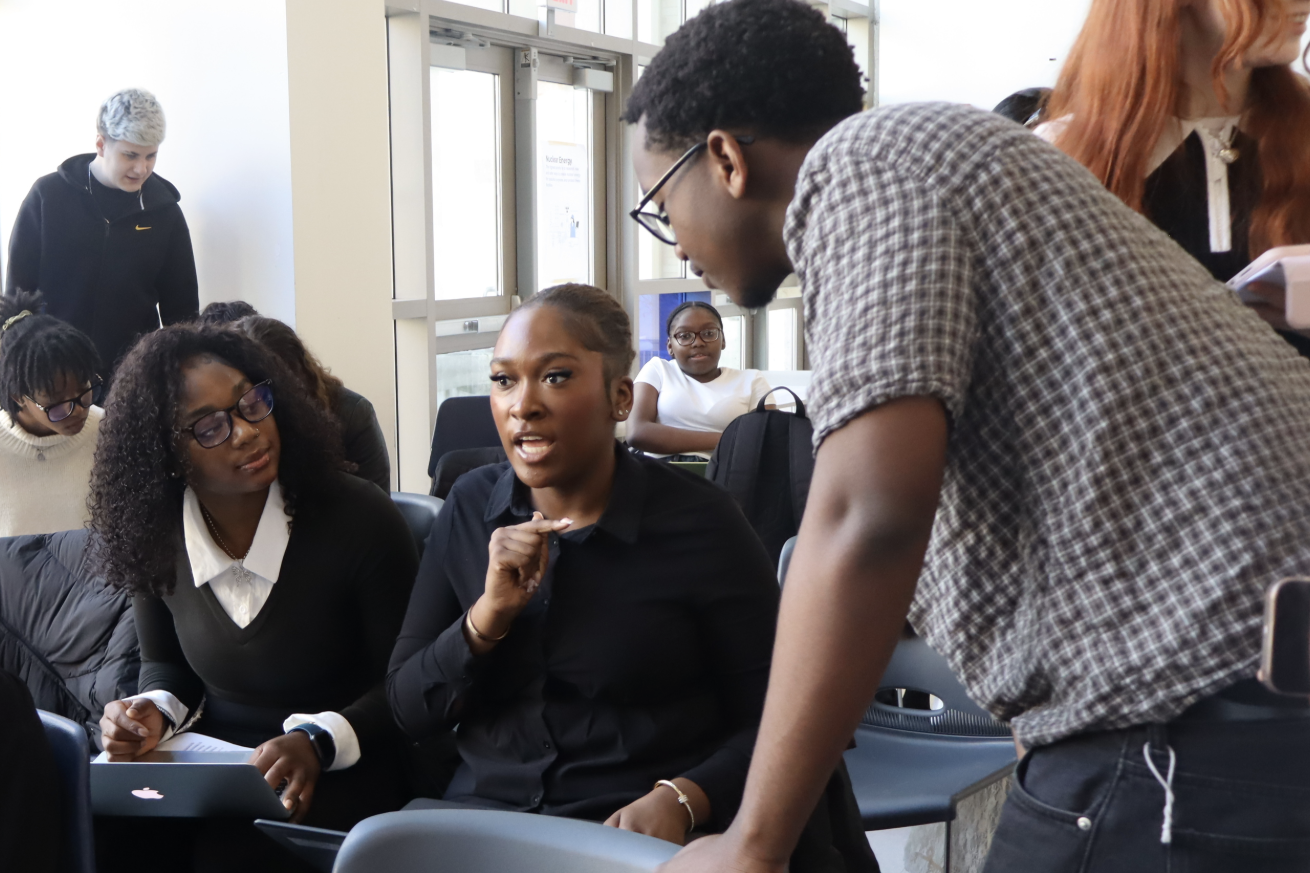
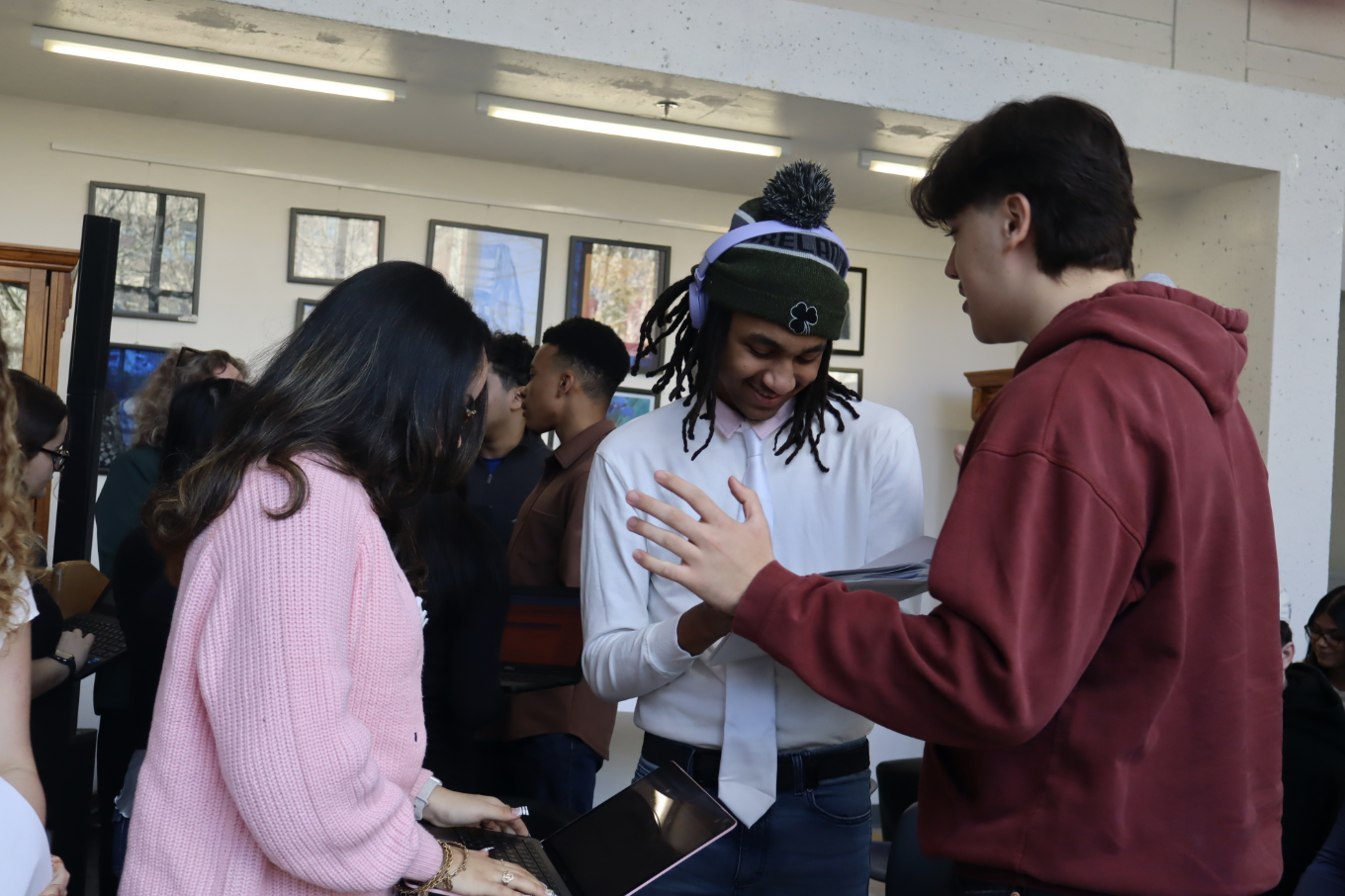
However, delegates of Egypt were successful as 25 voted in favor of doing a moderated caucus about non-proliferation. For 10 minutes, each delegate discussed with their group what they thought about the topic. To make it more formal, Coyle opened a speakers list which allowed delegates to request if they wanted to speak. Each representative could stand up from their seat and had 30 seconds to speak about the topic. After voicing their thoughts, Coyle concluded the moderated caucus and introduced the position statements.
Position Statements
Around the room, there were posters about deterrence, usage of nuclear weapons, total disarmament, using nuclear energy for peaceful purposes, managing stockpiles, and non-proliferation. For 15 minutes, delegates would find a topic they supported and with others, would work together to write and create a position statement, to later present to the chair and others as a resolution to vote on.
Once the 15 minutes was up, each group went up to the microphone and presented their posters, trying to persuade others to agree with their position statements.
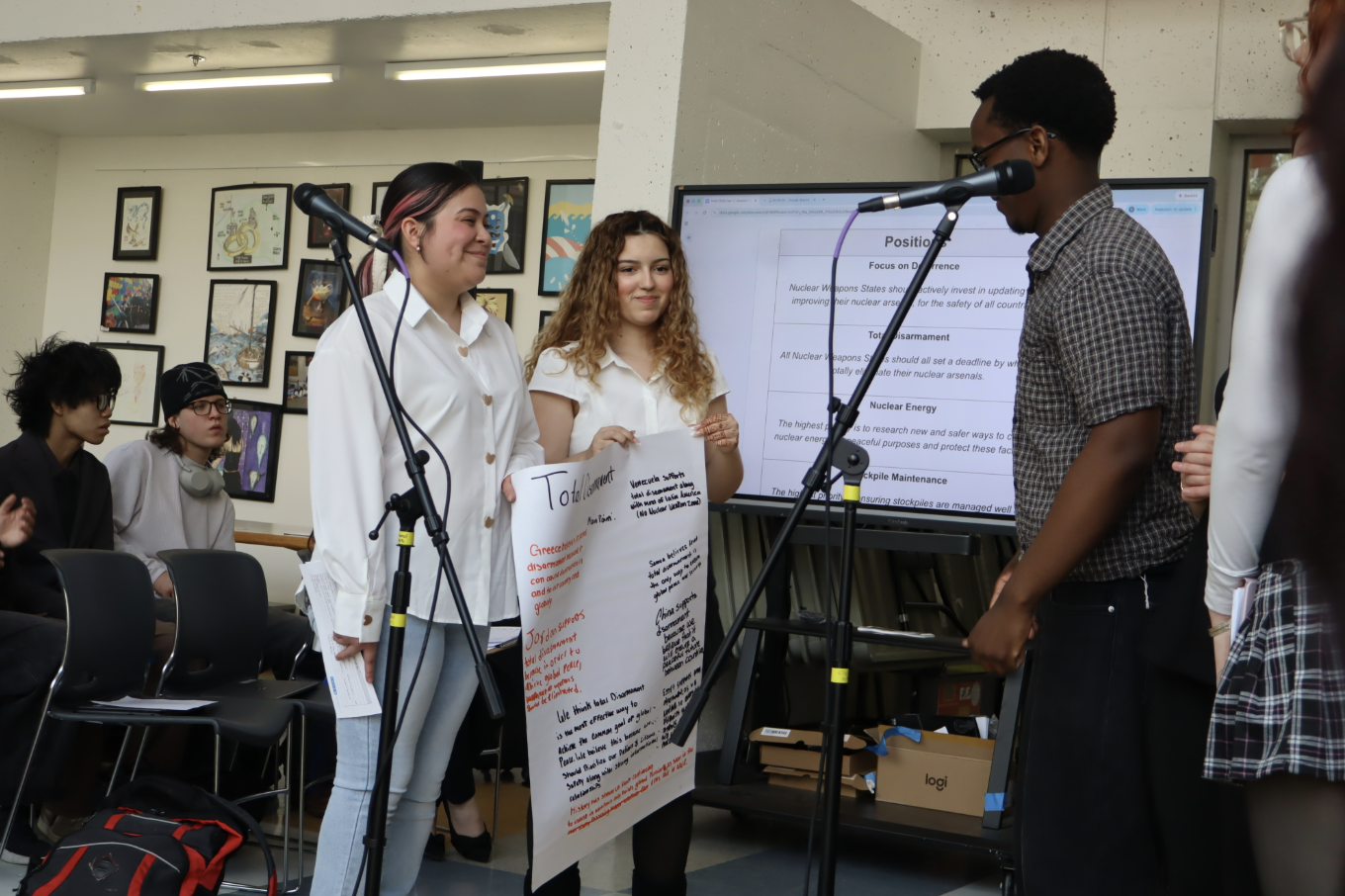
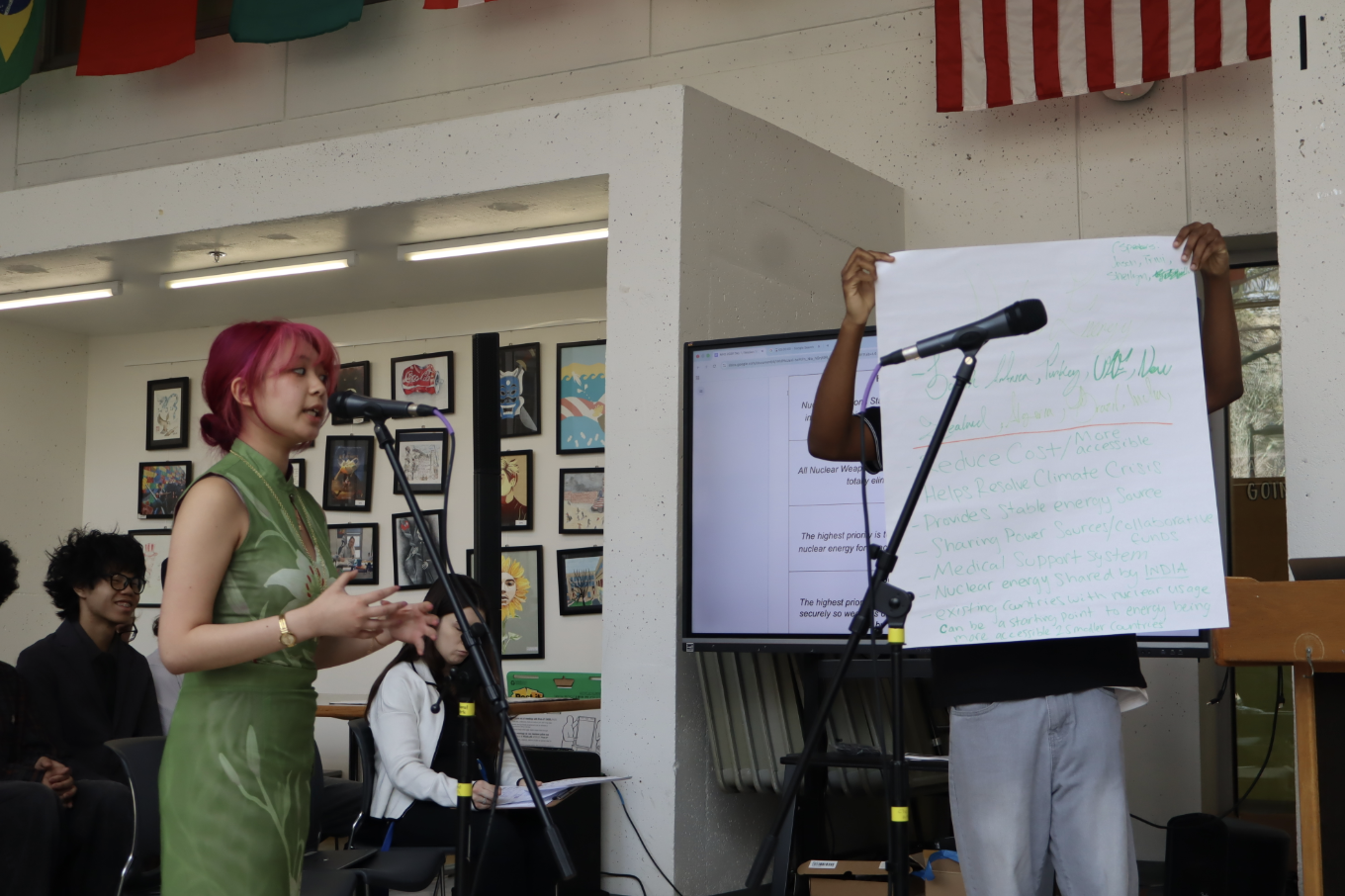
In order, deterrence went up explaining their focus on safety, security, and using weapons to intimidate others. Disarmament, split into 2 groups, both voiced how maintenance is expensive, has risks to the environment, destructive and stabilizes security for citizens as it threatens international peace. Nuclear energy was also split into 2 groups and highlighted how it allows everybody to work together, has low carbon and clean energy, and will help develop countries efficiently. The stockpile maintenance group focused on being careful with the usage of nuclear weapons. Lastly, non-proliferation wanted security, peace, stability, trust and to be able to develop.
Resolution Voting
The last part of Model UN was voting on which topic they wanted as a resolution. Coyle summarized each topic and then started the voting. Jason Dutaille has always been interested in New Zealand which is why he chose to represent the country. He believed that Model UN would “be a good learning experience.” He continued to say, “I felt confident in my ability to form a resolution that would be passed by The Chair.”
Out of the 5 topics, deterrence with only 10 votes did not pass. With the success of the other topics passing the minimum of votes, delegates cheered. To conclude the event, a delegate motioned to adjourn in which the majority voted in favor of.
Reflection
From experience, Coyle found confidence and being able to speak in front of people is a common challenge students face. “However, I really didn’t see a lot of that in this year’s simulation.”
History teacher Jonathan Copithorne, noticed that a common challenge was getting over the fear of public speaking, which is why he “spent so much time with the students ahead of time, practicing their speeches, so they know what they’re going to say, and they know kind of ahead of time they can plan ahead, especially when those nerves are starting to kick in.” Adding that he hovered around the microphones “just in case anyone needs a little extra support.”
History Teacher leader, Kurtis Scheer “felt the students performed really well in terms of their research, their speaking, and their ability to come to a consensus and vote and pass a number of resolutions here to tackle some really difficult questions.”
Though he wished he talked a bit more, Petition learned “that it’s difficult to make a set agreement with so many people. It makes sense now why the UN is so complicated.’ He added, “I was able to reflect the beliefs that my country held even if it was contrasting to mine.”
“Something you definitely can learn from this is how to be more out of your shell kind of because like the whole simulation was based on communication and understanding,” voiced Boucher.
“We’re not always going to agree on certain things, and countries are going to have different goals to try to achieve these two so, trying to figure out the best way to do it democratically and diplomatically is one of the big takeaways I think we’ll have from this whole thing,” concluded Scheer.
About the Author