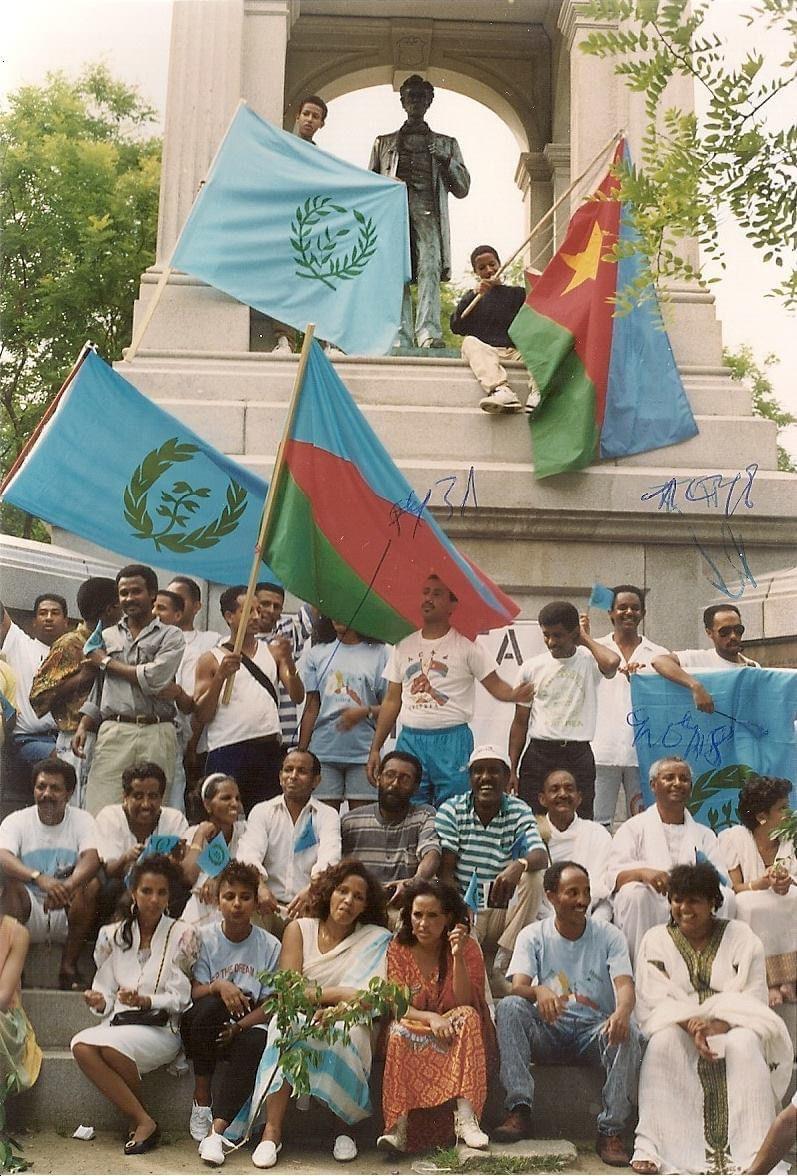
What does it mean to find your voice when you come from a place where voices are silenced? In Eritrea, journalists disappear for asking questions. 6,487 miles away in my high school classroom in Malden, I was encouraged to ask more.
24 years and roughly eight months have passed since September 18th, 2001, the day that the Eritrean press died. Government officials banned seven independent newspapers and 11 senior government officials. No context, no justification, no report. 24 years later, the lack of free press remains the reality in Eritrea. What once served as a gateway for education, news, and public morale during tormenting periods under colonial rule, turned into a political weapon overnight, leaving my younger self to question journalism as a whole despite my love for writing.
I walked into journalism thinking that it was going to be just another class on my transcript to fill my schedule. It wasn’t clear to me that the next four years were going to be the most transformative for me through the art of journalism and self-expression.
Growing up connected to a country where journalism is weaponized and strictly prohibited shaped the way that I viewed expression itself. I found that speaking openly did not always feel natural, sometimes felt even risky, and for the longest time, I simply associated it with my personality. I remember holding my notebook tightly with sweaty palms, and a racing mind that wouldn’t stop replaying the questions that I had prepared in fear of saying the wrong thing before my first interview. Yet, the moment the conversation began, I realized that my difficulty with expression wasn’t an aspect of my personality, but rather the product of conditioned censorship. I realized that journalism wasn’t about perfection, but curiosity and genuineness. Instead of speaking to impress someone, I was speaking to fully understand them. What I thought to be strictly professional, instead, strangely felt deeply human, and it occurred to me then why journalism is viewed as a threat.
I remember the spikes of anxiety that ran through my spine upcoming my first six-week trip to Eritrea. I browsed every single page on Google for articles about what to expect, hoping to find something that contradicted the theme of every piece of writing that I stumbled across. Every article, though not much to choose from, highlighted Eritrea’s censorship and tough living conditions. Although aware of the truth behind the outside commentary, I also had exposure to the beautiful aspects of my country, which undeniably outshone the negative components, due to accounts from my family members and my time in Eritrea, the most rewarding six weeks of my life.
The strict prohibition of public media was evident through the recycled phrases and structure of the one national news outlet allowed to air in the country, but the people served as a reminder that journalism is universal and beyond simply just facts and news.
Locals verbally relayed news and opinions in small gatherings, documented every occasion and moment that highlighted human emotion, both good and bad, and what shocked me most was witnessing locals branch out to learn new languages to better immerse themselves with the global community and news despite being isolated.
The words of my cousin, who pursued fluency in Mandarin as an act of rebellion toward the regime as she sought to find an outlet to news on the outside, forever remain engraved in me: “We live in two different worlds, but are united in our curiosity to better understand each other’s world.” This ignited a light in me that revealed the true power behind reporting and its ability to connect humanity across difference, distance, and unwilled silence.
Though it didn’t take me long to activate my voice as a journalist, fully understanding what journalism itself means was something that took me a long time to figure out. Though defined by its objective communication, confusing grammatical rules, and strict deadlines, the art of journalism serves a purpose beyond the reporting of facts to a broad audience. Rather than simply relaying information, the freedom of the press at its core encourages curiosity and awareness that bridges between people and gives visibility to voices that go unheard in our world.
I once viewed news solely as information, yet over time I’ve grown to learn that journalism also shapes whose stories and experiences are acknowledged and remembered. Our school newspaper may seem small compared to national media, yet even student journalism provides visibility. Every piece covering student achievement, social issues, or public concern promises people that their experiences always matter enough to be heard, no matter how big or small, and that serves as a force strong enough to override any threat posed to the composition of journalism prevalent in our world today.
About the Author