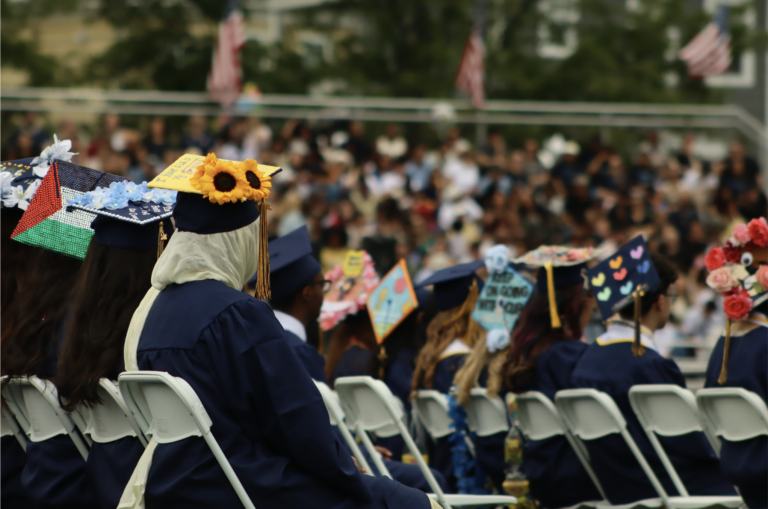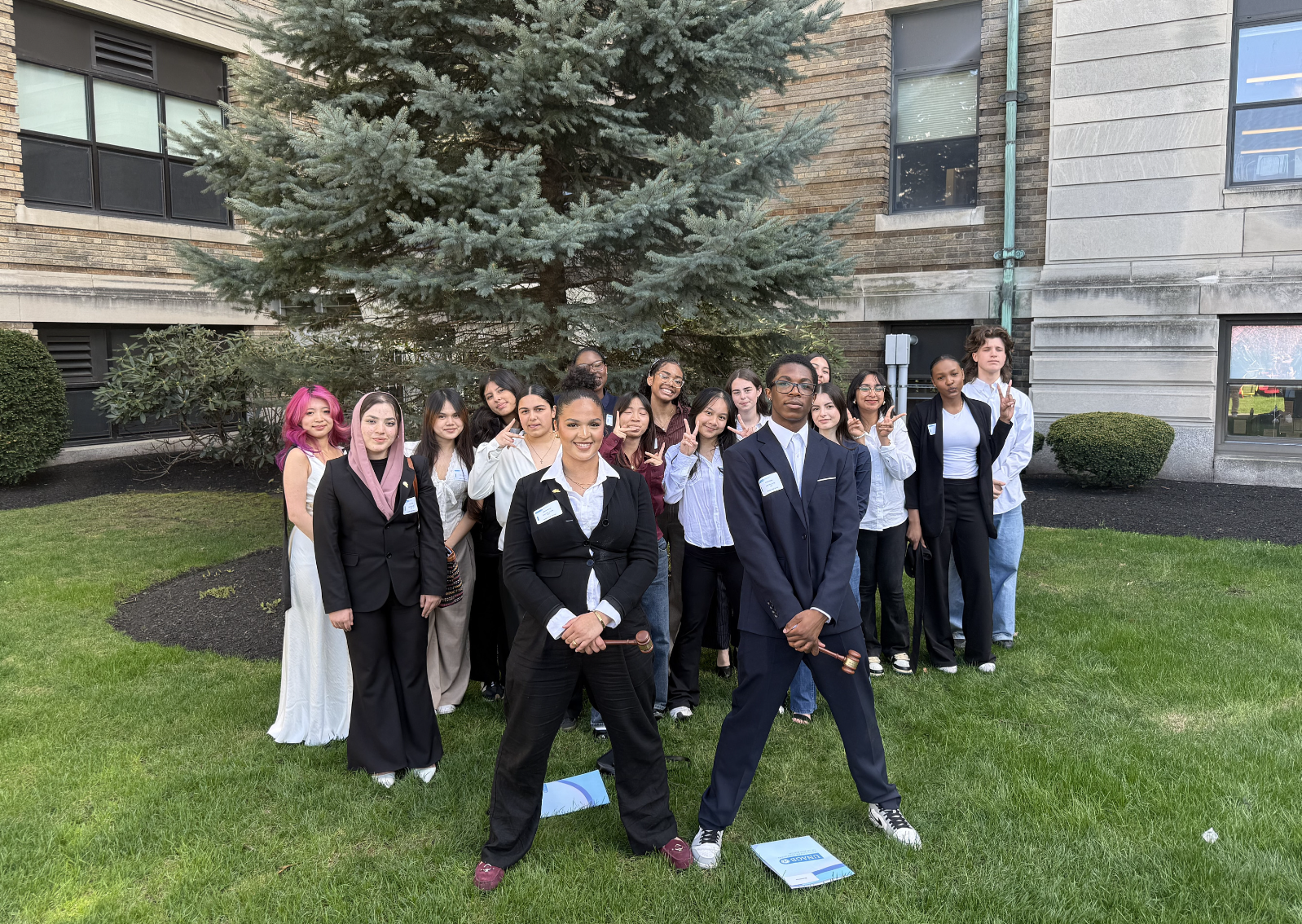
In one’s junior year at Malden High, it is customary for the only quarter three test grade to be a Model United Nations presentation that requires weeks of preparation and research regarding a pair of students’ assigned nation and topic. But, what if you were invited to participate in a Model UN simulation where the only information known beforehand is the primary topic participants must join together to form a resolution on?
This was the case for Malden High students on May 1st, where a group of students led by history teachers Kurtis Scheer and Sarah Straight went on a field trip to Northeastern University and Wentworth Polytechnic Institute to learn and create a hypothetical solution for Brain Drain worldwide that would address all parts of its issue.
Brain Drain
The term might be unfamiliar to most. At first glance, the meaning one might derive from it may not align with its true definition. Brain Drain occurs when highly skilled professionals emigrate to nations more developed and advanced than their own to either study a certain skillset or work in that field. This can be influenced by opportunities for higher pay, improved working conditions, improved political conditions, and more.
The nations involved with this presentation had a variety of different “push and pull” factors; some countries had issues that arose with population numbers such as India and Italy, some had ongoing violence-related issues, such as Mozambique, and some nations, such as Brazil and Mexico, already had existing solutions that had the opportunity to be workshopped during the conference.
During the registration process, advisors assigned delegates a pair of students representing a designated nation—the country that they were to represent during the conference. With the assignment came a tag labeling what school, committee room, and country a student represented. Once assigned to your country, each delegate receives a folder with brief information on Brain Drain, their country’s experience with the issue, and ideas that the delegates can explore in their caucuses.
“I never knew what Brain Drain was and its significance in the world. It really opened my eyes about the issues we currently have in our society and what needs to be addressed,” shared junior Ann Nguyen, who represented South Africa with junior Beyonce Pierre-Rene.
Navigating the Conference
The Malden High team met in Cafeteria A, bright and early, at 8 am to hand in final permission slips and meet up in order to head to Malden Center Station. The group took the Orange Line down to Ruggles Station, where both campuses are closely located. Malden High made it to Watson Auditorium in Wentworth Hall roughly ten minutes before registration closed.
The conference, hosted by the United Nations Association of Greater Boston (UNAGB), gave students and faculty explicit directions on the materials they needed and an overview of what the day and schedule would look like.
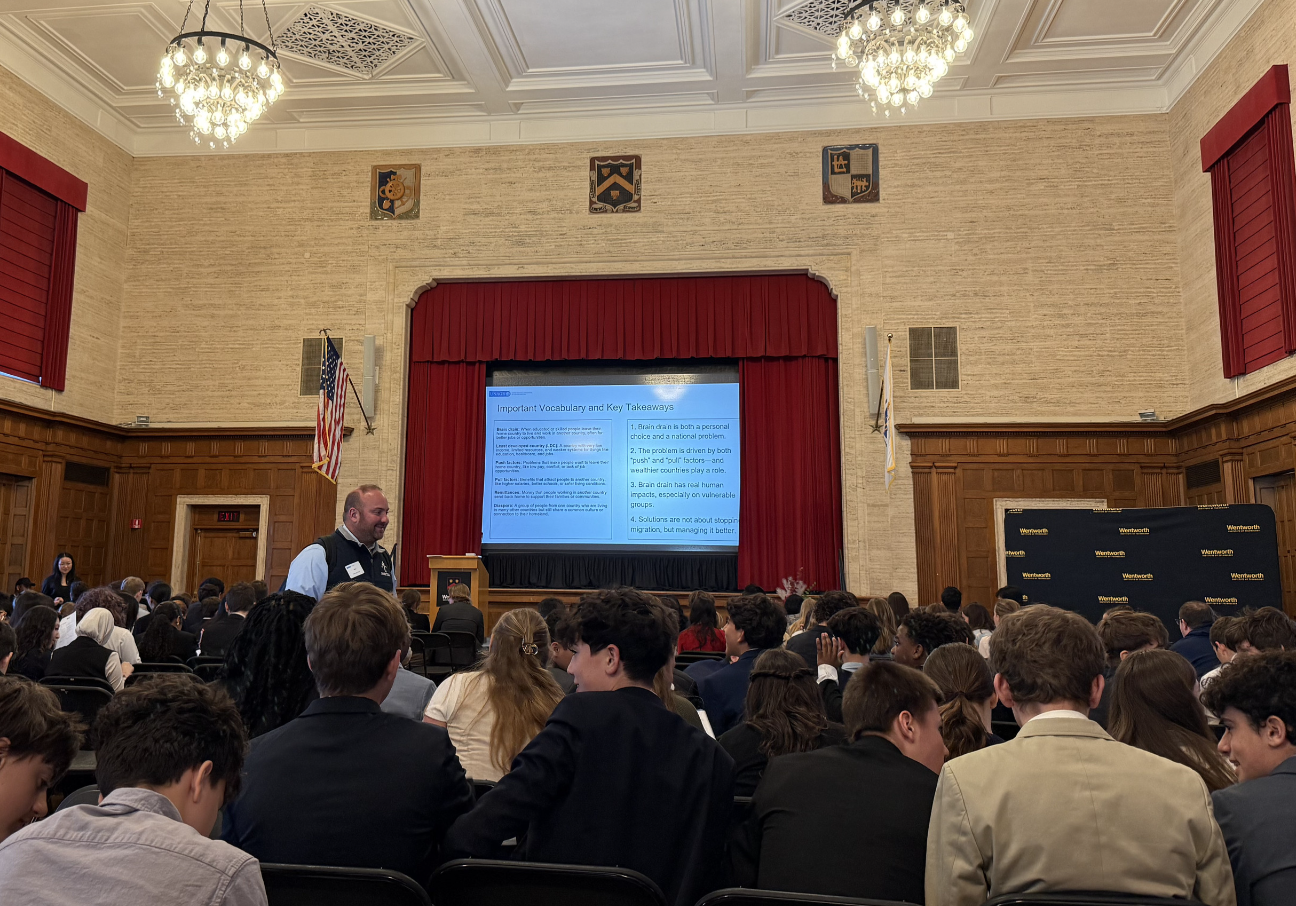
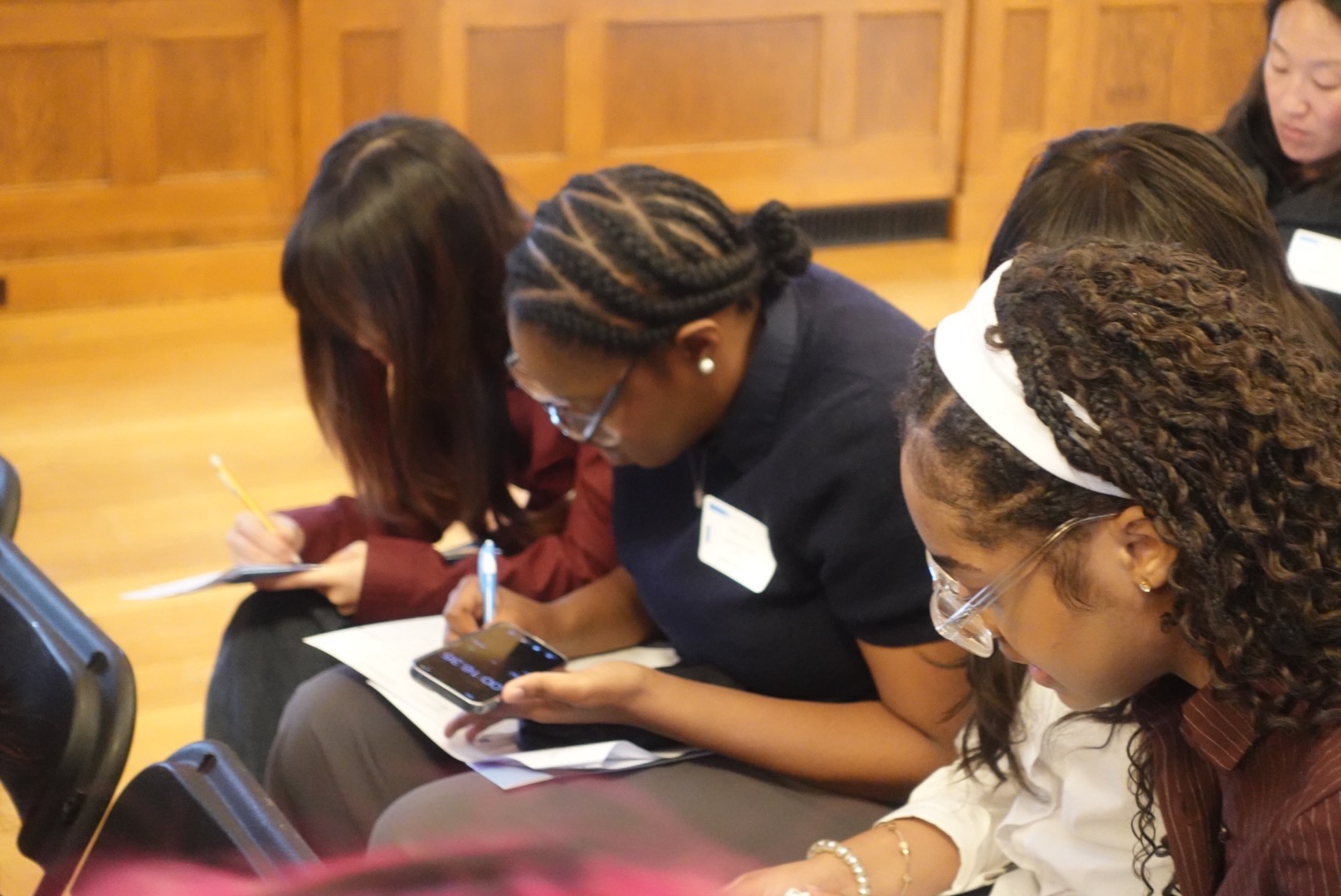
During the opening ceremony, facilitators provided students with background information, primarily about what “LDCs” (Least Developed Countries) are, and how Brain Drain specifically affects them. Students listened intently, took notes, and shared ideas with their delegates during this time.
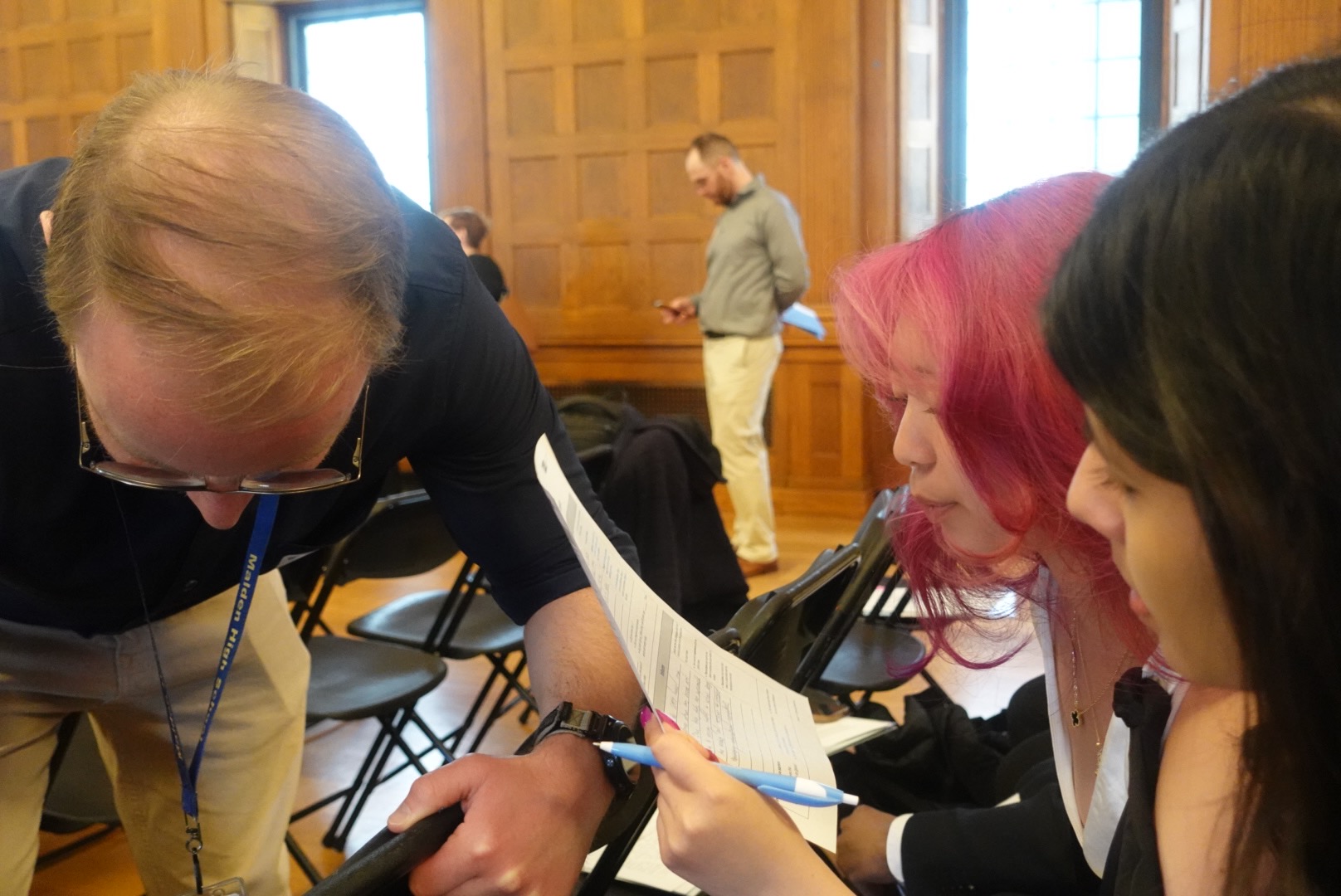
Inside each delegate’s folder were template sheets that allowed students to begin writing their position paper and research based on their provided resources, while announcers in the hall gave directions and more background information on Brain Drain. This was a strict no-technology conference; therefore, students could only reference their assigned folders for information, and phones were to be put away during the conference.
Once students were informed about the details of the conference, schools were split up based on the number on their name tags; Malden was split between rooms 5, 6, and 7. Groups diverged into different parts of the campus, but primarily residing in empty classrooms in Northeastern’s Bouvé College of Health Sciences.
The rooms had a mix of kids from each of the involved high schools and middle schools. Schools from all over Massachusetts, ranging from Worcester to Boston itself, came mixed within conference rooms, allowing Malden delegates to meet new faces, encouraging a professional workspace for all where schools and students with different backgrounds can come together and provide new perspectives on issues.
Model UN Simulation
Once students were settled in their conference rooms, the opening speeches that were drafted in Wentworth Hall were now to be presented to officially commence the simulations.
In a room full of hardworking students excited to receive potential awards, competition and determination were bound to arise. Between students professionally arguing their points and the most impactful parts of their drafted solutions, nations argued for representation of their respective problems with Brain Drain.
Some conference rooms had great collaboration among groups, leading to a few resolutions with great complexity forming between more than three countries in a room, while others had little collaboration between nations, keeping to themselves and addressing their own nation’s respective problem.
Some nations focused on tackling education to encourage hypothetical professionals to get an education in their native country, while other nations focused on general infrastructure and funding for programs that would create a sentiment to stay in their country from a young age.
All in all, this was an opportunity for students all over the state to experience what it’s like to collaborate with people on a collective issue that is often overlooked while learning what it is like to be in a “college environment” that “felt more professional,” according to junior Frankie Marenghi, who represented Mozambique with junior Maya Pedraza-Alexander in conference room seven.
Conference rooms ended with a “motion to adjourn”, officially leaving the conference a little past 3:00 pm. Schools gathered in Wentworth Hall to thank students for the overwhelming participation and to announce awards.
Students from Malden signing up for the field trip were made aware that there would be an award ceremony at the end. Three nations from each conference room were called if they received any of the following rewards: Best Position Paper, Best Negotiator, and Best Delegate(s).
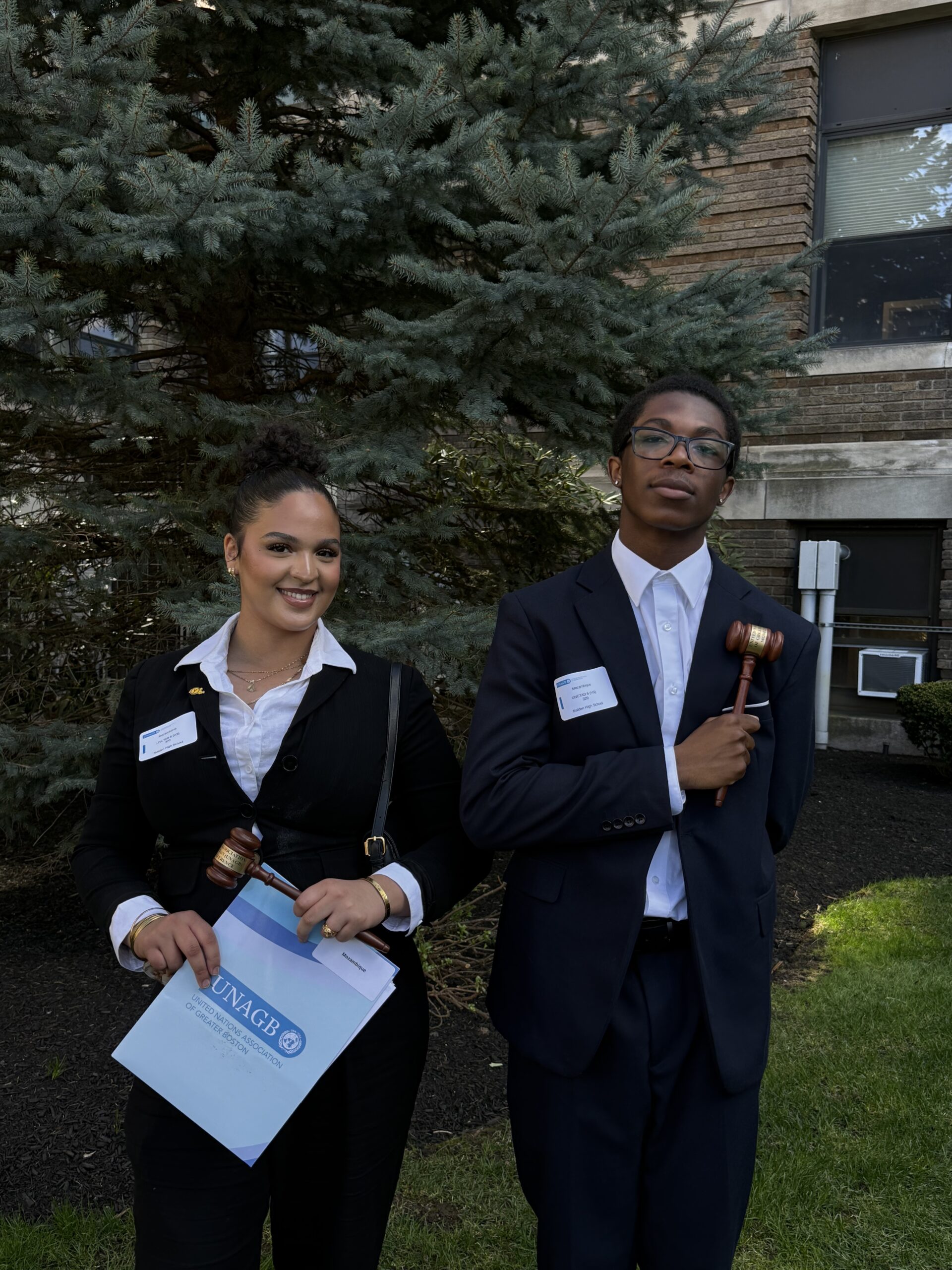
From Malden, junior Jason Dutaille and senior Nour Jaayfer took home the Best Delegates award for their impeccable performance as two dedicated and excited students who gave their all in combating Brain Drain while also representing Mozambique. Dutaille thanks his success to his “faith in Nour, without a doubt. Not to mention, I trust Mr. Scheer’s judgement–if he says Nour makes a solid partner–it’s probably true.” Dutaille continued by expressing that “it’s important that you push yourself and accept challenges when they arise,” explaining that “that’s part of the reason I accepted my invitation in the first place.”
Jaayer, being a senior who was admitted into Northeastern a few months prior, felt that it was “cool to actually see the lecture halls and envision herself walking through parts of the new parts of the campus. She felt prepared and excited, much like Dutaille, as she has participated in conferences before.
The “Best Negotiators” award went to juniors Anniyah Ahzar and Manager Editor for The Blue and Gold, Chelmie Hyppolite, for representing Italy in a balance between their desire to be heard for their specific issue pertaining to Brain Drain, while allowing themselves to be put down as either signatories or voters on two different resolutions in their conference room.
The day ended in significant success for Malden High students, where their voices were echoed throughout conference rooms that instilled a greater sense of confidence and public speaking ability within them. Many students unanimously agreed that they would return if they were to be invited back once more.
About the Author